Search here
 Log In
Royal Fort Lahore
Lahore fort, a 1,000-year-old complex, rises like an Arabian Nights fantasy on the left bank of the river Ravi, one of the five rivers from which the Punjab took its name. The Ravi was known to the ancients as Iravati, Parushni in the Vedas, and to the Greeks as Hydraotes. Although over time the river changed its course, usually westward, it passed by but never through the city of Lahore (unlike for example London’s Thames or Paris’ Seine.) Today, however, the boundaries of the District City of Lahore have extended over both banks. The Lahore fort is located at an eminence in the northwest corner of the Walled City. The citadel is spread over approximately 50 acres and is trapezoidal in form. Although the origin of this fort goes deep into antiquity, and all traces of the original fort had been lost, although attempts are being made to excavate its foundations to determine its origins.
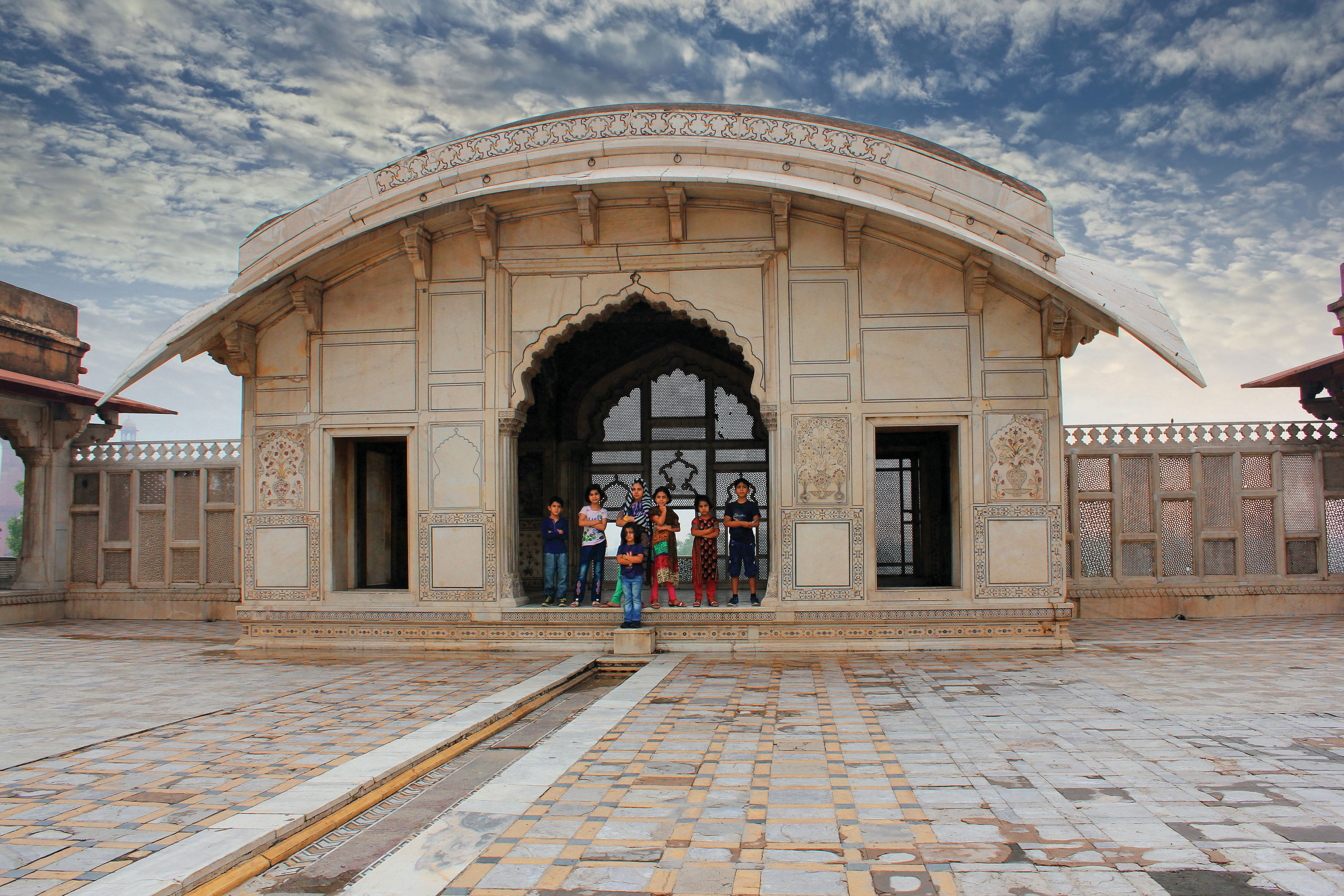
From time to time, some remains of a temple, along with weapons, ceramics and other artifacts, appear out of the silt. There is evidence that a mud fort existed here in 1021, when Mahmud of Ghazni invaded this area. The fort’s construction dates back to the early Hindu period. The fort is mentioned in connection with Muhammad Sam’s invasions of Lahore in 1180, 1184, and 1186. It was ruined by the Mongols in 1241, and then rebuilt by Balban in 1267. It was again destroyed by Amir Taimur’s army in 1398, to be rebuilt in mud by Sultan Mubarak Shah in 1421, then taken and repaired by Shaikh Ali. Each built of the old foundations. The present fort, in brick and solid masonry, was built during Akbar’s reign between 1556 and 1605 AD. Every succeeding Mughal emperor, as well as the Sikhs and the British, added a pavilion, palace, or wall, making it the only monument in Pakistan which represents a complete chronology of pre-Mughal and Mughal architecture. There are many legends attached to the fort, such as how Raja Jai Pal burnt himself alive in front of the fort walls. The attack of the Sultan Mahmud Ghaznavi, raids by the Mongols, the ascension of the Sikhs, the annexation by the East India Company (EIC) in 1849, stories of the surrender of the renowned Koh-e-Noor and its curse, and many more! Each incident marked an epoch in the fort’s history. Inspired by these myths and realities about the Lahore fort, I chose to visit it one morning.
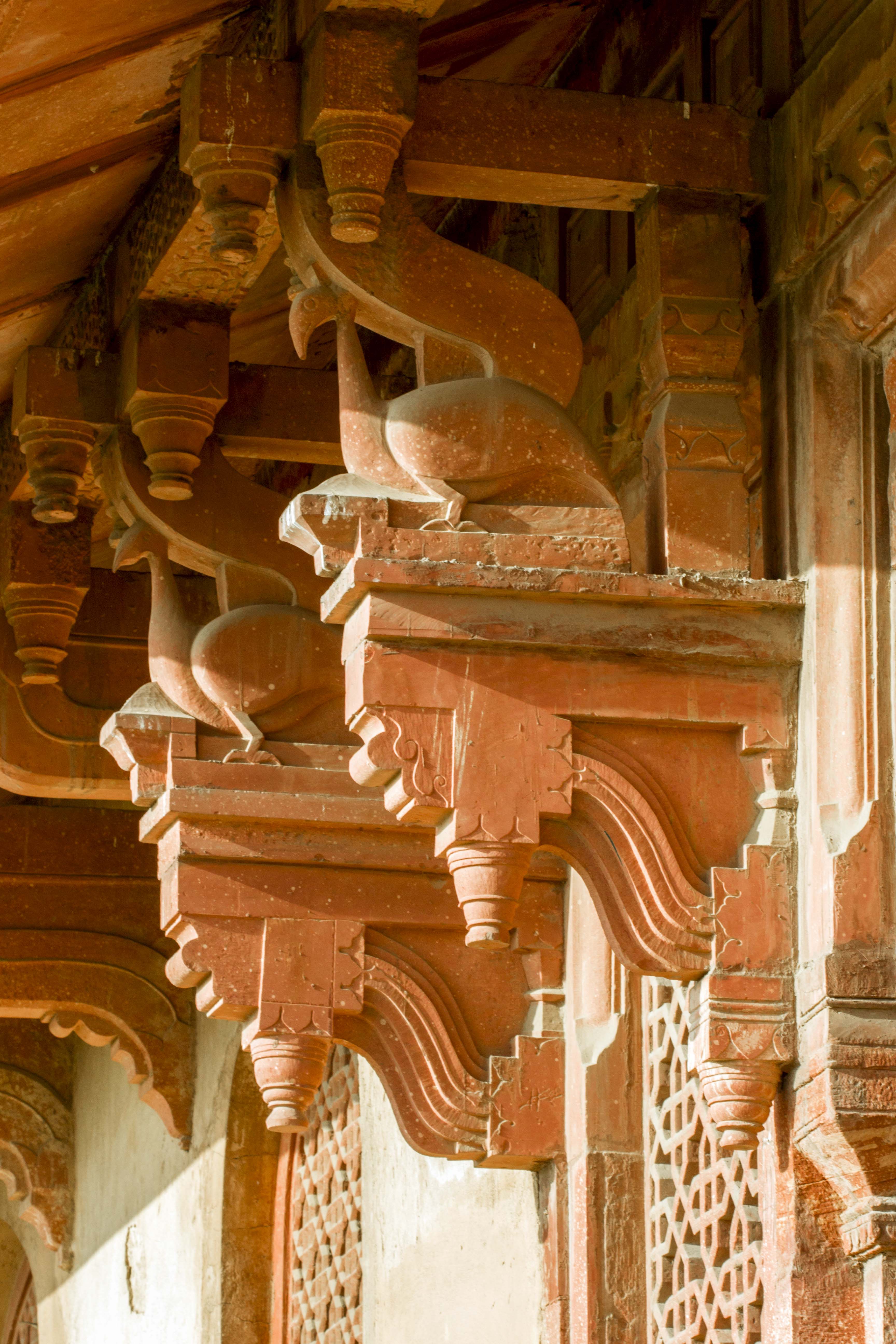
I woke with the rooster’s call. I opened my eyes to see a grey pall outside my window. The field was murky with it, brown grass sticking up out of a swamp of fog. The lights of my motorcycle shone like smudged stars. As the morning passed, sunlight roused more colors from their sleepy monochrome and, though the road still had tints of night, the sky is already more bluish than charcoal. Under the fumes of the morning traffic a tincture of the dawn lingers, like dew upon leaves, a gift of freshness bequeathed anew each day. As I reached the Lahore fort the dappled light of the sun has already lit the fort, the orange color lasted for several minutes and then faded into the early morning light! One can easily be won over by the charismatic beauty of the fort. The sunrise at fort can drive you through the annals of the history and make you as an intoxicated guest at the party. One can see the things around because the mind does transcend phenomena such as the spiritual delivery. I could feel my existence reincarnated in that time.
I become an observer, now, I can see and hear the noise of the royal entourage and their subordinates. It’s dawn and King is getting-up, performing wudu before praying salah at Moti Masjid (the Pearl Mosque) a small, three domed mosque made with white marbles to the west of the Hamam (bathroom), which was built in 1659 AD as a personal mosque for Emperor Shah Jahan. To my surprise it was a tradition in the old golden days to watch the sunrise then on a walk through the Paein Bagh. If the king went on a walk, it would be in the secluded gardens with the ladies of harem. If he chose to hunt with weapons, it would be chasing deer which abounded in the surrounding forest near the Ravi. Entering from the Akbari or Maseeti Gate built in 1566 AD the sprawling lawns tell of prodigious happenings. The Diwan-i Aam (Hall of Public Audience) built by Shah Jahan in 1628 AD, was built in a Chehel Sotoun style – a Persian style forty-pillar public audience hall where the Emperor would appear, receive official guests, commoners and watch parades. From there, he gave necessary orders for the administration of his empire, distribute charity. Members of the entourage, important court functionaries and friends who enjoyed the privilege of attending such moments were allowed to watch this ceremony. At this point the crowd that had gathered along the way could finally see the king. Some could speak briefly to him or forward him a written arzi or note. At the Diwan-i Khas (Hall of Private Audience), the Emperor held private meetings with courtiers and state guests. Diwan-i Khas usually served as a hall where the Emperor would attend to matters of the state.
The hall comprises a rectangular chamber with engraved arch opening supported on piers on all its sides. At the center of the chamber the famous Peacock throne was placed over a marble pedestal. Upon returning from his apartment, the king held council in this chamber. Majlis-e-shura (which dealt with national affairs) met once a fortnight here when there was no State Council meeting. The king could also decide to examine the progress of works projects. Five or six ministers worked with the Emperor, who spoke little, listened closely, and always made the final decision. It’s twelve and crowd would rush into the King’s tent chamber to go to the lunch at the Royal table. The ruler sat down to lunch with the individuals from the illustrious family. Once the lunch was finished, the ruler crossed the room and entered the harem to welcome the women of the court. He at that point resigned to his bureau to banter all the more uninhibitedly with his family and a couple of dear companions.
Emperor regularly left his spouse responsible for indoor amusement, for example, evening gatherings. Meanwhile, the ruler would sign the various letters arranged by his courtier, at that point go to the lofts of Makatab khana, where he contemplated vital printed material with one of his vakils or wazirs. The Maktab Khana (“Clerk’s Quarters”) initially known as Dawlat Khana-e-Jahangir, was built in 1617 under the supervision of Mamur Khan amid-the rule of Jahangir as an arrangement of shelters close to the Moti Masjid. Composed by Khawaja Jahan Muhammad Dost, it was utilized as section to the audience hall from the royal residence structures toward the north. Clerks in the Maktab Khana would likewise record the passage of visitors into the stronghold. It highlights iwans in the Persian-Timurid style in every one of its four sides. Each diwan is flanked by curves. To satisfy his aesthetics Emperor Jahangir ordered development of the gigantic “Picture Wall’, which is thought to be the best aesthetic triumph of the Lahore Fort. Not at all like the Red Fort and Agra Fort, Lahore Fort’s ramparts were made of brick as opposed to red stone.
The grand Picture Wall is an expansive area of the external divider which is wonderfully finished with a lively cluster of coated tile, faience mosaics, and frescoes. Emperor Aurangzeb, built the Alamgiri Gate, whose semi-circular towers and domed pavilions are a widely recognized symbol of Lahore that was once featured on Pakistani currency. The Jahangir Quadrangle is bordered on its northern edge by Jahangir’s sleeping chambers, the Bari Khwabgah, which was largely reconstructed during the British era. All the king’s servants and the people of the empire knew that if any man or woman goes to the king inside without being called, there is but one law— to be put to death. The real life experience that has been stretching my intellectual, mental and emotional capacity is finally over. Every minute of it was totally worth it. It truly feels that time starts now. History was both behind me and yet ahead of me.