Search here
 Log In
Power Sector In Pakistan
Punjab is second largest province of Pakistan in terms of covered area. Total land area is approximately 205,344km2 (79,284 sq. mi).Punjab is located at the north-western edge of the geologic Indian plate in South Asia. It is land of five rivers; Indus, Jhelum, Beas, Chenab, Ravi and Sutlej. It is densely populated i-e 93 million. It covers 55% of the country’s total population.
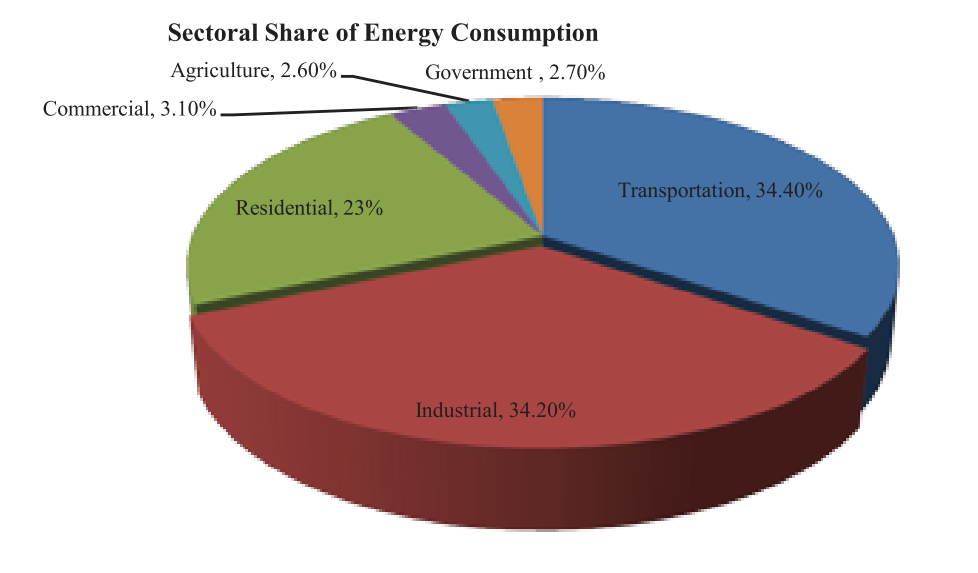
Punjab is the most industrialized province of Pakistan. Major industries are textiles, sports goods, heavy machinery, electrical appliances, surgical instruments, cement, vehicles, auto parts and processed foods. Punjab has more than forty eight thousand industrial units. The small and cottage industries are in abundance.
There are 39,033 small and cottage industrial units. Number of textile units is 11,820 and number of ginning units is 6,778. There are 6,355 units for processing of agricultural raw materials including food and feed industries.
Government of Punjab is encouraging private sector investment in power projects. Punjab power sector is large and demand for power is rising rapidly at 8% per annum. Punjab government has formulated stable regulatory policies, secure environment and transparency.
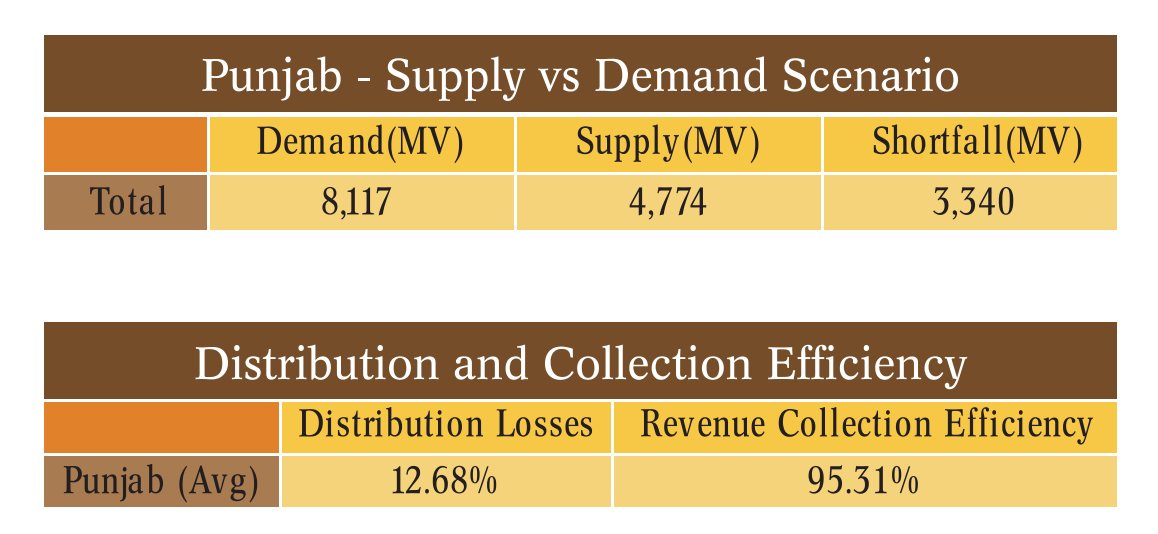
In order to meet the current and future energy demand, Government of Punjab is working on different power generation projects that are expected to contribute an additional power supply of 16,800 MW by the end of 2015-16.The government is planning to shift electricity generation from costly diesel and furnace oil to coal in order to generate 9,800 MW cheaper electricity over the next three years.
Power Sector Reforms:
The power sector had structural issue in the past, but the newly elected government has taken bold steps to restore confidence:
- Clearance of circular debt of Rs. 480 billion immediately
- Decision to increase tariff to improve recovery
- except targeted subsidies
- Legislation for strict legal action against power & gas theft
- New metering system on grids/feeders to isolate theft
- Institutional Reform and Capacity building initiated
- Renewable Energy as primary focus
Investment Rationale:
- Punjab has significant indigenous resource potential for power generation.
- 4,000 MW potential readily available with indigenous fuels/resources
- Expansive infrastructure/roads network ensures supply chain stability for non-local fuels
- Upfront tariff declaration – calculated at fixed Return on Equity
- Mandatory purchase of power generated by Independent Power Producers (IPPs), backed by sovereign guarantee of Government of Pakistan
ATTRACTIVE RETURNS
- 17% RoE on Renewable energy projects
- 20% RoE on Local coal
- 17% RoE on Imported coal
TAX EXEMPTION
- Exemption from Income tax
- Exemption from Turnover tax
- Exemption from Withholding tax on imports
CUSTOMS DUTY EXEMPTION
- 5% on import of Plant & Equipment not manufactured locally
- No Duties on Renewable Energy Plants & Equipment
Opportunties in Hydel Power
- Private sector investment has primarily been in the thermal sector, that has led to an increased tariff and Hydel/Thermal power production ratio of 30:70
- Punjab’s hydro power potential is estimated to be ~ 6,000 MW, out of which 1,700 MW is existing installed capacity
- GoPb is seeking private sector entities to invest in hydropower stations on canals and rivers
- Identified hydropower potential in Punjab of 800 MW on canal falls/rivers.
Opportunties in Coal Power
- Upfront tariff available for 220, 350, 660 and 1099 MW coal fired plants (for local coal based and imported coal based power generation)
- Punjab has sizeable coal reserves, estimated at 235 million tons of varying quality.
- 16 Industrial Estates under Punjab Small Industries Corporation have been targeted for establishment of dedicated power plants (10-50 MW) using mix of coal, biomass and solid waste
- 7 new sites in pipeline for investment in Small Coal Fired Power Plants (50-200MW)
Opportunities in Wind Power
- Punjab has two known wind-corridors at
- Kallar Kahar
- Rajanpur
- Wind studies at Kallar Kahar have been conducted by the Meteorological Department
- Studies indicate a 293 W/m2 power potential (at 50 m) at Kallar Kahar
- Foreign investors have signed memoranda of understanding with GoPb for setting up wind power plants at both locations
Opportunities in Biomass/ Bagasse
- Huge potential of biomass based power generation exists on unutilized crop residue of around 34 million tons per annum consisting of rice husk, rice straw, maize stalk and cotton stick, etc
- 35 million livestock in Punjab offers substantial opportunity for biogas power projects. 12,300 tons/day of solid waste is produced in urban centers of Punjab which is a readily available source for generation of power.
- Pakistan’s first cogen (80MW coal-bagasse) plant has been set up by the country’s largest sugar group JDW Sugar.
- Punjab’s 46 Sugar mills have the potential of producing 1,000 MW of power through bagasse/coal cogeneration
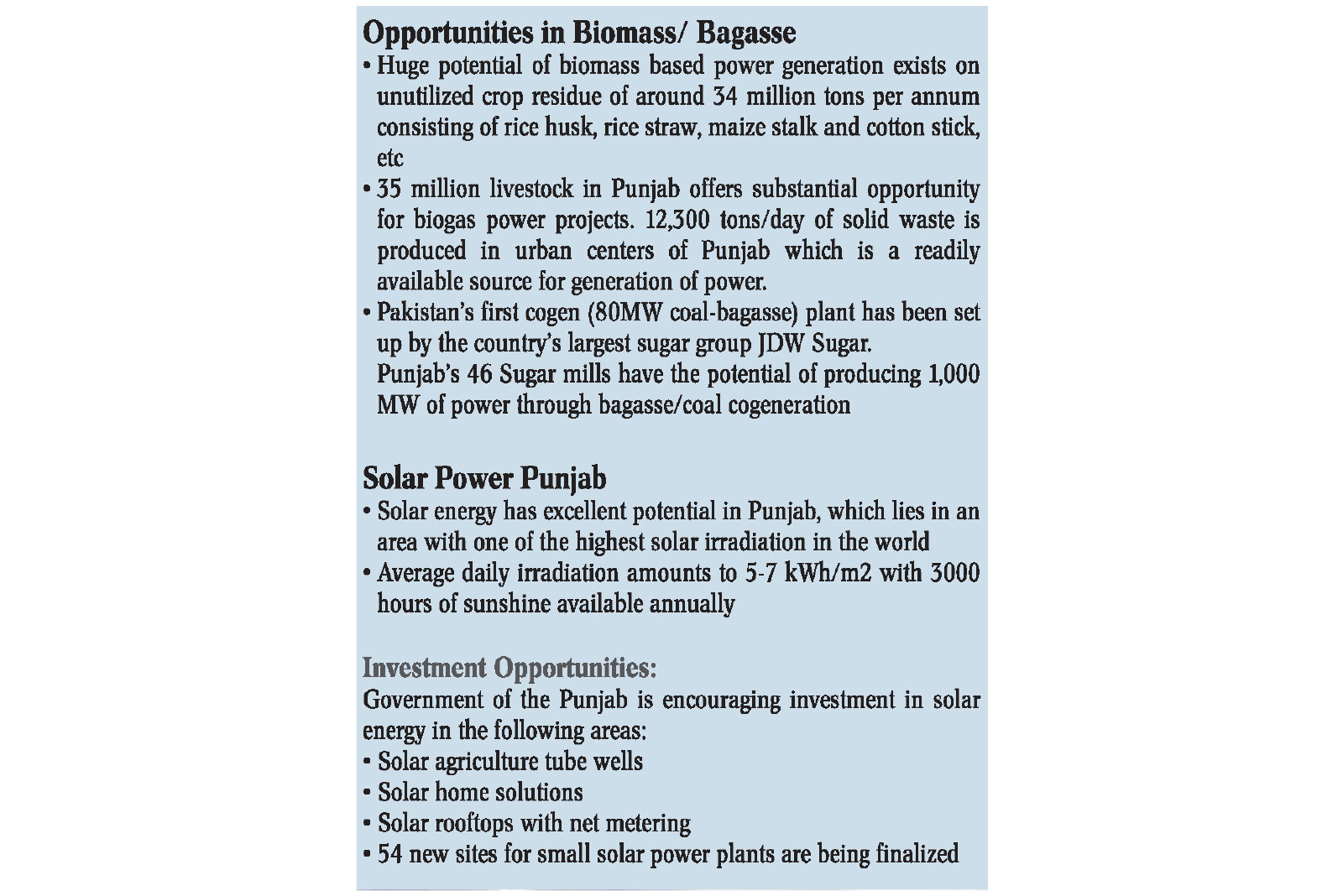
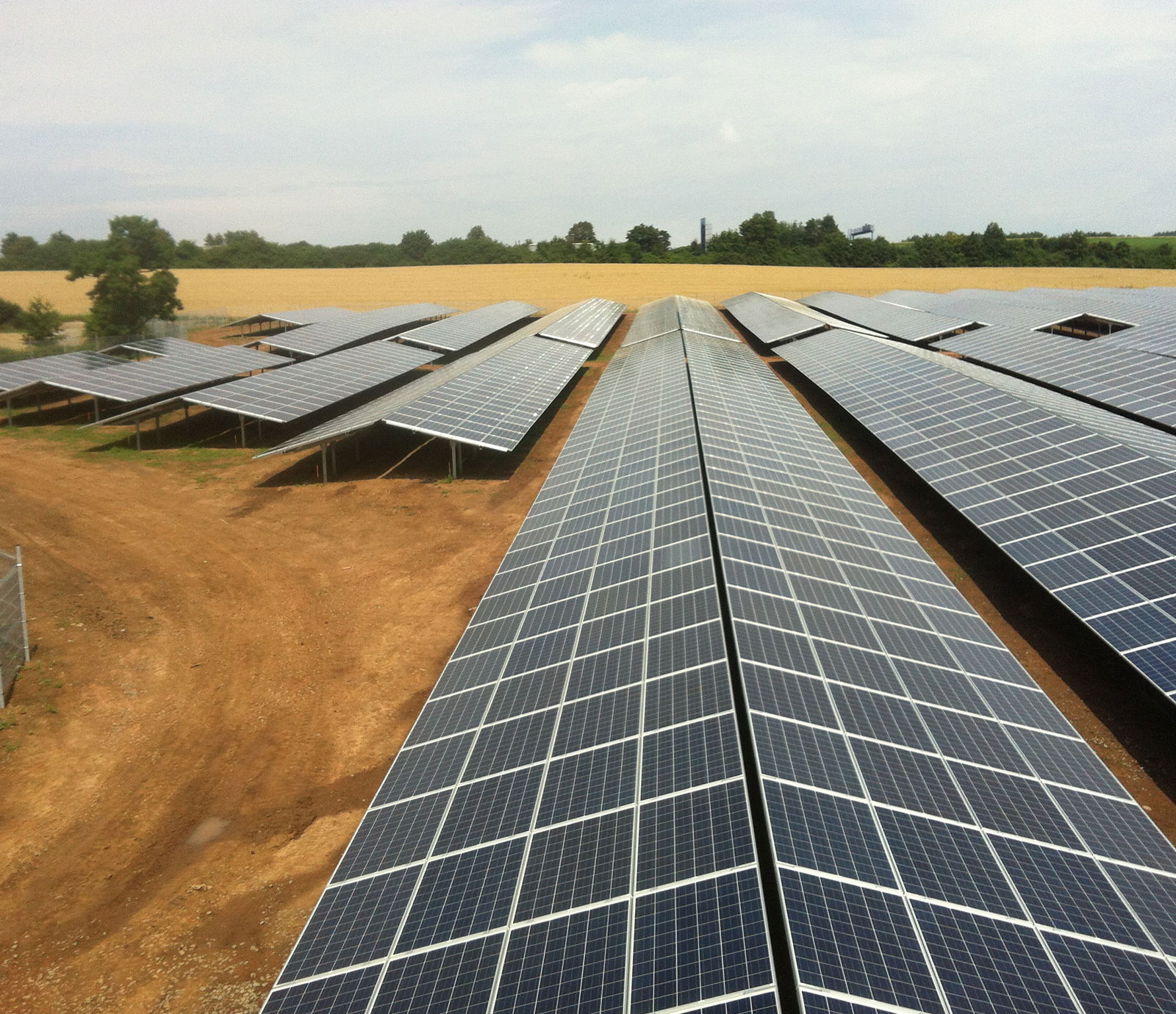
Solar Power Punjab
- Solar energy has excellent potential in Punjab, which lies in an area with one of the highest solar irradiation in the world
- Average daily irradiation amounts to 5-7 kWh/m2 with 3000 hours of sunshine available annually
Investment Opportunities:
Government of the Punjab is encouraging investment in solar energy in the following areas:
- Solar agriculture tube wells
- Solar home solutions
- Solar rooftops with net metering
- 54 new sites for small solar power plants are being finalized
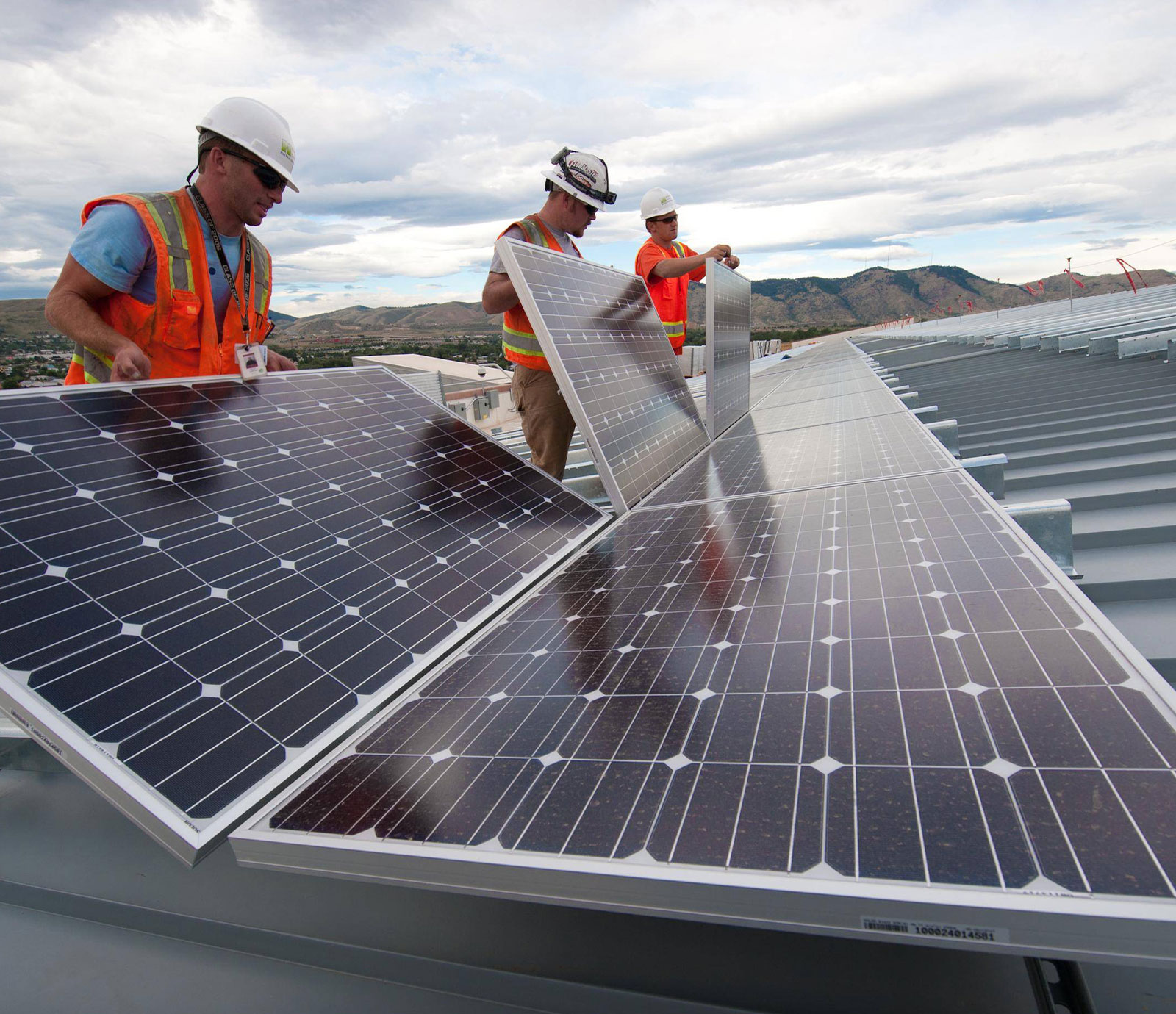
Quaid-e-Azam Solar Park
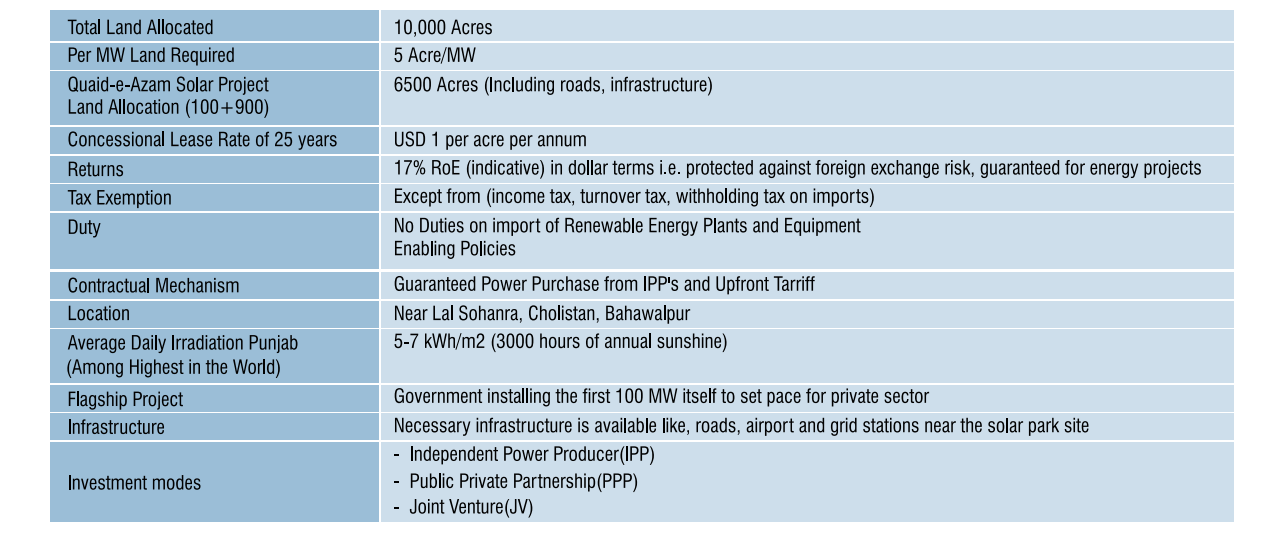
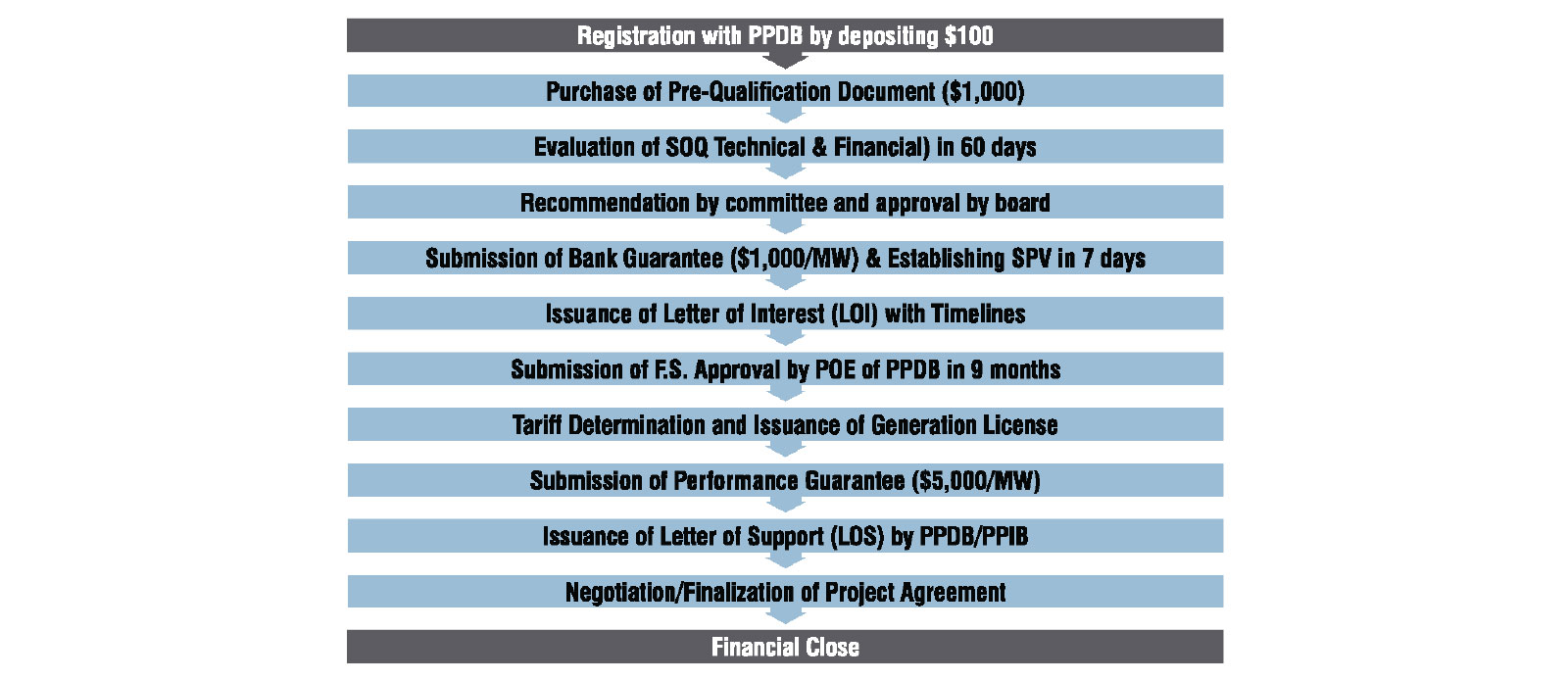
PPDB Solar Power Projects
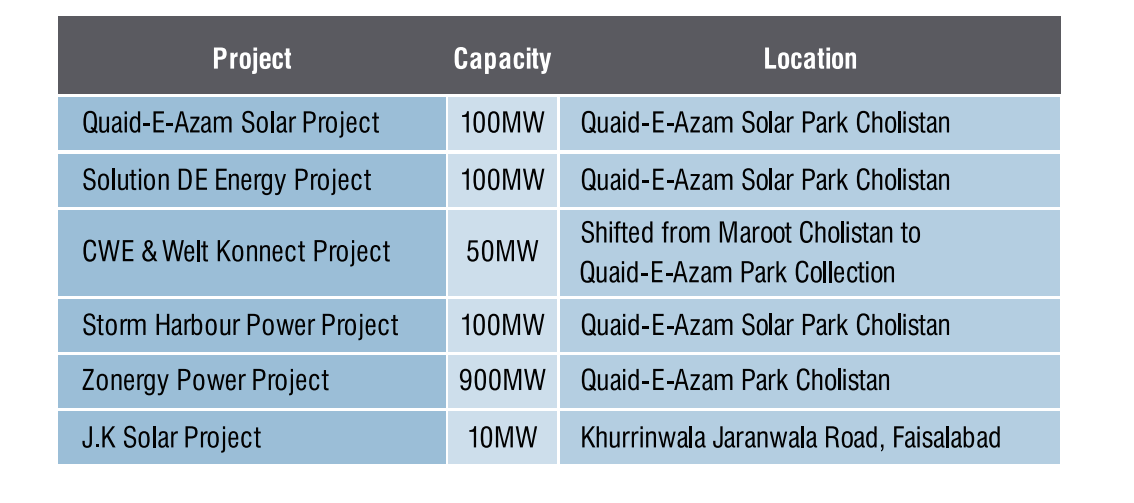
Following Solar Power Projects have been issued LOI by Punjab Power Development Board in IPP mode:
Upfront Tariff for Solar PV Power Projects
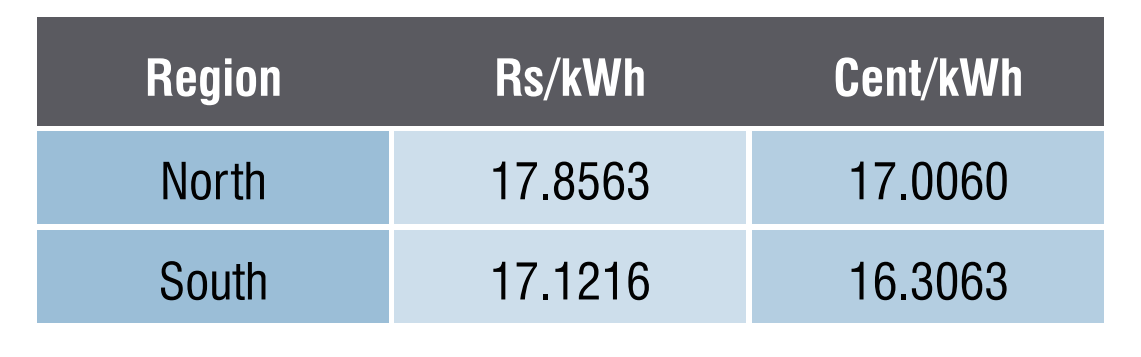
*As Given on AEDB site