Search here
 Log In
Switzerland
Switzerland and Its Society
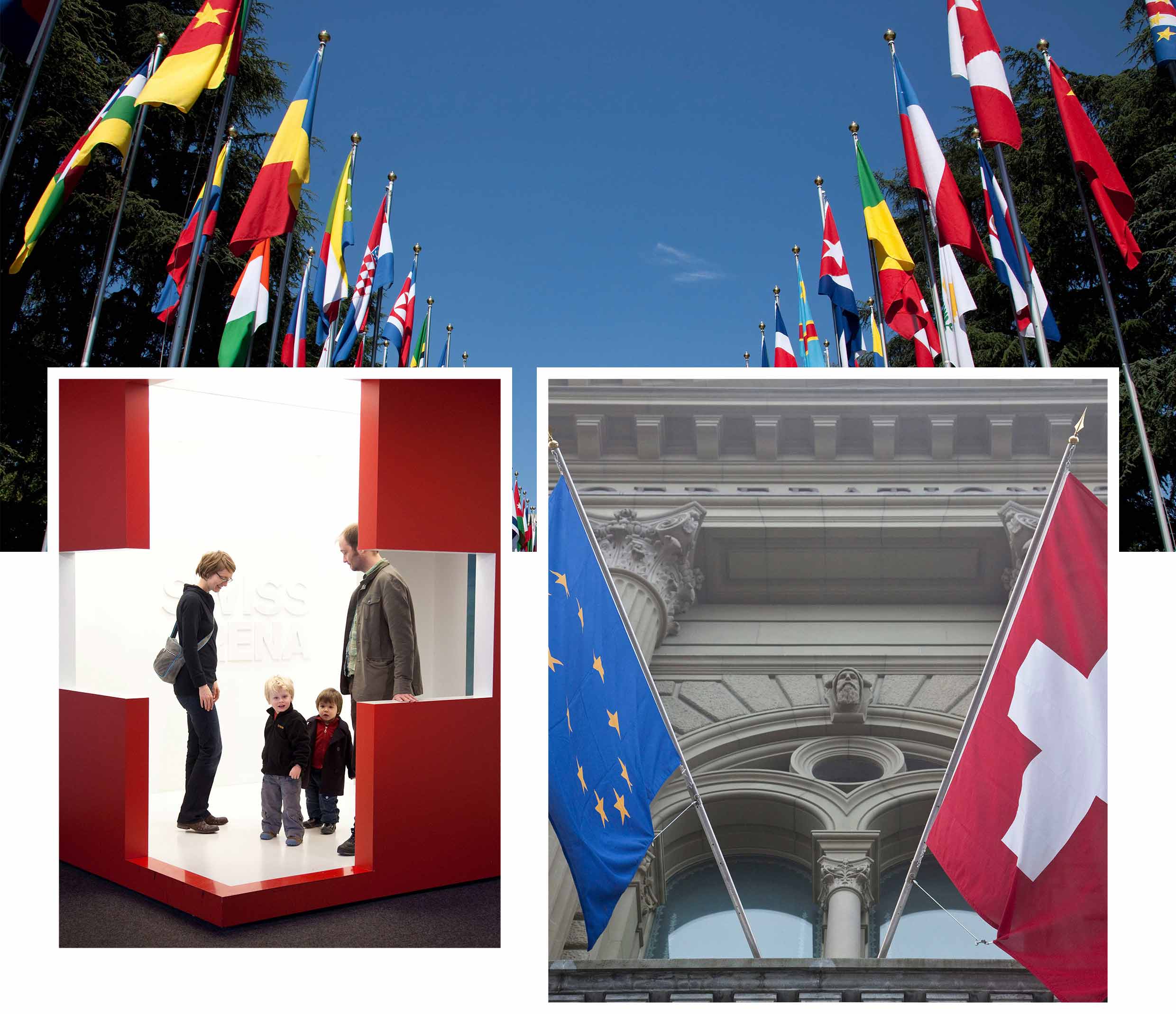
- Switzerland is a landlocked country in the heart of Europe.
- Neutrality is a cornerstone of Swiss foreign policy and prohibits Switzerland from participating in armed conflicts and joining military alliances.
- The resident population of Switzerland is 8.3 million.
- At 24.6%, Switzerland has one of the highest shares of foreigners in Europe. The resident foreign population currently stands at 2 million.
- Average population density in Switzerland is 201 inhabitants per km2.
- Switzerland has four language regions: German, French, Italian and Romansh. Multilingualism is an integral part of Switzerland’s national identity. German is the main language of around 63.5% of the population. However, they do not speak standard German but rather various Alemannic dialects that are collectively known as “Schweizerdeutsch” (Swiss German). French is the main language of around 22.5% of the population. Italian is the main language of around 8.1% of the population. Romansh is the main language of about 0.5% of the population.
- Thanks to its location at the crossroads of three major European cultures (German, French and Italian), Switzerland has a rich and varied arts and culture scene. This situation is also a reason why the country’s artists tend to be outward-looking and incorporate influences from other countries in their work.
- Basel University Library is Switzerland’s largest library, with holdings totaling 8.4 million. • With 55 theatres, the city of Bern has the highest cinema density in Switzerland. There are a total of 272 cinemas in Switzerland.
- Public spending on culture works out at CHF 337 per person, per year.
- Zurich, Geneva and Basel are Switzerland’s major cultural centres.
- The Swiss have one of the highest life expectancies in the world: 80.7 years for men and 84.9 years for women.
- Average household income in Switzerland was CHF 9,604 (approx. USD 10,208) in 2011.
Swiss Political System
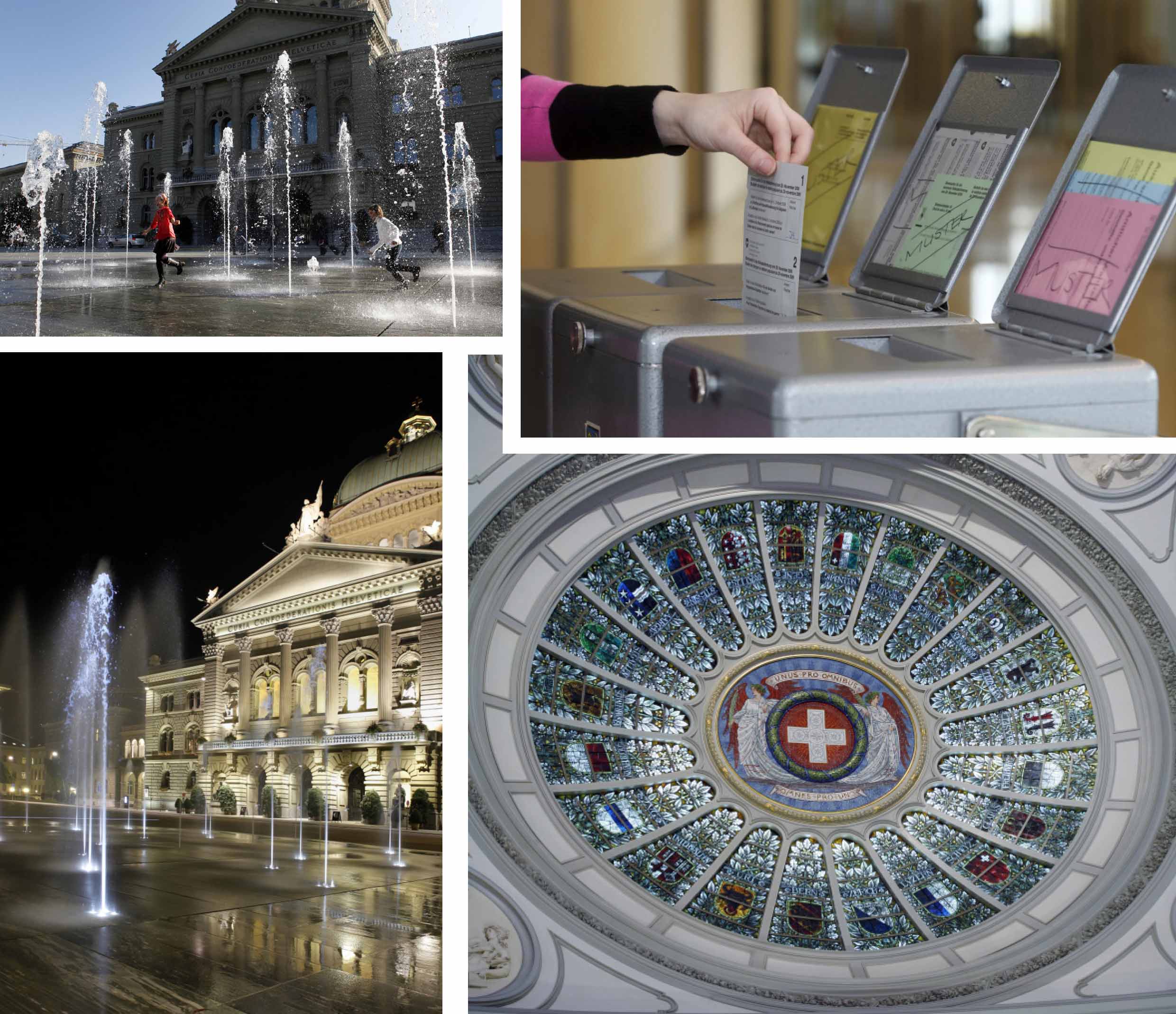
- Federalism and direct democracy reflect the great importance that the Swiss political system places on the freedom of choice and self-determination. The capital city of Switzerland is Bern.
- Three political levels share power in Switzerland: The Confederation, the 26 cantons and over 2,250 communes.
- The Swiss federal government, (the Federal Council), is made up of seven members, who are elected by parliament.
- The Swiss parliament, or (Federal Assembly), has a total of 246 members, who are directly elected by the people. Switzerland has a bicameral parliament: The National Council (200 members) and the Council of States (46 members).
- 13 political parties are represented in the Swiss parliament. Those parties with the largest share of the popular vote are represented on the Federal Council.
- Direct democracy is one of the special features of the Swiss political system. It allows the electorate to express their opinion on decisions taken by the federal parliament and to propose amendments to the Federal Constitution.
Swiss Economy
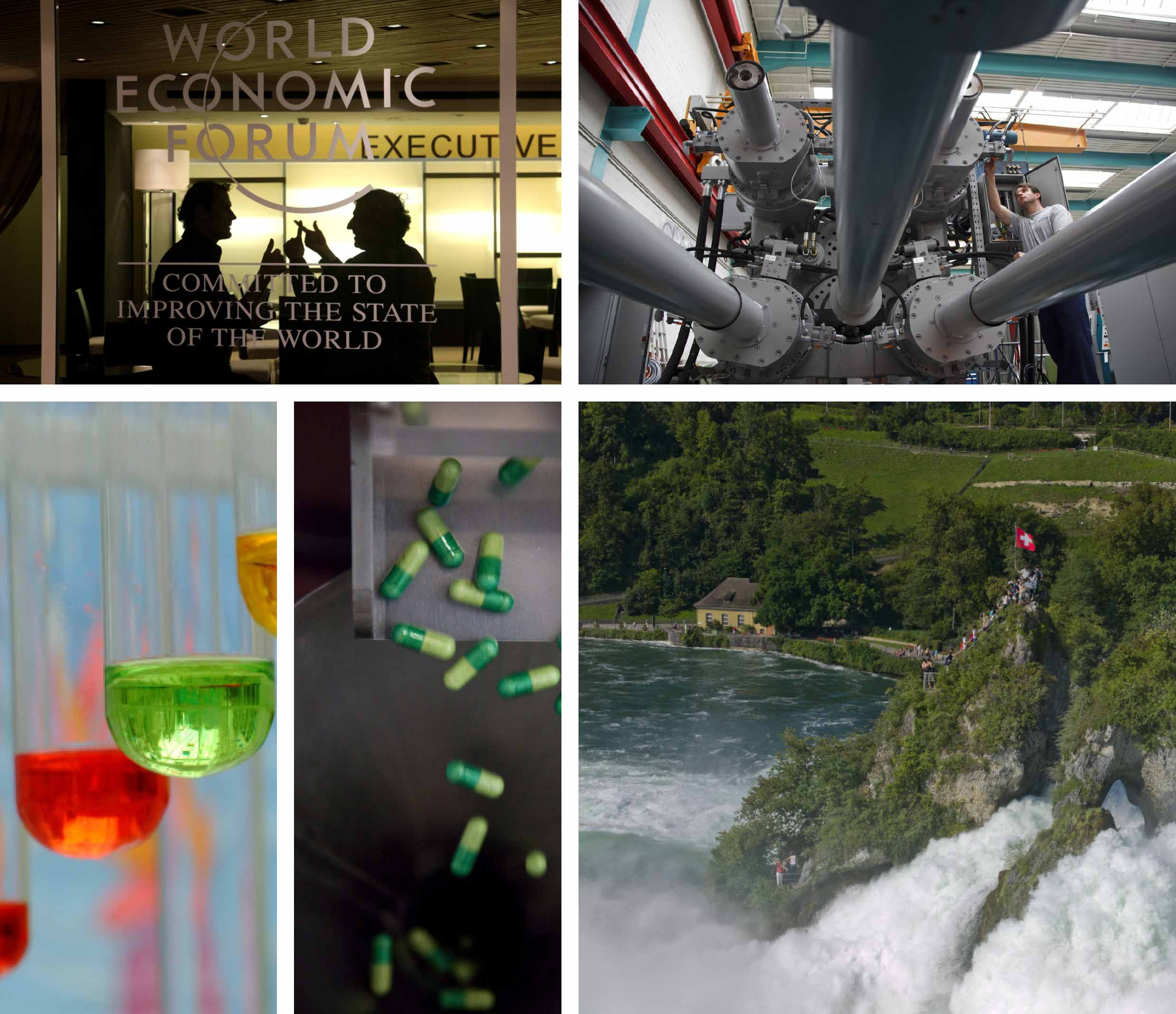
- Switzerland has the fifth highest gross domestic product (GDP) per capita in the world. At the end of 2012, Swiss GDP per capita stood at CHF 74,010 (approx. EUR 61,300 or USD 81,000).
- About 72% of Swiss GDP is generated by the service sector and 27% by industry.
- Most Swiss firms (over 99%) are small- and medium-sized enterprises (SMEs). These are defined as companies with fewer than 250 employees.
- Private individuals and businesses pay direct taxes, which make up roughly 70% of total tax revenue. Indirect taxes make up around 30% of all tax revenue in Switzerland.
- Switzerland has the lowest rate of value-added tax in Europe. 8% is levied on most goods and services, 3.8% on accommodation services, and 2.5% on basic necessities and other everyday items.
- Switzerland is one of the world’s most important commodities trading hubs. It is the world market leader in crude oil, coal, cotton, and cereals trading. There are 570 commodities-trading companies in all in Switzerland, most of which are located in the Geneva and Lausanne regions, in the canton of Zug, and in Lugano.
- The Swiss watchmaking industry has conquered the world with its high-quality products. There are around 600 watchmaking firms in Switzerland, most of which are based in Geneva and the Jura Arc
Science and Research in Switzerland
- Switzerland is not only one of the world’s most innovative research nations, but also one of the most competitive.
- Switzerland is one of the highest spenders on research and development in the world.
- Every year Switzerland spends close to 3% of its GDP, more than CHF 16 billion (around CHF 13 billion or USD 18 billion), on research and development. Over three-quarters of this funding come from the private sector.
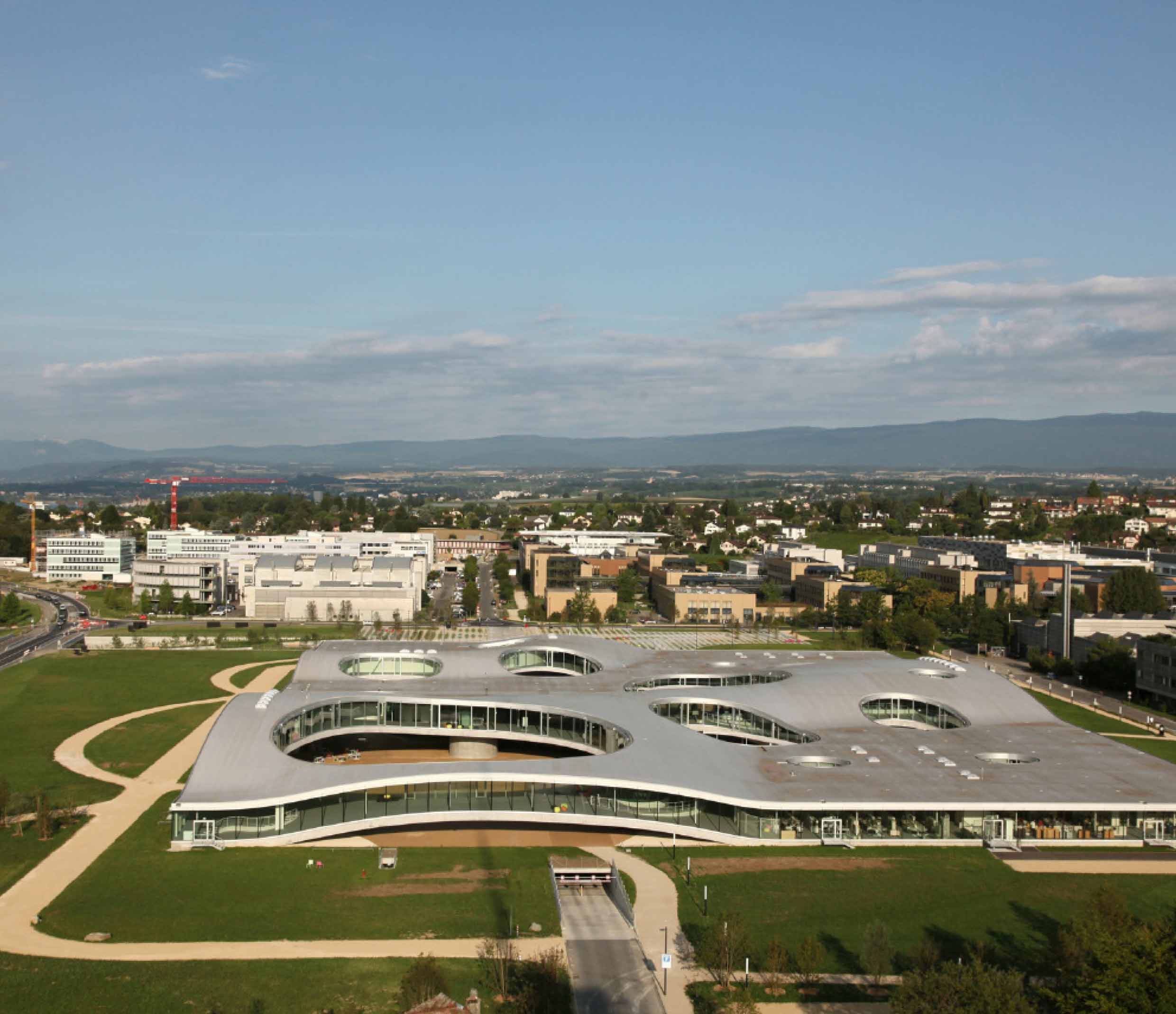
- The universities and the two federal institutes of technology – the Federal Institutes of Technology in Zurich and Lausanne – focus primarily on basic research. Universities of applied sciences and the private sector concentrate on applied research and responding to the needs of the economy.
- Swiss researchers produce roughly 1.2% of all scientific papers published worldwide, putting it in 17th place in international rankings. If we consider the actual number of papers produced in proportion to the country’s population, Switzerland comes top of the class, with an average of 3.6 publications per 1,000 inhabitants. These papers are also internationally acclaimed: in terms of impact, only the United States outperforms Switzerland (above the global average of 17%).
- In 2012 Swiss researchers published a total of 36,042 scientific papers.
- 23,269 patents were filed in Switzerland in 2012.
- Switzerland ranks first in the Global Innovation Index 2013, published by Cornell University, INSEAD and the World Intellectual Property Organisation (WIPO).
- Since its founding in 1952, the Swiss National Science Foundation (SNSF) has reviewed more than 70,000 research funding applications and has enabled over 20,000 talented young researchers to undertake a research period abroad.
- Switzerland’s two national universities, the federal institutes of technology, in Zurich und Lausanne, are renowned worldwide for their cutting-edge scientific output. They also have long attracted foreign researchers and lecturers, with over 50% of teaching staff in both institutes hailing from outside Switzerland.
- The Federal Institute of Technology Zurich (ETHZ) came 12th in the 2013 QS World University Rankings.
Swiss Innovation: Solar Impulse
Around the World in a Solar Powered Aircraft
TWO PIONEERS FLEW AROUND THE WORLD IN A SOLAR AIRPLANE TO PROMOTE CLEAN TECHNOLOGIES
THE FOUNDERS AND PILOTS
By pushing back, the boundaries of the possible, going into the unknown and taking on a project deemed unfeasible by industry experts, Bertrand Piccard and André Borschberg wanted to support concrete actions for sustainability and show that the world can be run on clean technologies.
BERTRAND PICCARD
(Initiator and Chairman) A medical doctor, explorer and lecturer, achieved the first ever non-stop round-the world balloon flight. Initiator of Solar Impulse, he brought together the partners to fund this project. Linking science with adventure to promote clean technologies, he develops the project’s philosophy and outlines its symbolic and political reach.
ANDRÉ BORSCHBERG
(CEO & Co-Founder) An engineer by education and an entrepreneur, André Borschberg has solid experience in creating and managing companies, as well as in flying. His passion for aviation and his interest in innovative solutions have led him to develop the strategy to design and build the Solar Impulse airplanes and to organize the flight
THE FIRST ROUND - THE WORLD SOLAR FLIGHT
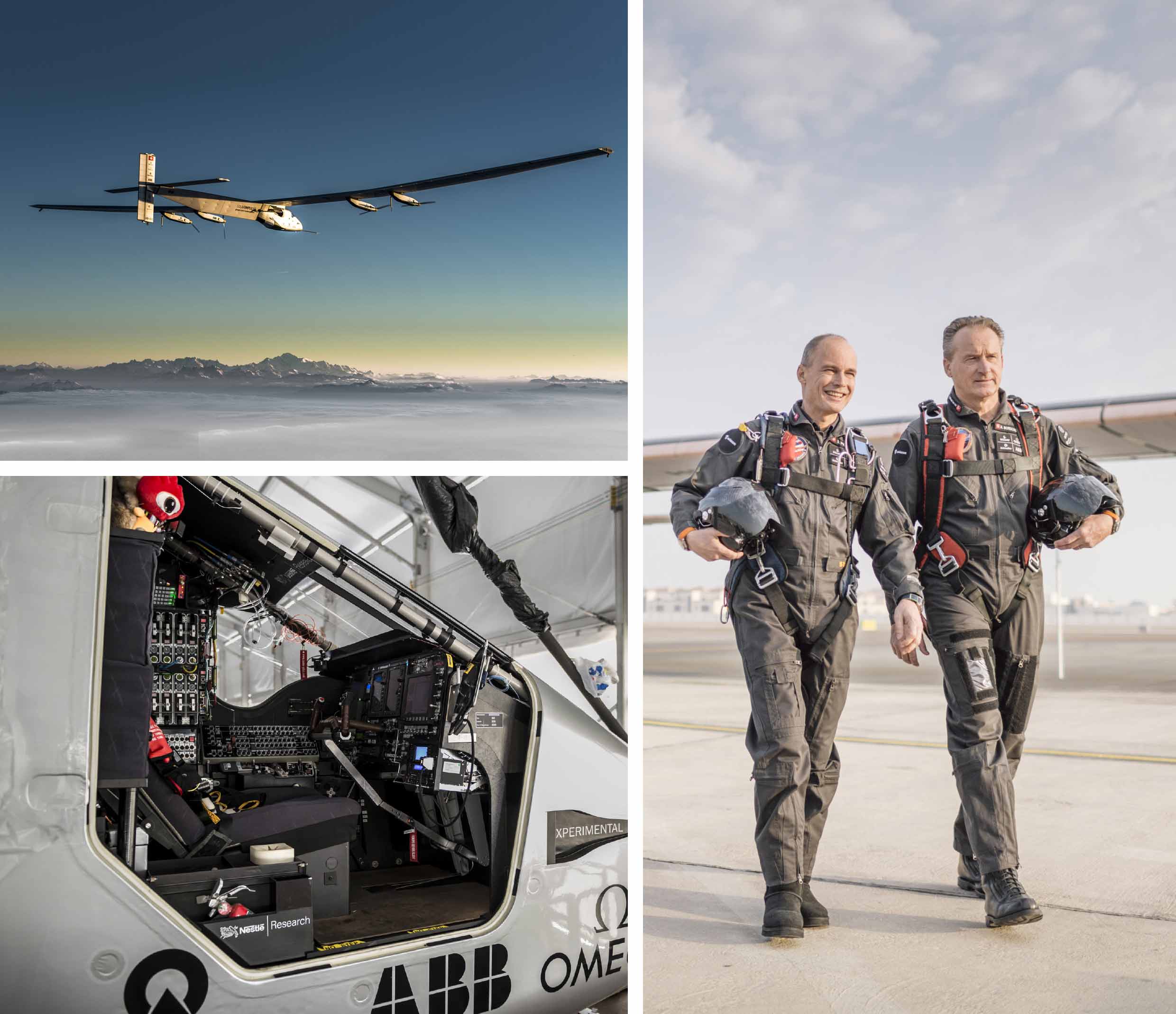
Taking turns in the single-seater 3.8m3 cockpit, Bertrand Piccard and André Borschberg flew Si2 around the world in 23 days, 43’041 km and 17 legs, crossing Asia, the Pacific Ocean, the USA, the Atlantic Ocean, the Mediterranean Sea and the Middle East. This landing in Abu Dhabi on 26 July 2016 with Bertrand Piccard at the controls brought full circle the historic circumnavigation that began on 9 March 2015 when Si2 set off from Abu Dhabi piloted by André Borschberg.
A total of 19 world records were set or are still pending by the World Air Sports Federation (FAI), in particular when André Borschberg accomplished the pioneering first of flying five consecutive days and nights over the Pacific Ocean from Japan to Hawaii in the longest duration a solo airplane of any kind has ever flown and when Bertrand Piccard achieved the historic first crossing of the Atlantic Ocean in a solar airplane.
KEY MILESTONES OF THE PROJECT
| 1999 | Bertrand Piccard’s vision |
| 2003 | EPFL Feasibility study led by André Borschberg |
| 2004
– 2009 | Start-up financing, design and construction of Solar Impulse 1 |
| 2010 | First ever solar-powered day and night flight (André Borshberg |
| 2011 | Special guest at Paris-le-Bourget International Air Show |
| 2012 | First intercontinental solar flight across the Mediterranean to Morocco (Bertrand Piccard) |
| 2013 | Across America Mission from San Francisco to New York City |
| 2014 | Solar Impulse 2 maiden flight |
| 9 March 2015 | Departure for the first Round The World Solar Flight from Abu Dhabi (André Borschberg |
| 26 July 2016 | Completion of the first Round The-World Solar Flight from Abu Dhabi (Bertrand Piccard) |
THE VISION
Solar Impulse started off with Bertrand Piccard’s vision of building an airplane capable of flying night and day without using any fuel, propelled solely by solar energy. The aim of the project was to develop a symbol which would attractively promote a pioneering and innovative spirit, particularly in the field of renewable energy and clean technologies.
Solar Impulse’s goal was to demonstrate that clean technologies, such as the ones used on the Solar Impulse airplane, have the potential to change lives, societies and future markets in an unprecedented way. Solutions exist to run the world on clean technologies.
“If an airplane can fly day and night without fuel, everybody could use these same technologies on the ground to halve our world’s energy consumption, save natural resources and improve our quality of life. Our hope is to motivate everyone to reduce their dependence on fossil fuels in their daily lives and encourage concrete actions for sustainability,” Bertrand Piccard
THE DEVELOPMENT AND DESIGN
To translate Bertrand Piccard’s vision into reality, it took more than ten years of calculations, simulations, construction and testing by a technical team brought together and led by André Borschberg. As a result, the Solar Impulse 2 – a genuine flying laboratory and concentration of clean technologies – flew around the world with no fuel. To take up the challenge of achieving the first Round-The-World Solar Flight, each link in the propulsion chain, from the solar cells to the propellers, had to be optimized.
| Single-seater aircraft made of carbon fiber |
| Unpressurised and unheated cockpit of 3.8m3 / 134ft3 |
| Wing Span: 72m / 236ft (larger than a Boeing 747: 68m / 223ft) |
| Length: 25 m / 82ft |
| Weight (empty): 2300kg / 5100lb (equals an empty family car) |
| Cruising Speed: 45-55km/h / 28-34mph (25-30 KIAS (Knots-Indicated Air Speed) at sea level) |
| Max. Altitude: 8’500m / 28’000ft (Flight Level: 280) |
| 17,248 solar cells built into the wings that power the four batteries (38.5kWh per battery) that in turn power the four electric engines (13.5kW / 17.5hp each) and the propellers |
| The propulsion system is 93% efficient i.e. only 7% energy loss compared to a car that loses 70% |
“From the beginning, we knew that the plane would require a large wingspan to reduce drag and a large surface to insert enough solar cells and produce sufficient energy whilst at the same time have an ultra-light structure to save a maximum amount of energy and fly throughout the night on batteries. The aircraft structure uses the most advanced technologies and has stimulated scientific research in the fields of composite structures, lightweight materials, electric propulsion and methods for managing and storing energy,” André Borschberg
CLEAN TECHNOLOGY SOLUTIONS
When Solar Impulse was initiated in 2003, the aviation industry thought that a flight around the world powered by solar energy was infeasible. Therefore, Bertrand Piccard and André Borschberg searched for the necessary knowledge elsewhere. It’s thanks to a diversified team with a positive outlook and a wide network of partnerships that Solar Impulse has been able to develop technologies that give solutions capable of meeting many of the many challenges facing our society today. Indeed, the energy efficient solutions developed by Solar Impulse can already be used in electrical networks, houses, cars as well as IT equipment and household appliances.
“All the technologies developed with our partners, such as electrical motors with 97% efficiency, LED lamps for public/private lightening system, extremely efficient insulation foam that can reduce energy consumption for houses, light materials, high energy density batteries and ultra-thin solar cells, can be used on the ground to contribute to a cleaner and more sustainable world,” Bertrand Piccard.
“Just imagine your energy reserves increasing during flight! To make this dream a reality, we had to make maximum use of every single watt supplied by the sun, storing any surplus in our batteries. We tracked down every possible source of energy efficiency,” André Borschberg
THE PICCARD FAMILY HERITAGE
Solar Impulse continues in the long tradition of the Piccard family – three generations of Swiss pioneers: Auguste, Jacques and Bertrand – having featured scientific exploration and protection of the environment from the skies to the ocean abyss.
“All my education was about pioneering, with the stories of my grandfather being the first person to explore the stratosphere and to see the curvature of the Earth, and my father diving with his Bathyscaphe to the deepest place under the sea, in the Marianna Trench. I was deeply inspired by my family, from whom I learned about the spirit of exploration, curiosity and perseverance,” Bertrand Piccard.
ADVOCACY
Through Solar impulse, Bertrand Piccard also actively promotes the use of new modern clean technologies as an opportunity for change seeking to influence decisions and bring progress within political, economic, and social systems and institutions. His message conveys a visionary approach: solving climate change is not an expensive problem, but rather a unique opportunity for profit and job creation. Climate change, and in particular CO2 emissions, are mainly caused by inefficient energy sources. If those outdated technologies were to be replaced with modern technologies, such as the ones used on the Solar Impulse 2 aircraft, the energy consumption of the world, and therefore the C02 emissions, could divide by two.
“If an airplane can fly day and night without fuel, everybody can use these same technologies on the ground to halve our world’s energy consumption, save natural resources and improve our quality of life. Solar Impulse is a perfect example to illustrate that solving climate change is a profitable opportunity, not an expensive problem, and that it is possible today to bridge ecology and economy,” Bertrand Piccard
Swiss Energy Conservation and Environment Friendly Measures
- Switzerland covers a total surface area of 41,285 km2. Approx. 30% of Switzerland’s surface area is covered in forests.
- Average energy consumption per person in Switzerland has fallen by around 6.1% since 1990.
- Switzerland’s energy policy aims by 2020 to reduce the country’s consumption of fossil fuels by 20% and increase the share of renewable energy by 50%.
- At present, Switzerland is in the midst of an energy transition. One of the aims of the country’s “Energy Strategy 2050” is the phase-out of nuclear power.
- 13% of Switzerland’s road cargo traffic through the Alps will be shifted to rail – in 2020 this will be the equivalent of around 180,000 lorry journeys.
- Mobility car sharing gives its 100,000 members access to approx. 2650 vehicles in 1,380 locations across the country.
- Switzerland has over 60,000 km of footpaths – 1.5 times the circumference of the Globe.
Key Aspects of Environmental Protection in Switzerland
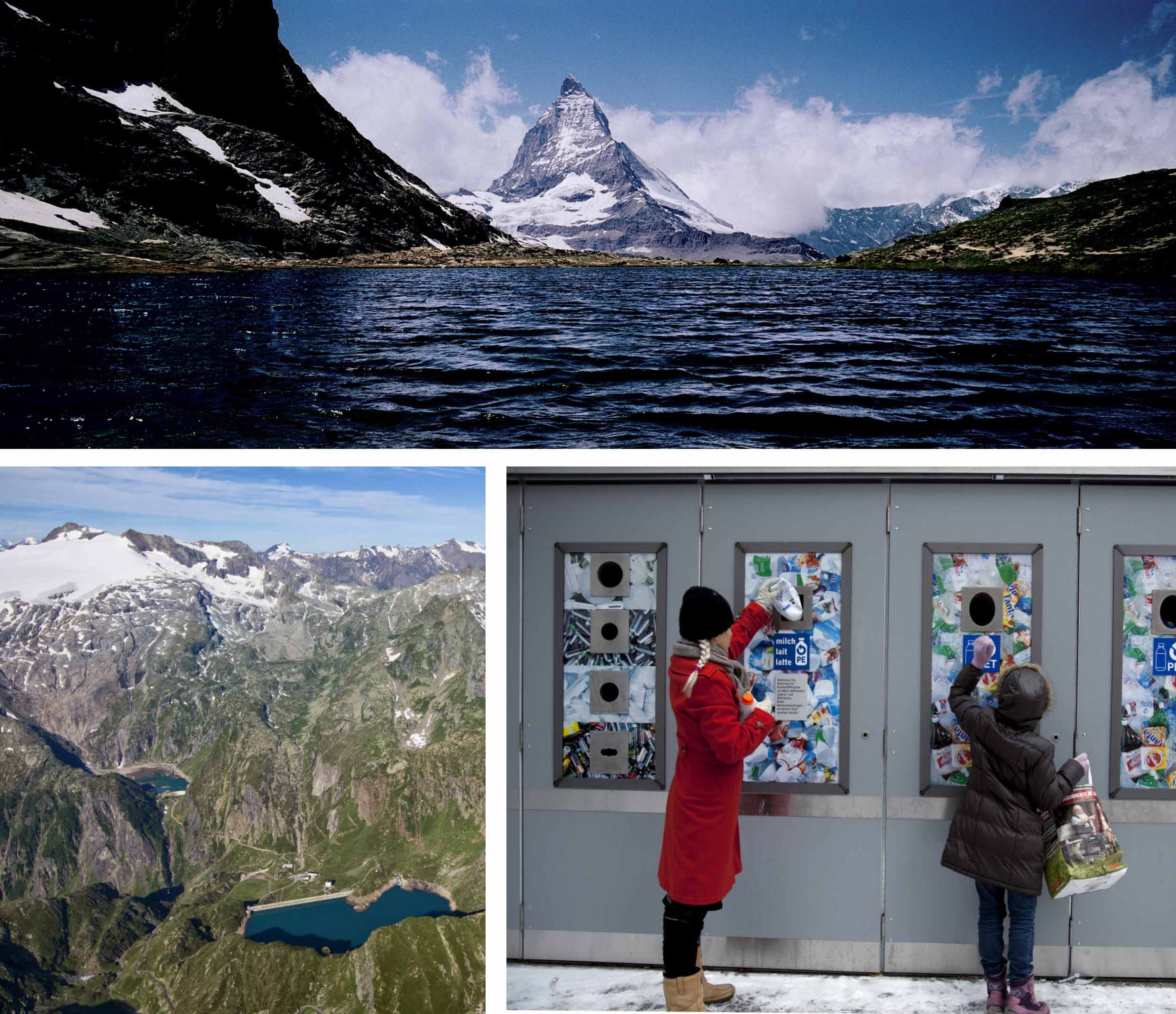
Lakes, mountains and clean air are associated with Switzerland’s quality of life. Beyond its picture postcard image, the natural environment is an integral part of Switzerland’s identity and has forged the national spirit. To safeguard this environmental heritage, the Federal Council and the people of Switzerland have implemented a series of concrete measures in recent years. Here are some of the key aspects of Switzerland’s environmental policy.
PROTECTION OF NATURAL RESOURCES
Population growth, increasing consumption and economic development: these are the three biggest factors impacting on natural resources. To ensure their sustainability, Switzerland encourages its citizens to consume resources responsibly and has put in place an environmental policy that promotes optimal techniques for their use. One area of action, for example, is to give priority to renewable energy in the use and production of resources. The policy on waste and primary products is to be developed as part of the green economy with the aim of further closing materials cycles, promoting the recycling of primary products, reducing both the demand for them and the creation of waste products.
HIGHER DENSITY URBAN PLANNING
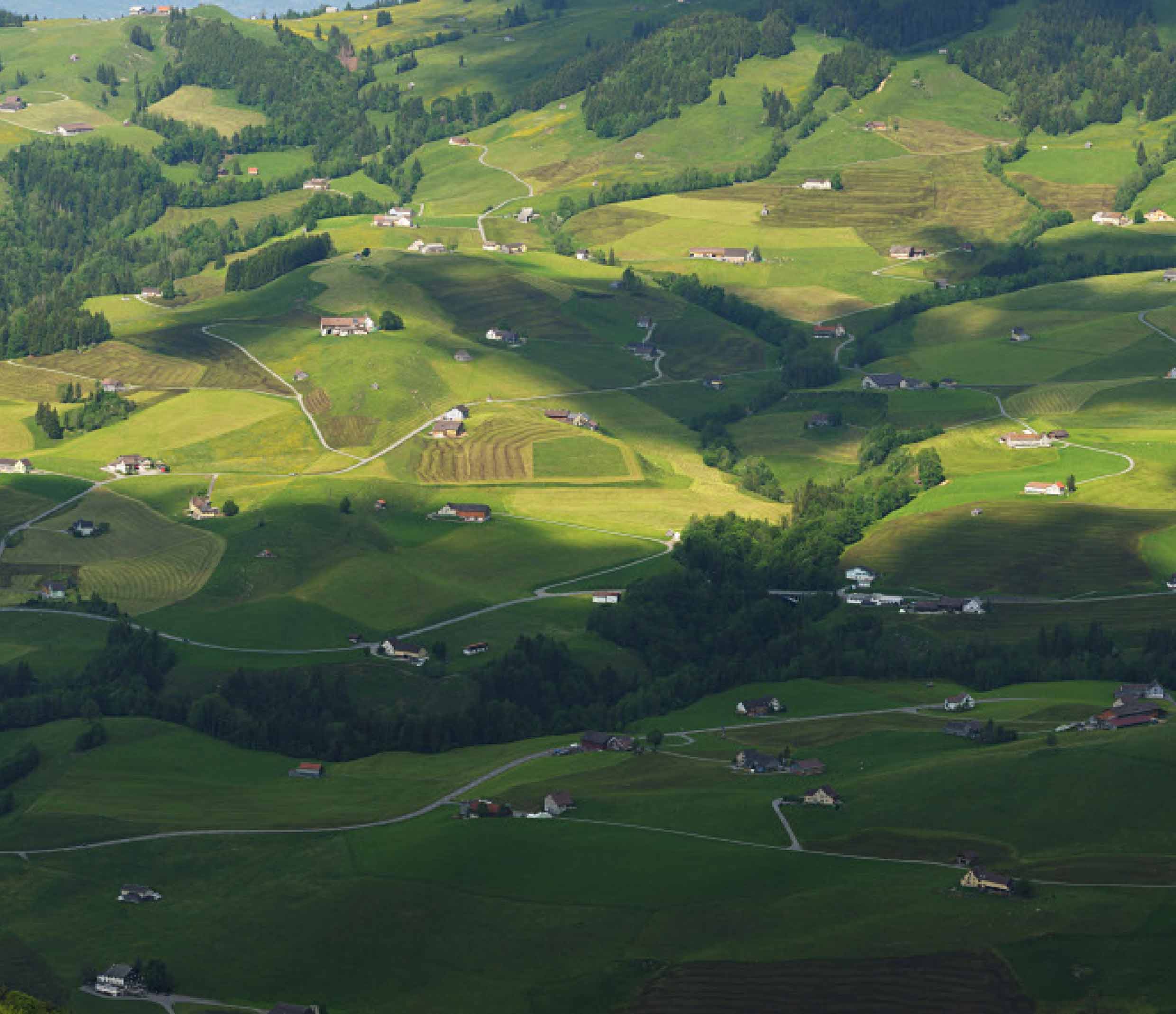
Urbanisation is in a constant state of change. It involves, however, the risk of urban sprawl where residential areas extend over wide areas with low density housing. The Spatial Planning Act, which was accepted by the people of Switzerland in March 2013, has two main objectives: to use available space more economically and to combat the excessive spread of building zones. This is an effective way to limit urban expansion and construction on farmland.
CONTRIBUTION TO THE FIGHT AGAINST GLOBAL WARMING
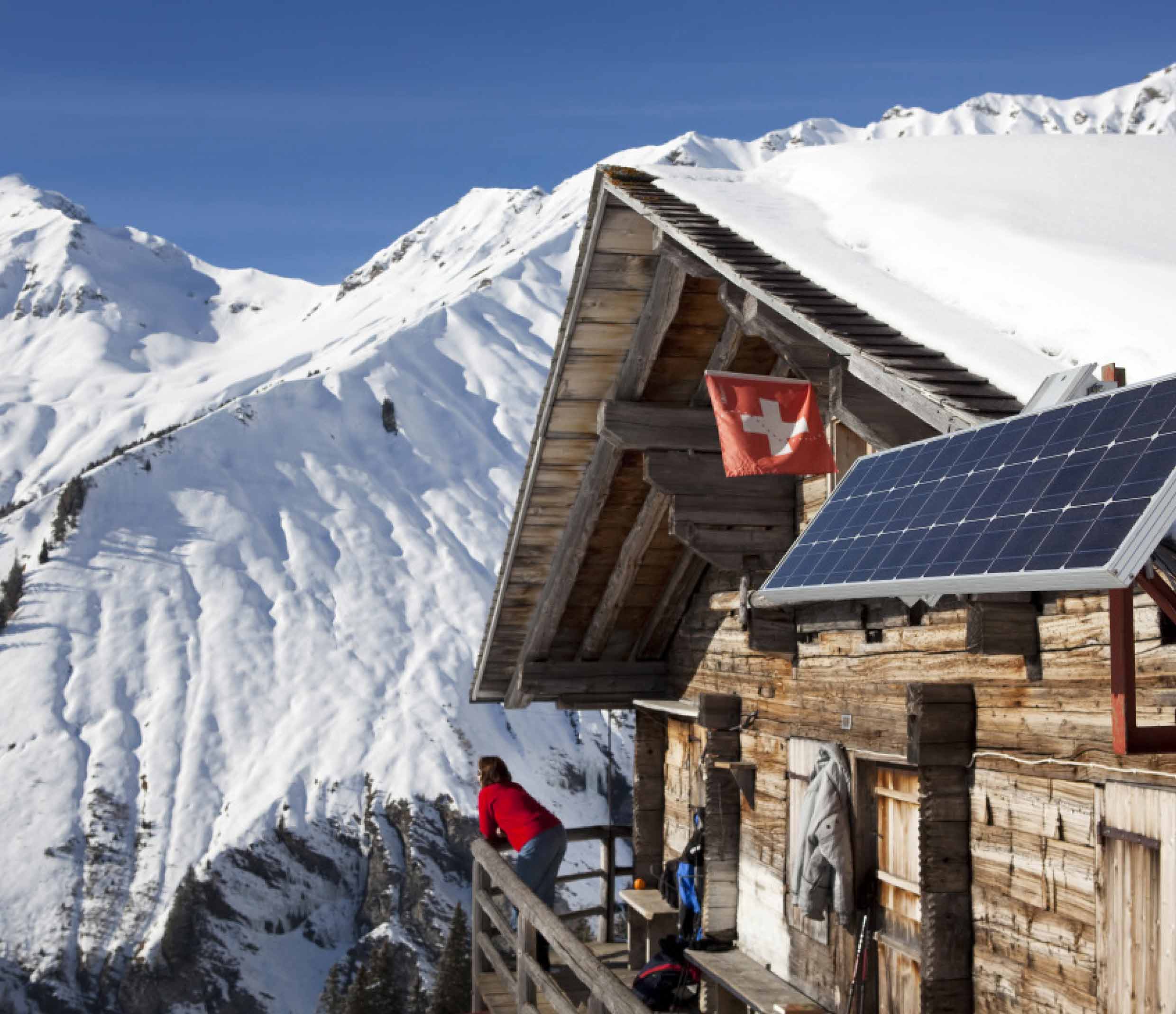
Climate warming is a global problem. In Switzerland, various steps have been taken to limit the increase in atmospheric temperature to less than 2°C. The focus is on reducing the emissions of greenhouse gases, one of the main causes of global warming. In addition to a plan of action adopted in 2014, the carbon tax has been revised upwards. This affects in particular the construction and transport sectors, two major CO2 emitters.
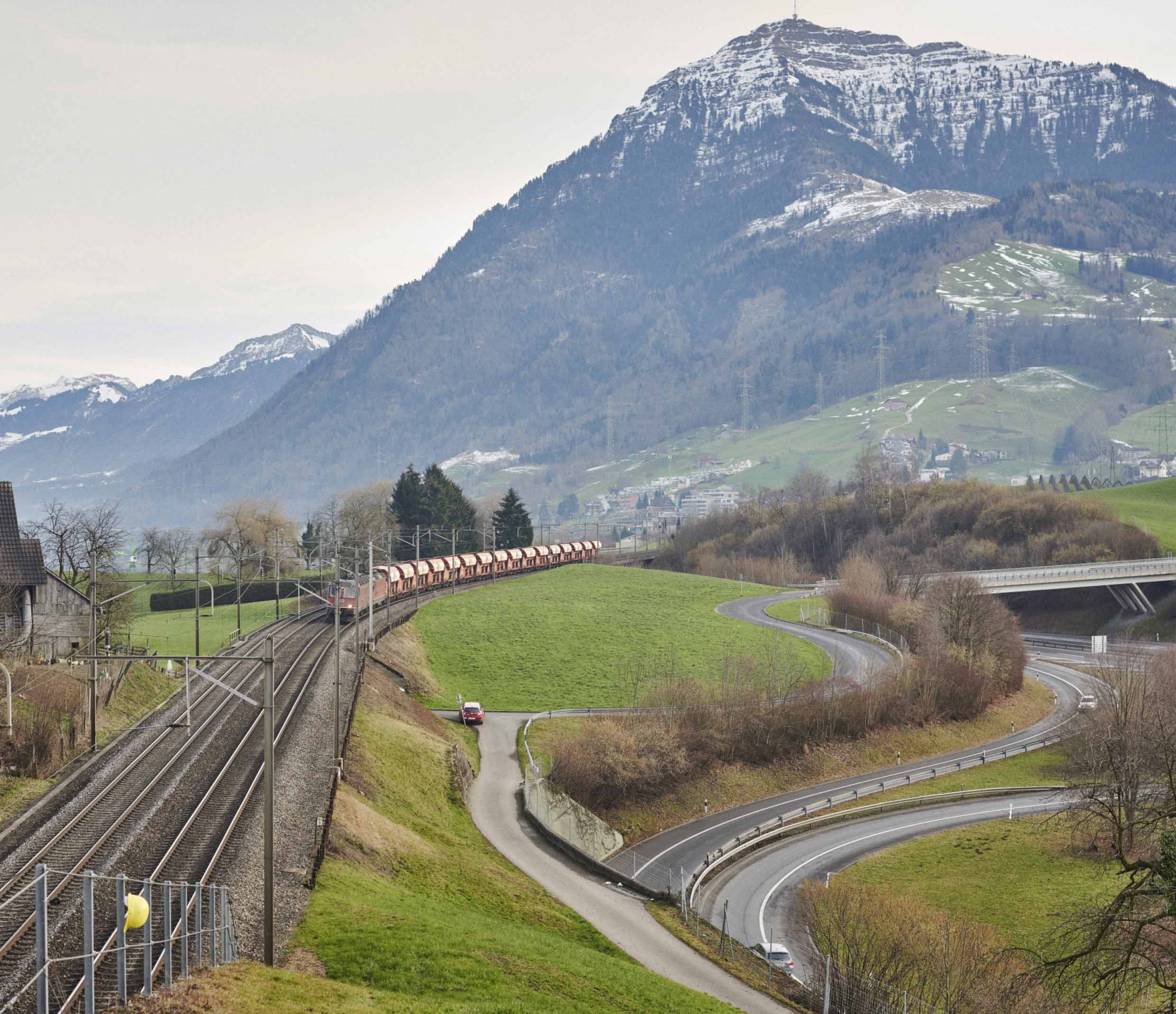
PRESERVATION OF WATER QUALITY: A NATIONAL RESPONSIBILITY
Switzerland, which on occasions is referred to as Europe’s water tower, has many lakes and waterways, such as the Rhine and the Rhone, whose sources are in Switzerland. The water purification stations which were built in the 1960s and 70s guarantee very high water quality. To eliminate micro pollutants caused by phytosanitary products in agriculture, Switzerland decided to add a new step in the treatment of waste water in a hundred or more water treatment plants. The state of Swiss waterways is expected to improve by 2030 thanks to the new constructions under way and the renovation of existing water-treatment plants.
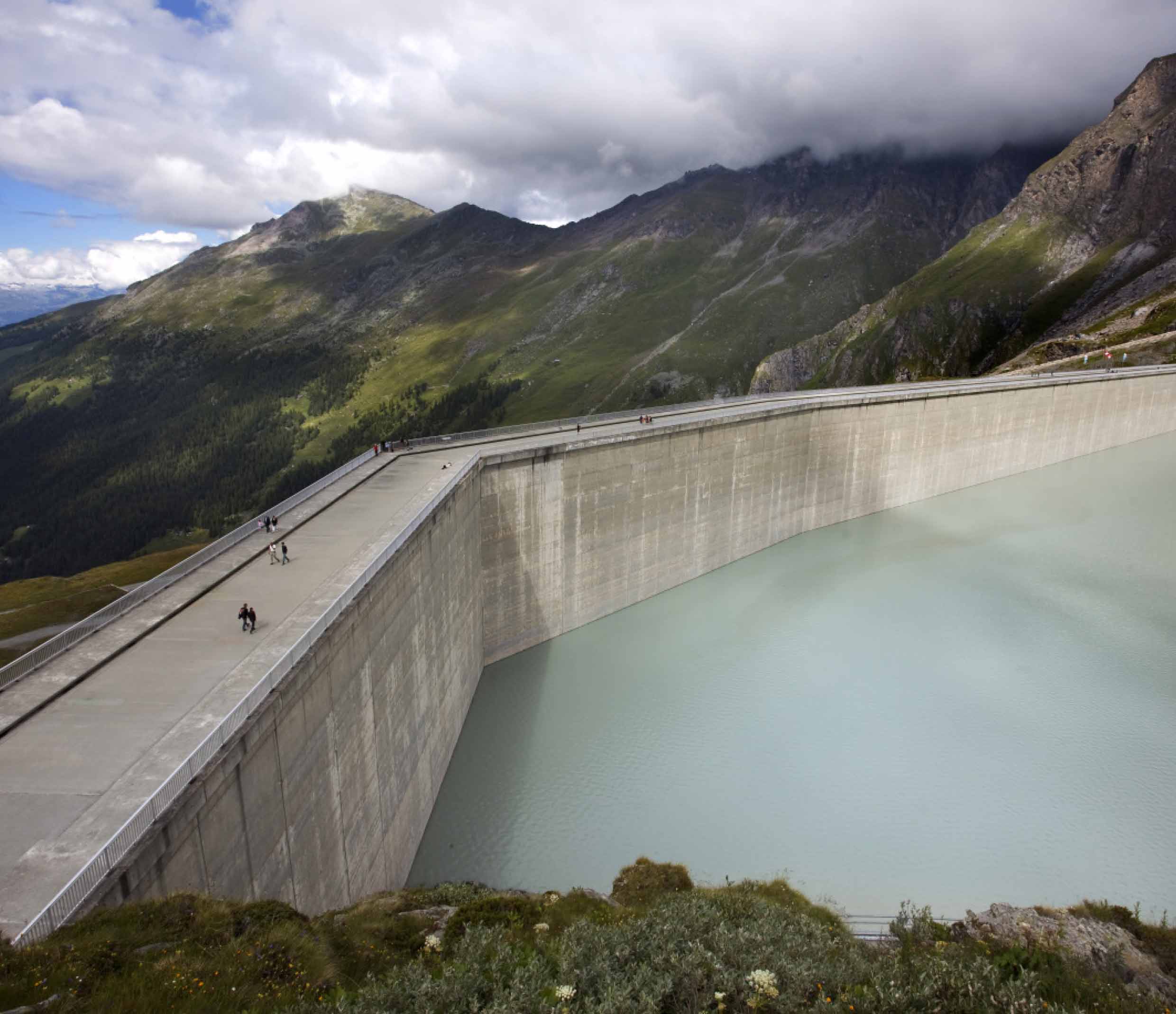
SOILS, A RICH ASSET FOR ENVIRONMENTAL EQUILIBRIUM
Soil is an essential part of environmental cycles and facilitates in particular the absorption of rainfall and the replenishment of groundwater tables. Nevertheless, urbanisation and natural reforestation are reducing the total area of available fertile land every year. The Federal Council has responded: it now supports farmers by offering them the tools to limit permanent damage caused by their use of the land, and trains specialists who advise building contractors on major development projects.
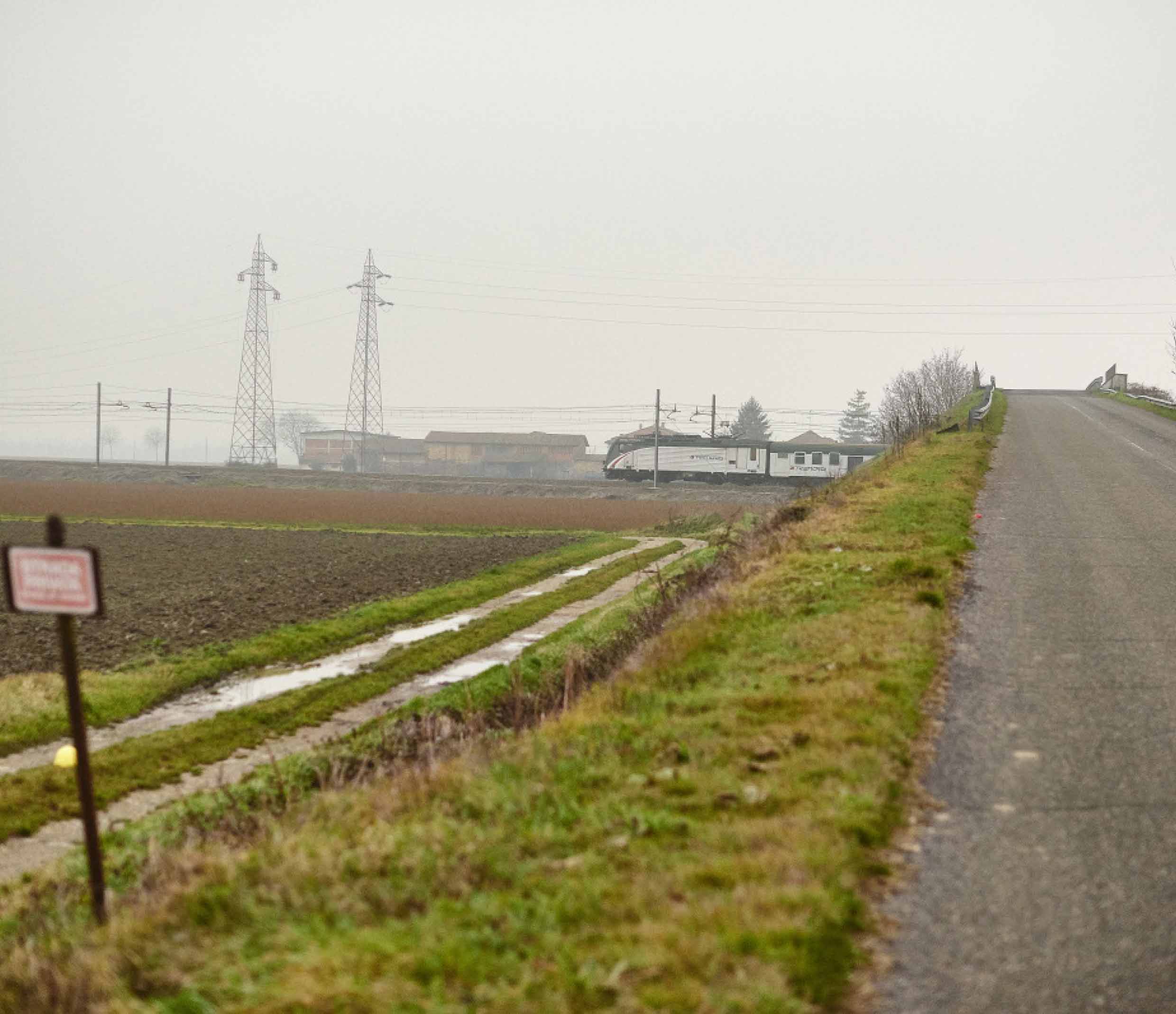
MAINTAINING BIODIVERSITY: LONG-TERM COMMITMENT
The differences in altitude, climate and types of soil have created a wealth of biodiversity in Switzerland with more than 50,000 living species. For some years the reduction in the area of natural habitats is having a negative impact on the balance of fauna and flora. More than 30% of species surveyed are currently under threat. In 2012, the Federal Council set 10 objectives in Switzerland’s strategy on biodiversity, including the definition of protected zones that spearheads the action plan for managing biodiversity.
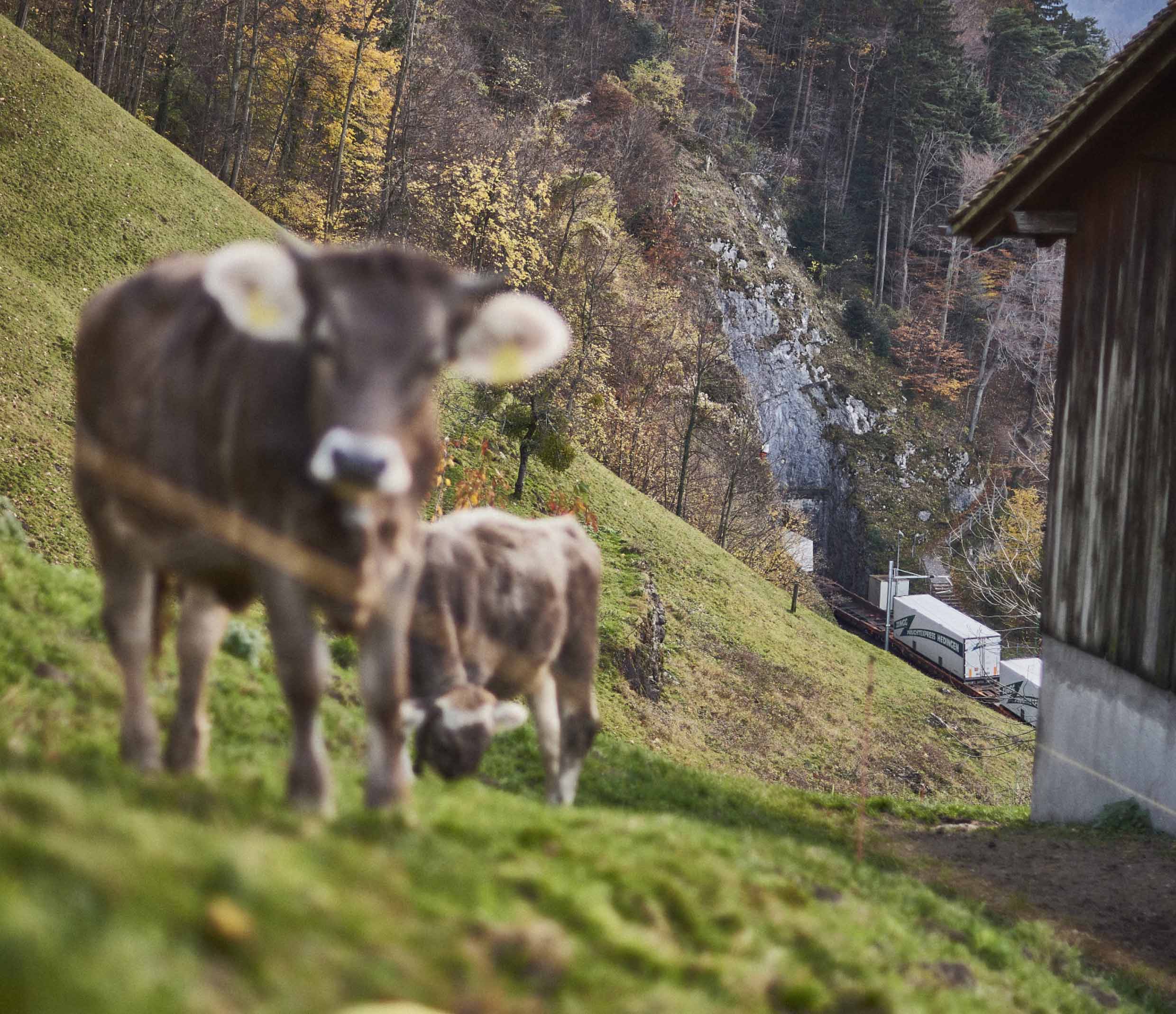
WE BREATHE WELL BUT WE WILL BREATHE BETTER
The quality of air in Switzerland is good and is constantly improving. In the last 25 years the emission of fine particles in cities has fallen by more than 50%. To maintain these good results Switzerland supports the development and use of technologies that pollute the least. This is especially the case in the automobile industry – one of the most polluting sectors – where the Confederation imposes strict standards of CO2 emissions on the industry through the installation of high-performance filters and catalytic converters in vehicles.
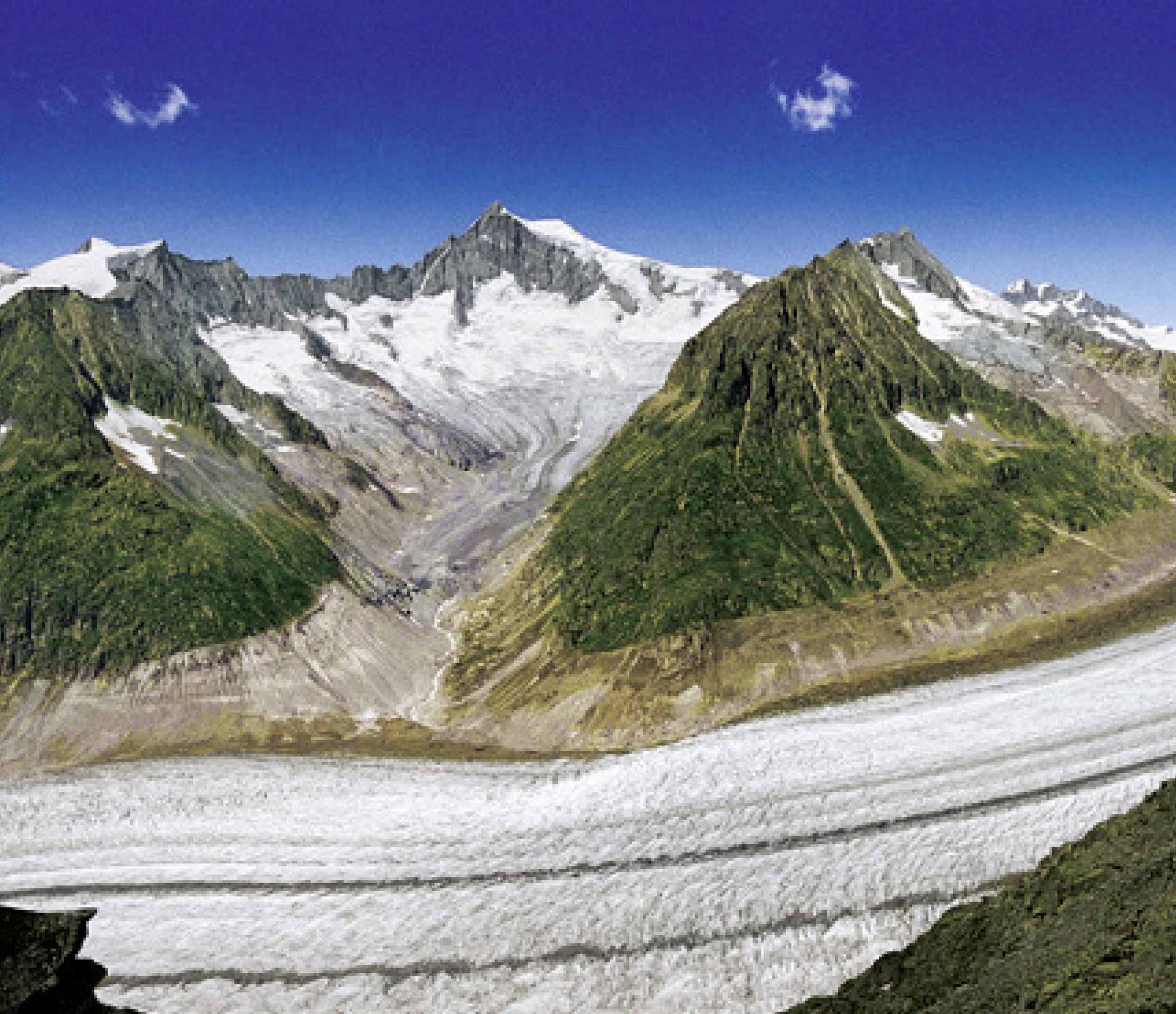
THE COUNTRYSIDE, AN ESSENTIAL NATIONAL ASSET
Respecting the integrity of the countryside improves the quality of life, conserves biodiversity, and helps to promote green tourism. In developing the Spatial Strategy for Switzerland, the Confederation identified the countryside as one of the key factors of any development project. This includes, for example, the definition of zones where the conservation of the countryside takes priority over every other project, including those concerning energy, industry or transport. The ambition is simple: respect and protect the countryside more today than yesterday!
Swiss Transportation
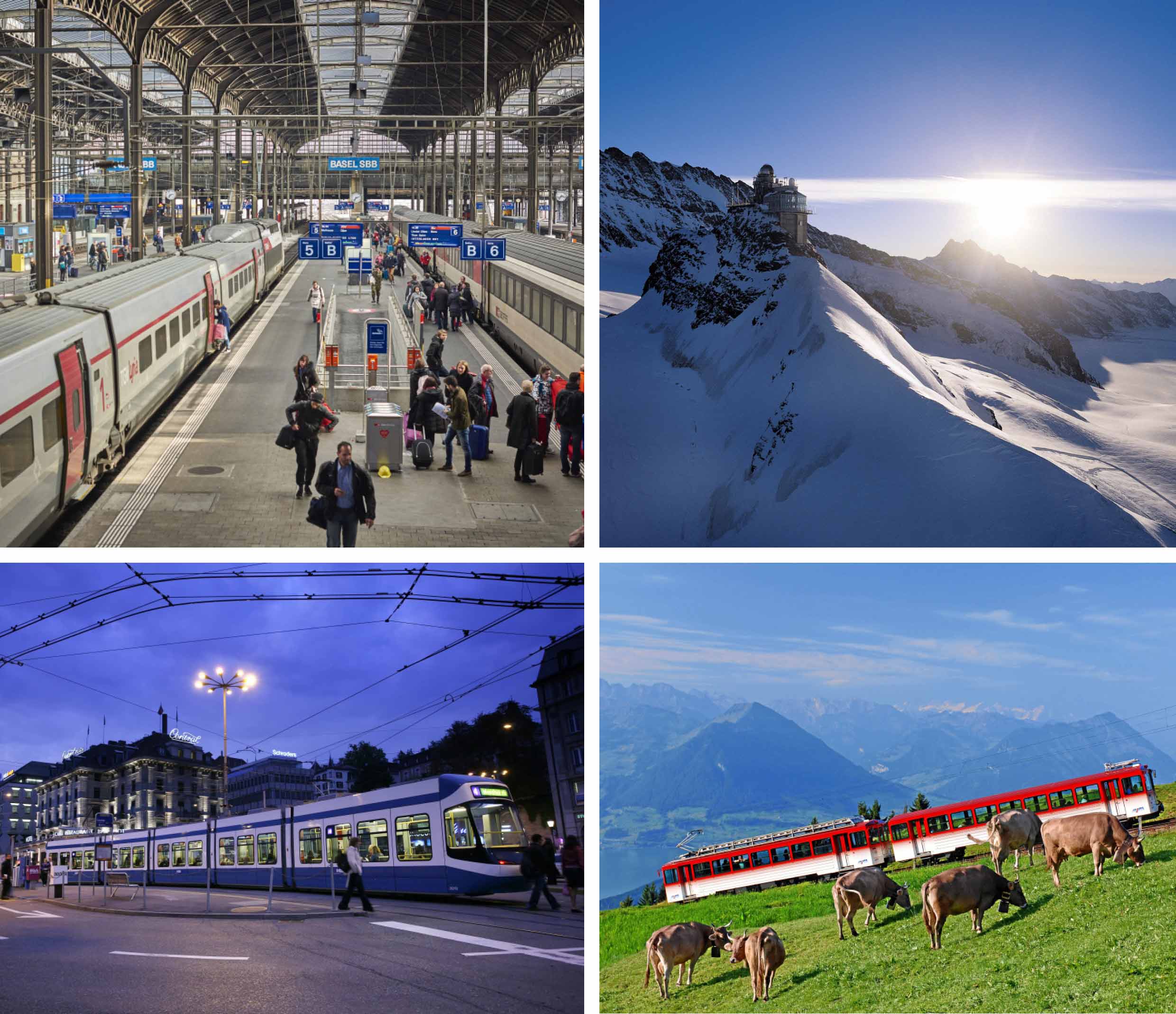
- Switzerland has a dense and reliable rail and road network.
- As well as a 71,452 km-long road network, Switzerland also has 5,124 km of train tracks, 11,007 km of bus routes and 1,774 km of mountain railways.
- Switzerland has around 1,800 tunnels. The major feat of engineering is the Gotthard base tunnel stretching over 57 kilometres. It is the longest rail tunnel in the world.
- Switzerland has around 26,000 public transport stops, in other words one stop every 900 metres.
- With 16 vessels, the Lake Lucerne Navigation Company has Europe’s largest fleet of self-propelled ships operating on inland waterways.
- With 2,050 trains passing through every day, Zurich –Altstetten is the busiest railway line in the world.
- The No. 10 route, operated by Baselland Transport (BLT), is the longest tram line in Europe. Running from Dornach to Rodersdorf, it covers 25 km, and takes in three cantons (Baselland, Baselstadt, Solothurn) and two countries (Switzerland and France).
- The automated M2 line of the Lausanne Métro climbs 338 metres, with inclines as high as 12% in some places. This is a world-first for rubber-tyred underground trains.
- 59% increase in transport capacity by 2030, 13% of Switzerland’s road cargo traffic through the Alps will be shifted to rail – in 2020 this will be the equivalent of around 180,000 lorry journeys.
Swiss Construction Project Serving Europe
THE OPENING OF THE GOTTHARD BASE TUNNEL IN 2016
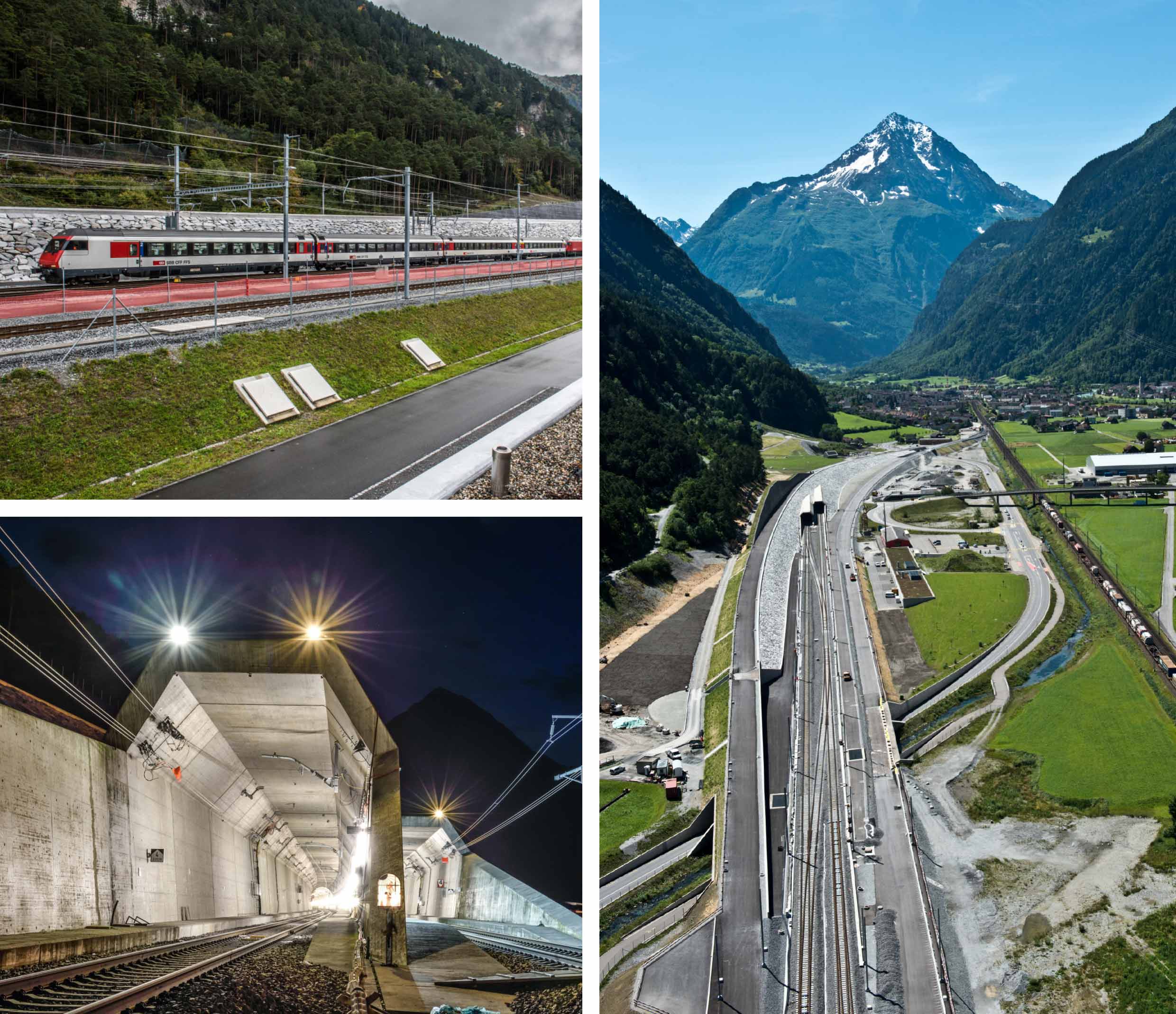
The world’s longest railway tunnel – the Gotthard Base Tunnel – was officially opened on 1 June 2016. Covering 57.1km, it is the cornerstone of the European Rhine-Alpine Corridor for freight transport, and is part of Switzerland’s New Rail Link through the Alps (NRLA). This once-in-a-century construction project constitutes a substantial contribution by Switzerland to Europe’s transport infrastructure, symbolising Swiss values, such as innovation, precision and reliability. Its commercial commissioning by the Swiss Federal Railways (SBB) took place on 11 December 2016.
THE RHINE - ALPINE CORRIDOR
The Rotterdam/Antwerp-Genoa railway corridor is Europe’s most important freight transport axis in terms of volume. It runs along the Rhine through Europe’s industrial heartland, linking dynamically growing economic hubs, including Rotterdam, Amsterdam, Antwerp, Cologne, Frankfurt am Main, Basel, Zurich, Milan and Genoa. Forecasts indicate that the volume of freight on this railway line is set to increase further. The EU gives the Rhine-Alpine Corridor priority and will invest around EUR 25 billion in its expansion over the coming years. The corridor is an integral part of the European policy on the development of trans-European transport networks (TEN-T) in which it plays a pioneering role.
THE SWISS PEOPLE APPROVE SUSTAINABLE TRANSPORT POLICY
Switzerland has pursued a sustainable transport policy that focuses on shifting transalpine traffic from the road to rail since the 1980s. The Swiss people have endorsed this policy in several referendums. The NRLA concept was approved by the Swiss electorate on 27 September 1992 and the corresponding financing model on 29 November 1998 by clear majorities (both 64%). This large-scale project has therefore been legitimised by direct democratic means.
NRLA – A ONCE-IN-A-CENTURY CONSTRUCTION PROJECT
The NRLA is the largest construction project that Switzerland has ever undertaken in its history. It consists of three new base tunnels (Lötschberg 34.6km, Gotthard 57.1km and Ceneri 15.4km) and the expansion of the approach routes. The Lötschberg Base Tunnel has been in operation since 2007 and the Ceneri Base Tunnel is set to open in 2020. Switzerland is investing around CHF 23.5 billion (around EUR 21.5 billion) in the construction of the NRLA, which equates to approximately 3.5% of Swiss gross domestic product (GDP).
After completion of the work at Ceneri and on the approach routes, trains will be able to cross the Alps without having to climb any significant gradients. The time for passenger trains to travel between Zurich and Lugano will be reduced by around 45 minutes, and more freight trains will be able to cross the Alps in less time and require fewer locomotives. The efficiency and reliability of railway transport is improving which makes railways more competitive. It also strengthens the EU single market. Economic benefits and the protection of the Alpine environment have therefore been reconciled.
THE GOTTHARD BASE TUNNEL – A RECORD-BREAKING PROJECT
The first plans for a base tunnel between Amsteg and Bodio were drawn up in 1947. Just short of 70 years later and after a 17-year construction period, the Gotthard Base Tunnel replaces the Seikan Tunnel (53.9km) in Japan as the world’s longest railway tunnel. The breakthrough was made in October 2010. The Gotthard Base Tunnel cost around CHF 12.5 billion (around EUR 11.5 billion) and connects Bodio in the canton of Ticino with Erstfeld in the canton of Uri. The section of line through the Gotthard Base Tunnel is around 30 kilometres shorter than the previous line that ran over the mountain and, thanks to the new tunnel, capacity has been increased. Up to 250 freight trains and 65 passenger trains can use the tunnel per day. Capacity was restricted to a maximum of 180 freight trains on the previous Gotthard mountain line. Passenger trains can now travel through the tunnel at speeds of up to 200km/h, which will increase up to 250km/h in future.
SWITZERLAND INVESTS FOR EUROPE
Shorter journey times makes Switzerland’s regions as well as Germany and Italy more accessible. Over 20 million people in the area between southern Germany and northern Italy alone will benefit The Gotthard Base Tunnel is both “an idea born in Switzerland” – which Switzerland has financed itself – and the result of close international cooperation. Companies and workers from around 15 countries were involved in the construction project. For example, tunnel-boring machines from Germany, shaft construction specialists from South Africa and many engineers and tunnelling specialists came from Italy, Austria and the Balkan statesfrom the Gotthard Base Tunnel. The tunnel constitutes a significant contribution by Switzerland to European transport policy and brings Europe closer together.
Swiss Workforce
- The Swiss labour market is renowned for its stability and low unemployment rate.
- Switzerland has one of the lowest unemployment rates in Europe.
- Collective labour agreements between employee organizations and employers govern working conditions in many sectors.
- Strikes are extremely rare and Switzerland has one of the most flexible labour markets in the world.
APPRENTICESHIPS
The recipe for Swiss Success
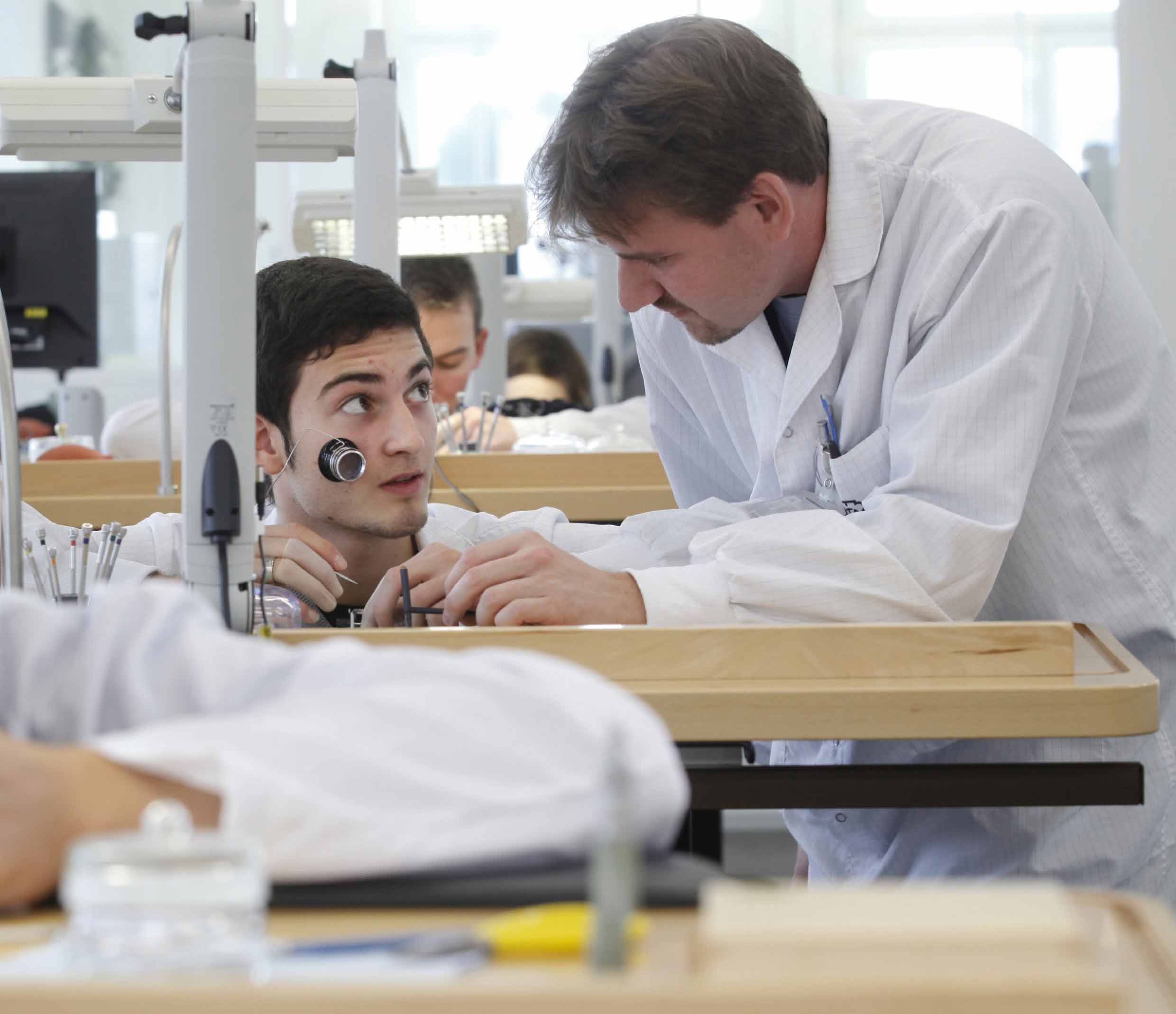
In Switzerland, vocational education and training (VET) is highly valued and allows young people to learn a trade by combining classroom study with in-company work. More and more countries are taking an interest in this model, which is an effective tool for combating unemployment.
The good health of the Swiss economy, with unemployment rates not exceeding 4% for example, is due in particular to the quality of the VET system, which is geared to labour market needs and integrated into the education system.
At the end of their compulsory education, Swiss youngsters have a choice between continuing their studies and opting for VET. In most cases, this is ‘dual’ VET, meaning that it combines school with practical experience. The basic in-company apprenticeship involves spending three or four days a week in the workplace combined with classroom learning at a vocational school. The training, during which the apprentice is paid by the employer, lasts between two and four years, at the end of which the apprentice receives a Federal VET Diploma or Federal VET Certificate. The former apprentice can then go straight into the labour market or enter higher education. Many managers of Swiss small and medium-sized enterprises have followed this route.
Individuals with a VET qualification have more chance of finding a job than those without one. More and more other countries, seeking ways to combat unemployment, are taking an interest in the Swiss VET system. Indeed, this was one of the ideas behind the state visit of Chinese President Xi Xinping at the start of the year.
Swiss Social System
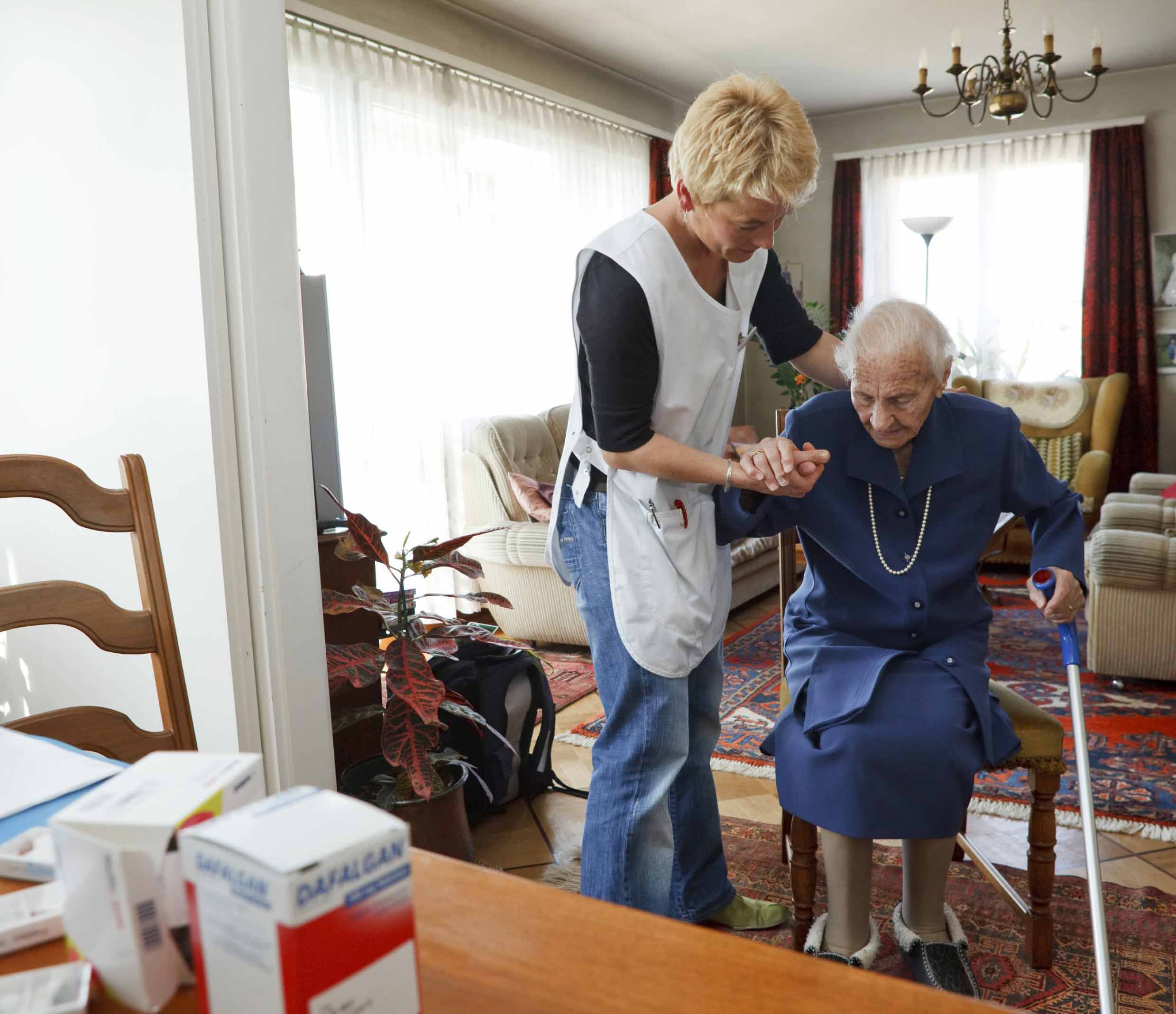
- Switzerland offers its residents a very high level of social security protection.
- The Swiss social security system has five branches: old-age, survivors’ and invalidity insurance, health and accident insurance cover, compensation for loss of earnings as the result of military/alternative civilian service or maternity, unemployment insurance and family allowances.
- The pension system rests on three pillars. The “first pillar” is the old-age and survivors’ insurance scheme (AHV/AVS) and the invalidity insurance scheme (IV/AI). It is compulsory and is financed from employee and employer contributions. The “second pillar” is the occupational pension scheme, which is also compulsory. Employees with annual earnings of at least CHF 24,570 are automatically insured with an occupational pension fund. The “third pillar” is an optional, private savings scheme.
- Private providers offer health and accident insurance cover. Everyone who lives in Switzerland has to take out basic health insurance with a provider of their choosing. The annual co-insurance payment varies from CHF 300 to CHF 2,500 depending on the premium that the insured has chosen to pay. Basic compulsory cover can be supplemented by a range of optional “complementary” policies. The country spends 11.4% of its gross domestic product (GDP) on health care.
- Compensation for loss of earnings (EO/APG) covers the salary lost by those in military service, alternative civilian service and civil protection service. Since 1 July 2005 women benefit from maternity insurance cover, which provides them with 80% of their salary for 14 weeks following the birth of their child.
- Unemployment insurance benefits amount to 70% or 80% of the claimant’s last salary. Depending on the person’s age, support obligations and length of insurance period, claimants may be entitled to receive a daily allowance for between 90 to 520 days. In all cases, the claimant must have paid contributions for at least 12 months over the previous two-year period.
- Child allowance rates vary from canton to canton. The minimum is CHF 200 per month for children under 16. The minimum education allowance is CHF 250 per month for children aged between 16 and 25 who are still in education.
Protecting Cultural and Natural Heritage of Universal Value by Switzerland
From the medieval Old Town of Berne to the futuristic city of Brasilia, from the tiny convent of Müstair to the imposing cathedral of Chartres, from the fertile terraced vineyards of Lavaux to the vast desert of Ténéré – all have one thing in common: they are UNESCO World Heritage Sites. UNESCO designates outstanding cultural achievements and unique natural phenomena that are of exceptional universal value and entrusts humanity with their protection and preservation. There are currently 890 such sites on the UNESCO World Heritage List.
World Heritage Sites in Switzerland
Switzerland has been a signatory state to the UNESCO World Heritage Convention since it came into force in 1975. Eight years later, the first three Swiss sites were accepted on the UNESCO World Heritage List. It would be almost 20 years before it applied again. Today, the tiny country of Switzerland has 11 UNESCO World Heritage Sites both natural and cultural, and has one application pending.
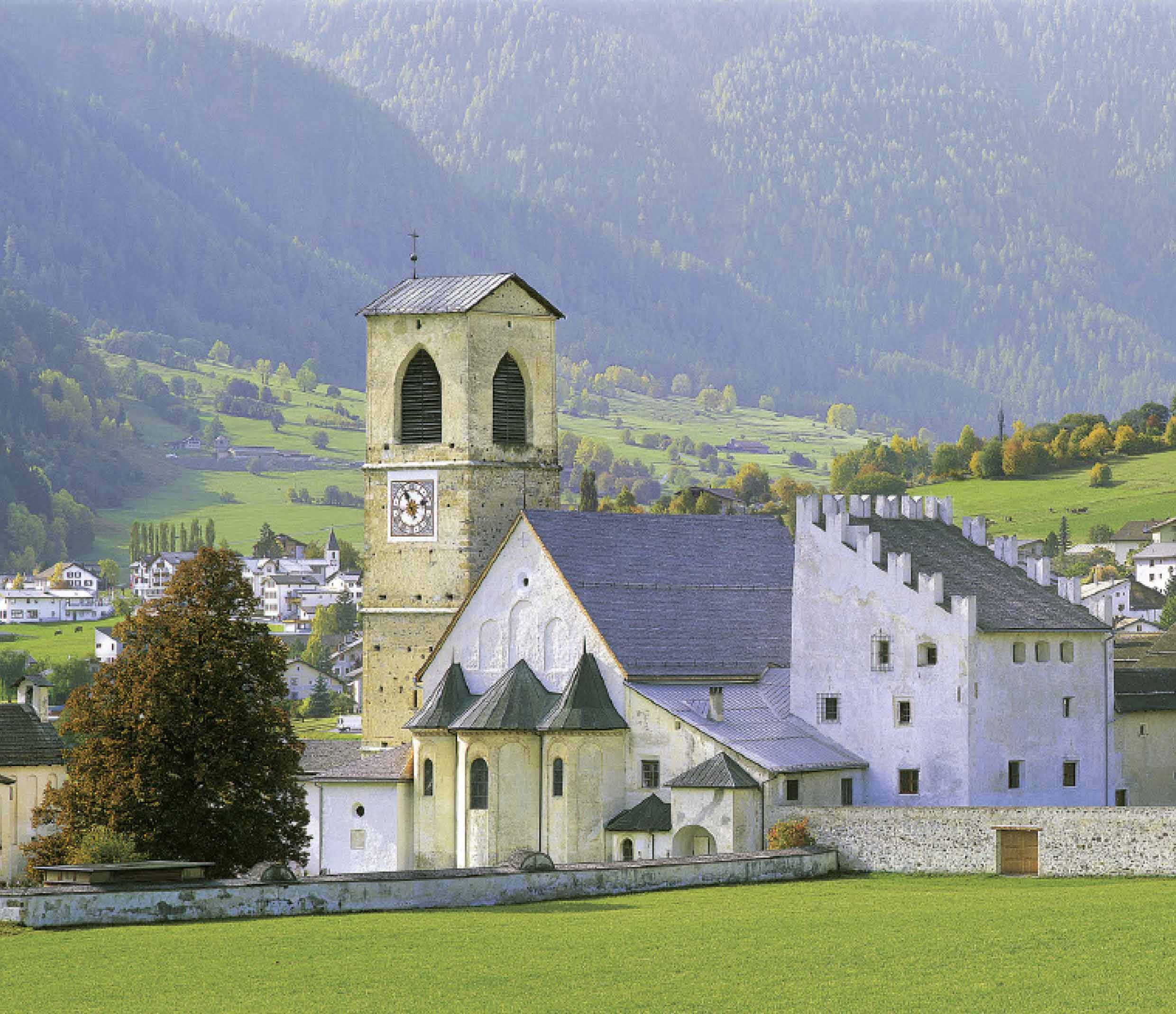
• MÜSTAIR CONVENT
Nestling in the remote Val Müstair lies the Benedictine Convent of St. John. If its thick walls could talk, they would tell an exciting and sometimes turbulent story spanning more than 1,000 years. Since the reign of Charlemagne, the strategically located convent would be the setting for major power struggles which had little to do with the Christian beliefs of its occupants. Today, though, peace reigns throughout the convent, where the resident community of twelve nuns go about their daily activities according to the Benedictine maxim of “ora and labora” (prayer and work).
Facts & figures
| What | St. John Convent, founded in 780 A.D., originally a monastery before becoming a Benedictine convent in the 12th century. |
| Where | Val Müstair, canton of Graubünden, Switzerland. |
| UNESCO Inscription | 1983 |
| Why | Unique testimony to a civilisation that has disappeared (Criterion 3 of UNESCO Operating Guidelines). |
• RHAETIAN RAILWAY
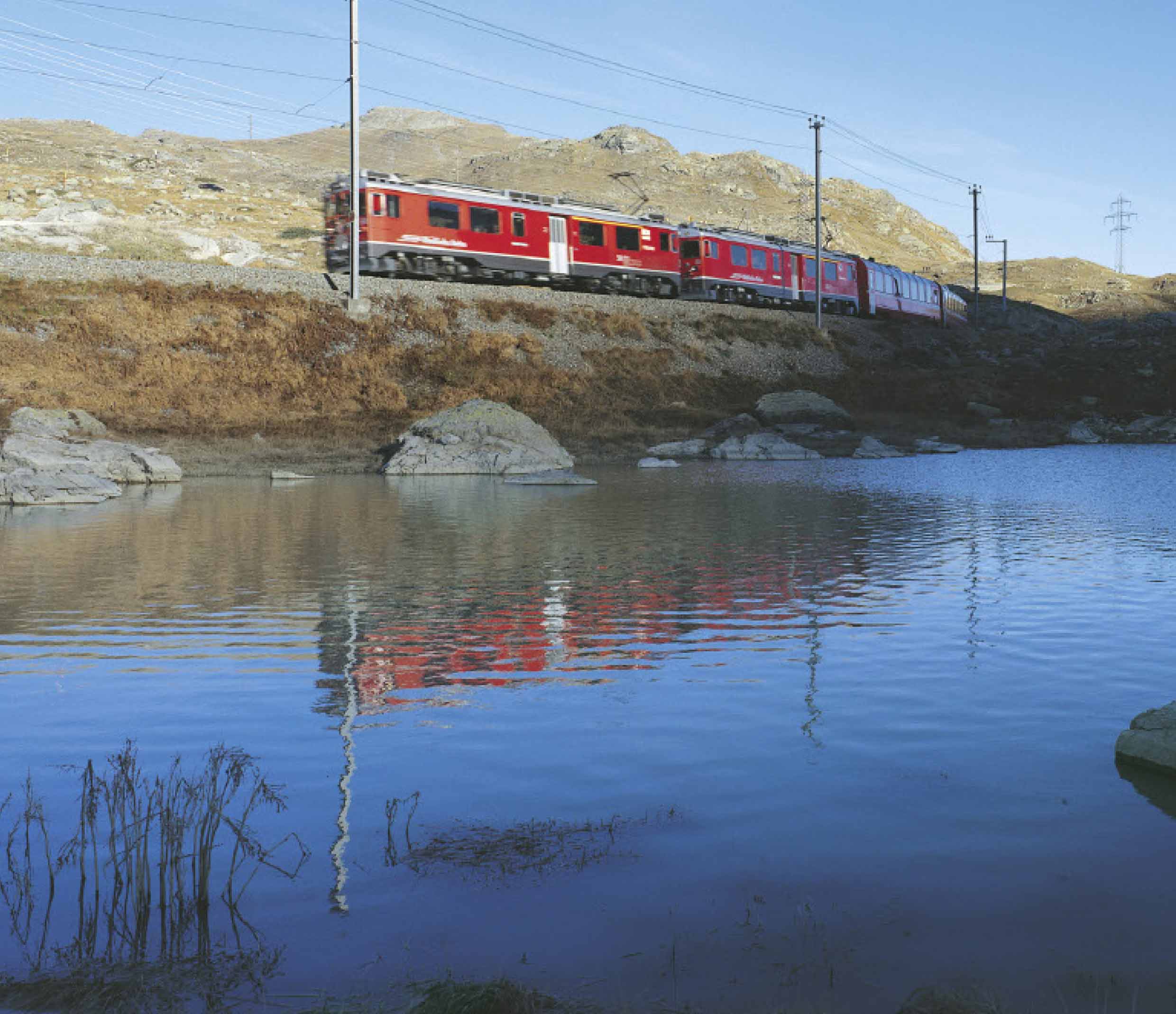
A quaint, red, narrow-gauge railway trundling over vertiginous bridges and breathtaking gorges is a familiar image that graces the cover of many a Swiss tourist brochure. Built at the turn of the century in response to Switzerland’s burgeoning tourist industry, the railway has been one of the main drivers of this Alpine region’s economic, social and cultural development.
Facts & figures
| What | Albula and Bernina lines of the Rhaetian Railway and surrounding landscape. The lines were completed in 1903 and 1910 respectively. |
| Where | From Thusis (canton of Graubünden, Switzerland) to Tirano (Italy). |
| UNESCO Inscription | 2008 |
| Why | Outstanding example of a technological ensemble or landscape. Exhibits an important interchange of human values on developments in architecture and technology (Criteria 2 and 4 of UNESCO Operational Guidelines). |
• OLD CITY OF BERN
The jade green waters of the River Aare meander along three sides of the Old City of Bern, a picturesque and beautifully preserved example of a medieval town that has rightfully earned its place on the UNESCO World Heritage List. The city was founded in 1191 by the Zähringen family as a strategic stronghold. In those days the river served as a natural defence against invaders. Today, though, the River Aare serves as a refreshing recreational spot for the city’s residents during the summer months.
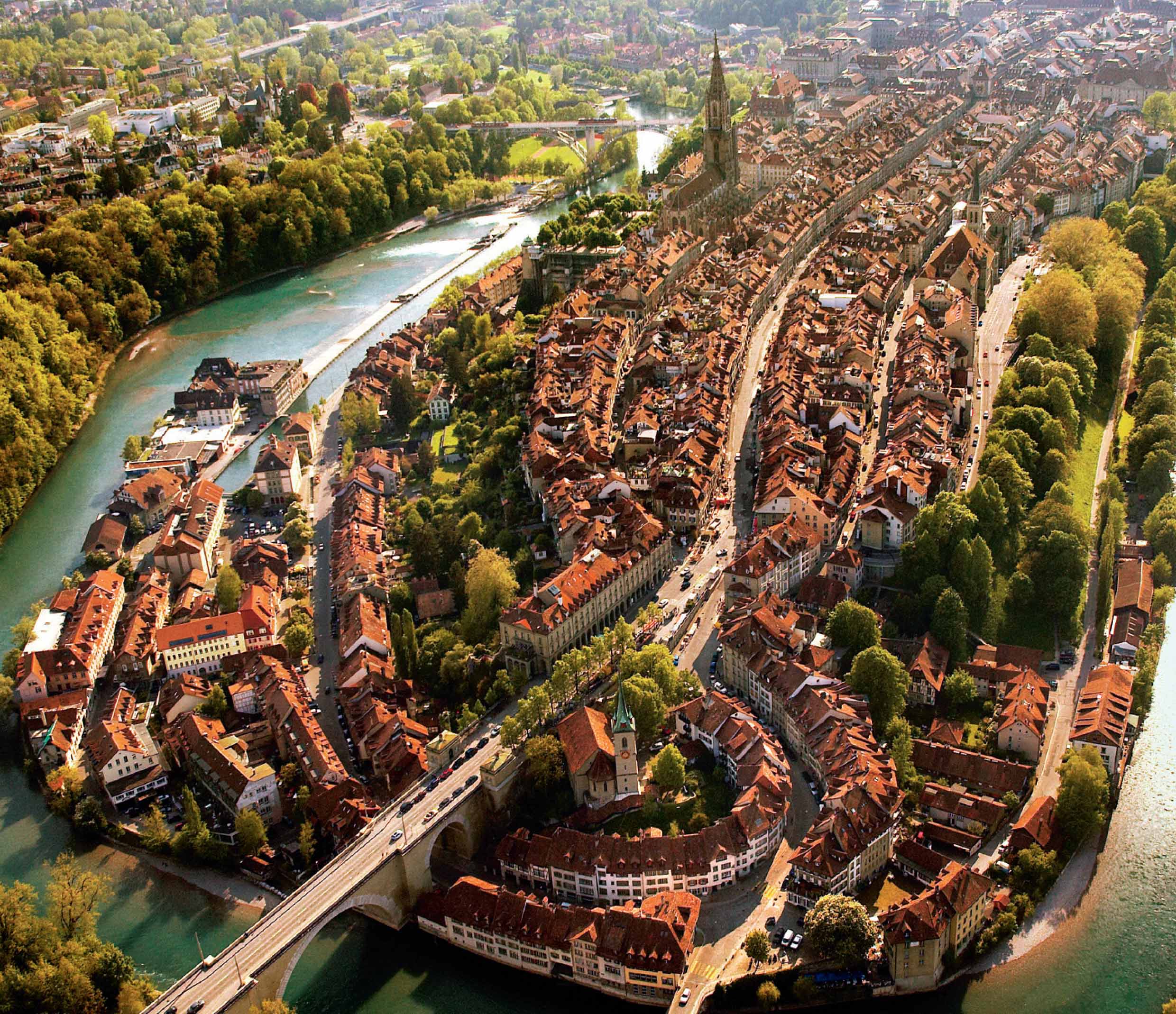
Facts & Figures
| What | Old City of Bern, founded in the 12th century. Town structure is High Middle Ages while the architecture is late Baroque. |
| Where | Bern, capital of the canton of Bern, capital of Switzerland and seat of the federal government |
| UNESCO Inscription | 1983 |
| Why | Unique testimony to a civilisation and culture which has disappeared (Criterion 3 of UNESCO Operational Guidelines) |
• CONVENT OF ST. GALLEN
In the rarefied and studious atmosphere of the impressive Baroque library, surrounded by thousands of precious books, the power of knowledge is almost tangible. The convent was established in the 7th century by the Irish monk Gallus. By the early Middle Ages, its school and learned monks would transform it into one of the most exciting centres of culture in Europe. Without the monastery, the town of St. Gallen would have never been founded.
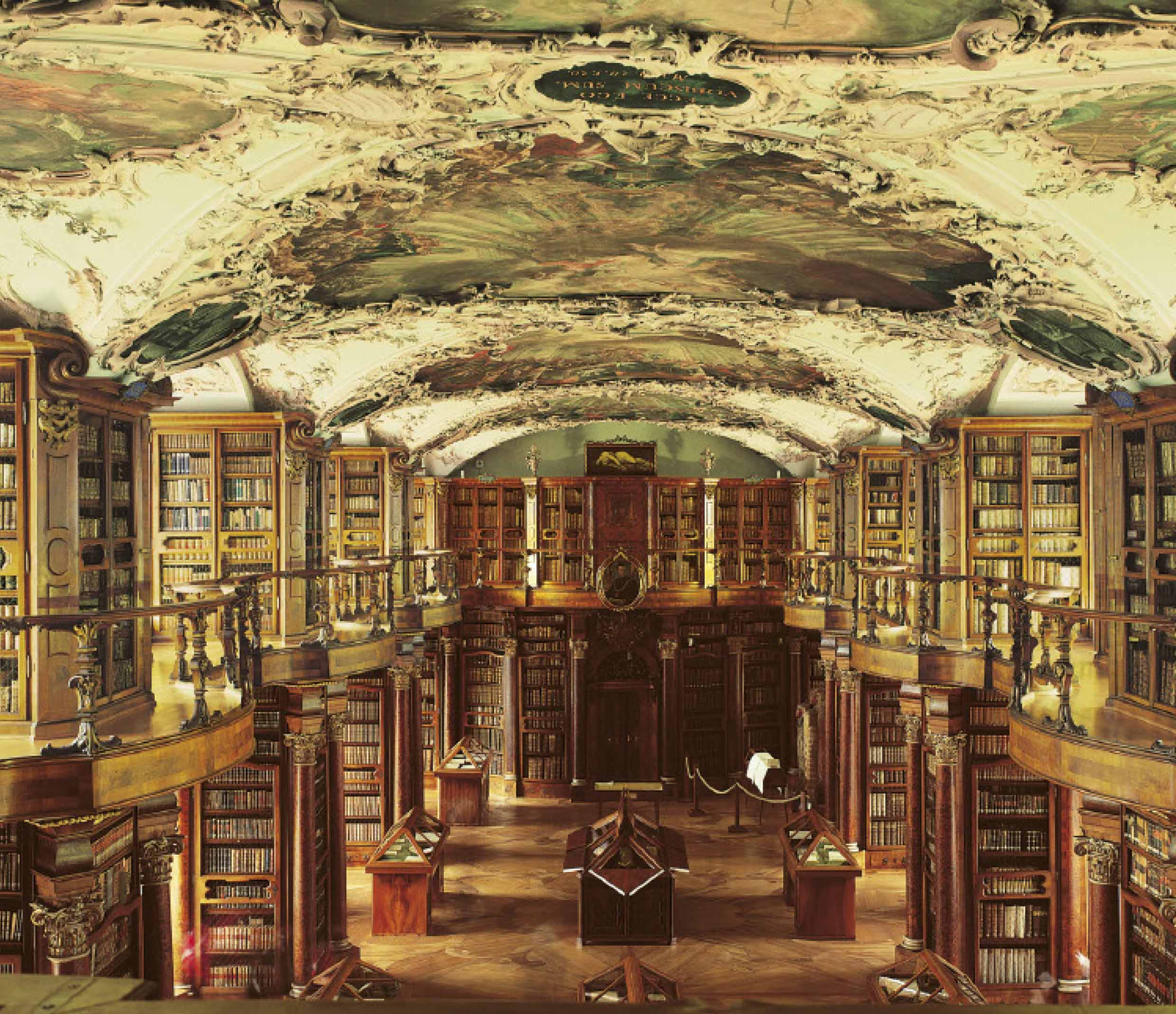
Facts & Figures
| What | Library and convent complex. Founded in 621 and reached the height of its influence in 9th and 10th centuries. Secularised in 1805. |
| Where | Town of St. Gallen in the canton of the same name, Switzerland |
| UNESCO Inscription | 1983 |
| Why | Outstanding example of a type of building which illustrates a significant stage in human history. Exhibits an important interchange of human values on developments in architecture (Criteria 2 and 4 of UNESCO Operational Guidelines). |
• BELLINZONA
Three castles dominate the majestic skyline of Bellinzona, the capital of Switzerland’s most southerly canton. Three castles that back in the mists of time protected Milan from a Swiss invasion. Three castles that are now cherished for their cultural and architectural value rather than their geopolitical importance. For example, the refurbishment of Castelgrande is a showcase of contemporary Ticino architecture at its best.
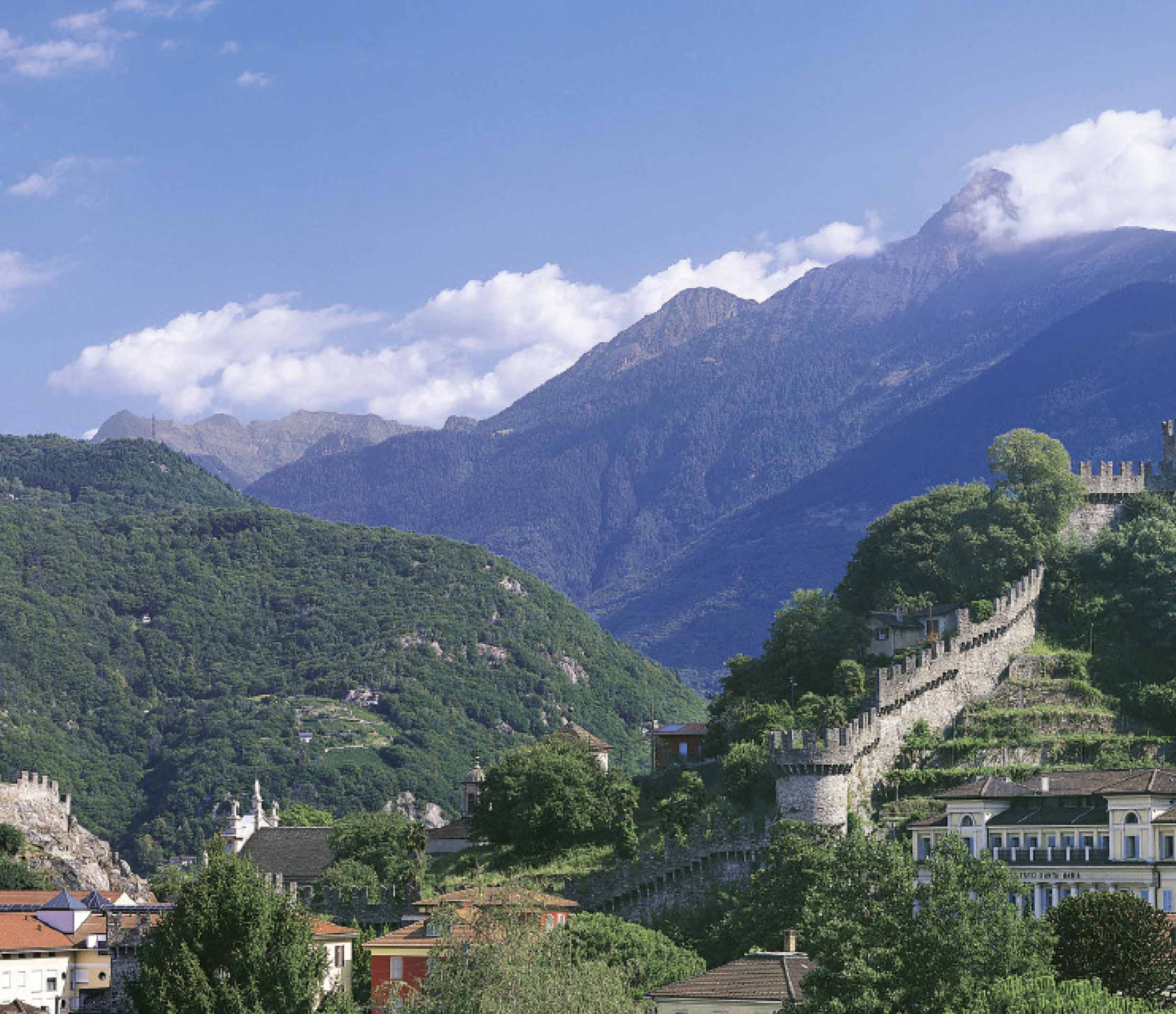
Facts & figures
| What | Medieval defensive wall and ramparts dating back to Late Antiquity, including the three castles of Castelgrande, Montebello und Sasso Corbaro |
| Where | Bellinzona, canton of Ticino, Switzerland |
| UNESCO Inscription | 2000 |
| Why | Outstanding example of buildings which illustrate significant stages in human history (Criterion 4 of the UNESCO Operating Guidelines). |
• LAVAUX
The vineyards of Lavaux offer one of the most spectacular panoramic views in the world. Don’t take our word for it – hop on the Berne-Lausanne train and see for yourself! This train ride offers a breathtaking view of the rolling terraced vineyards, Lake Geneva and snow-covered mountains. An important cultural landscape whose beauty has been carefully preserved by generations of winemakers.
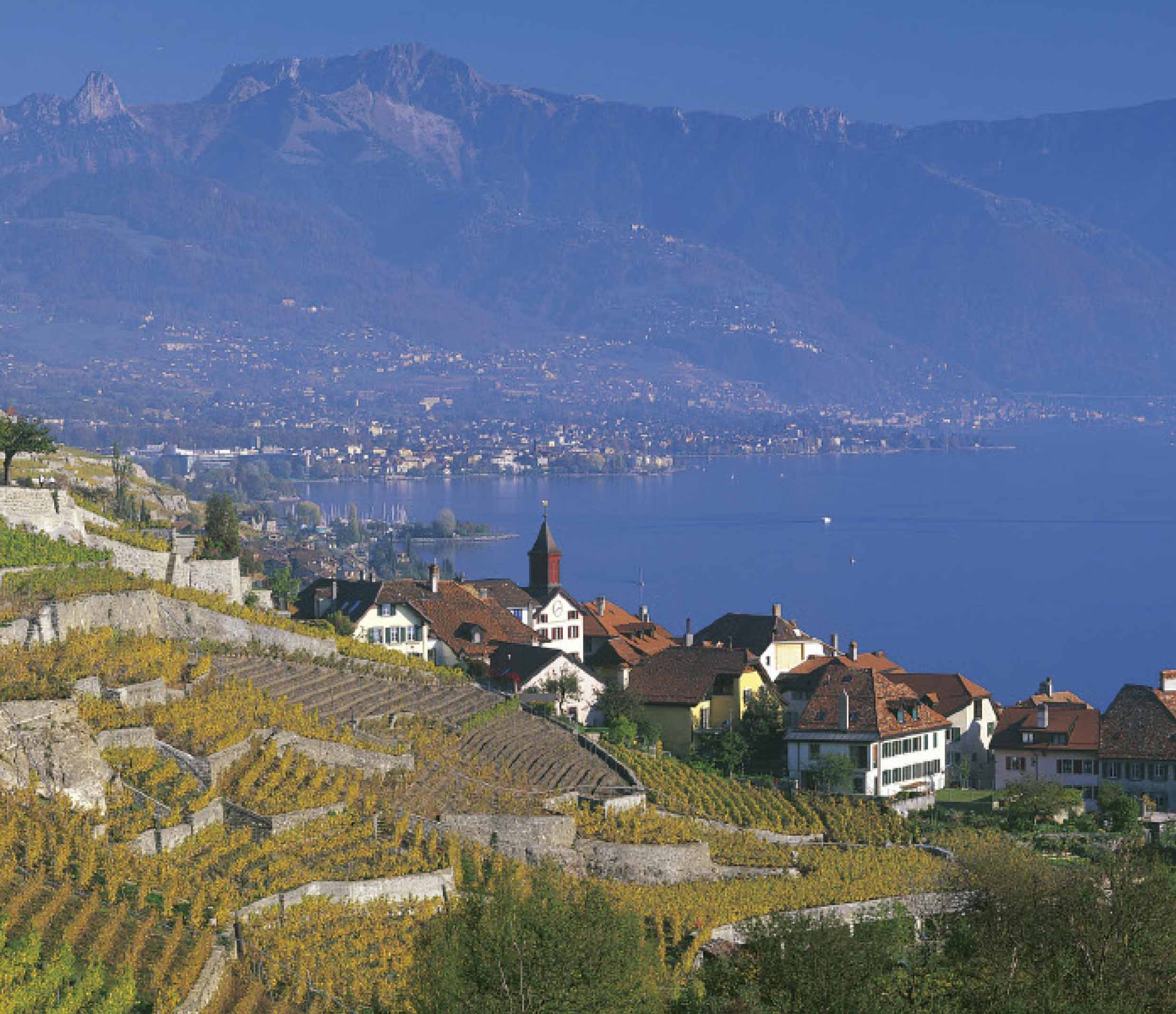
Facts & figures
| What | Lavaux, vineyard terraces stretching from Montreux to Lausanne |
| Where | Canton of Vaud, Switzerland |
| UNESCO Inscription | 2007 |
| Why | Exceptional testimony to a cultural tradition. Outstanding example of a landscape which illustrates significant stages in human history and of human interaction with its environment especially when it has become vulnerable under the impact of irreversible change. (Criteria 3, 4, and 5 of UNESCO Operational Guidelines). |
• LA CHAUX-DE-FONDS & LE LOCLE
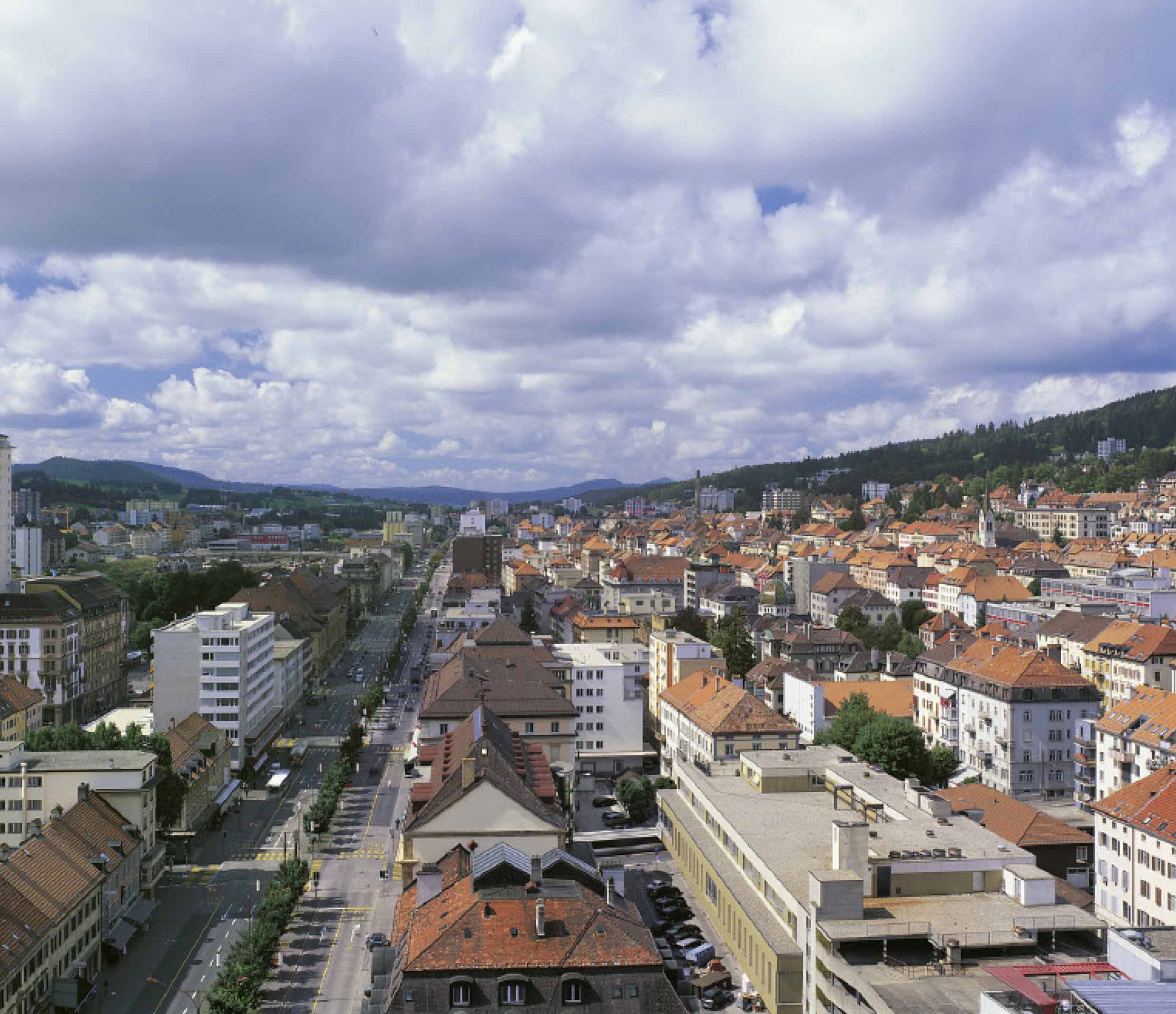
Two towns laid out like Manhattan but resolutely more human in size. Two towns that are the product of rational and ordered urban planning, where houses and workshops sit side by side on the same street. Two towns that are a concrete expression of a body of contemporaneous thought. From the 19th to 20th century, the towns of La Chaux-de-Fonds and Le Locle would evolve to become a “single watchmaking workshop”, a position that has endured to the present day.
Facts & figures
| What | Typical urban landscape of the watchmaking industry, built after the city fires in the 19th century. |
| Where | La Chaux-de-Fonds and Le Locle (both in the canton of Neuchâtel) |
| UNESCO Inscription | 2009 |
| Why | Outstanding example of an architectural ensemble which illustrates significant stages in human history (Criterion 4 of UNESCO Operational Guidelines). |
• SWISS TECTONIC ARENA SARDONA
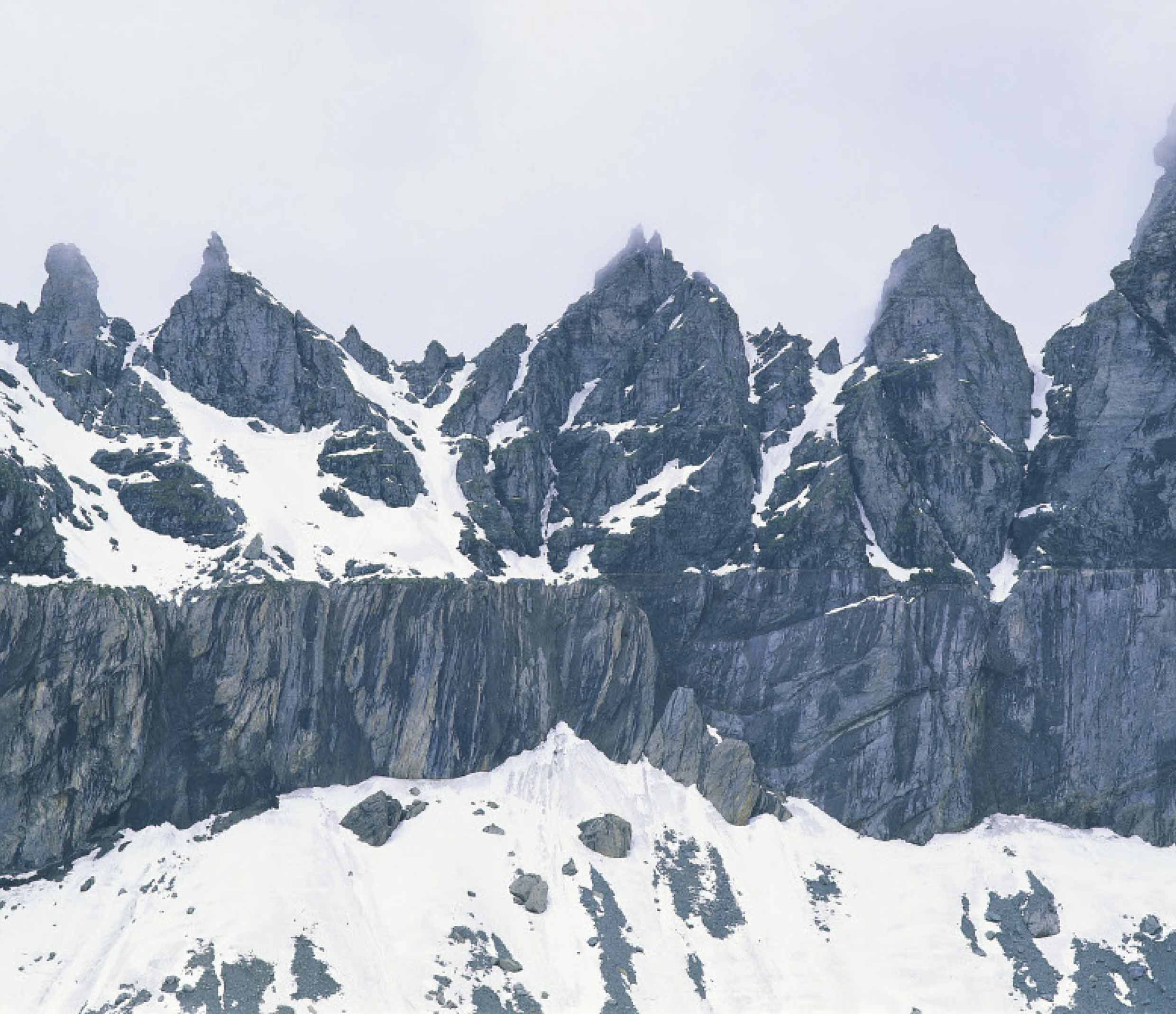
It may not be the catchiest name, but this 30,000-hectare mountain landscape is truly memorable. Its “magic line” of mountain chains and Martinsloch have intrigued researchers and astronomers and inspired many a travel writer. Today, the Tectonic Arena is a giant nature trail and an important research centre on mountain formation
Facts & figures
| What | Glarus thrust, mountain formation with seven over 3,000 metres high, tectonic phenomenon. |
| Where | Cantons of Glarus, St. Gall and Graubünden, Switzerland. |
| UNESCO Inscription | 2008 |
| Why | Outstanding example of the earth’s history as well as of geological and geomorphic processes (Criterion 8 of UNESCO Operational Guidelines). |
• MONTE SAN GIORGIO
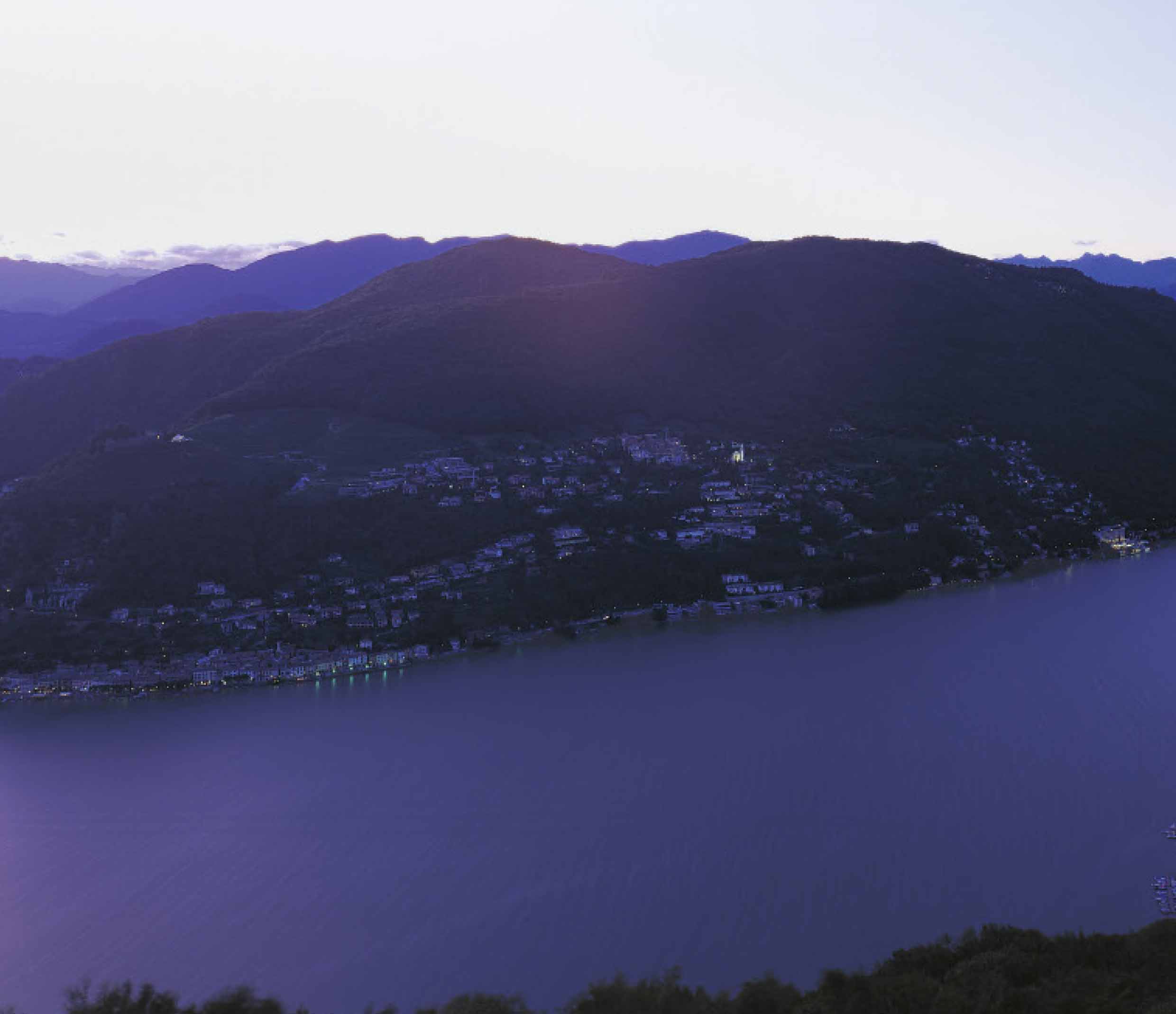
The beauty of the surrounding landscape – verdant sugar loaf mountains, turquoise waters and Mediterranean architecture – would have also made Monte San Giorgio worthy of inclusion on the World Heritage List. But there is more to this UNESCO World Natural Heritage Site than its superficial beauty. Its unique value is buried deep underground… thousands and thousands of prehistoric fossils
Facts & figures
| What | “Dinosaur Mountain” in Mendrisiotto (1,096m), fossils from the Triassic period |
| Where | Canton of Ticino, Switzerland and Italy |
| UNESCO Inscription | 2003 and 2010 (Italian part of Monte San Giorgio) |
| Why | Outstanding example representing major stages of earth’s history, including the record of life (Criterion 8 of UNESCO Operational Guidelines). |
• SWISS ALPS JUNGFRAUALETSCH
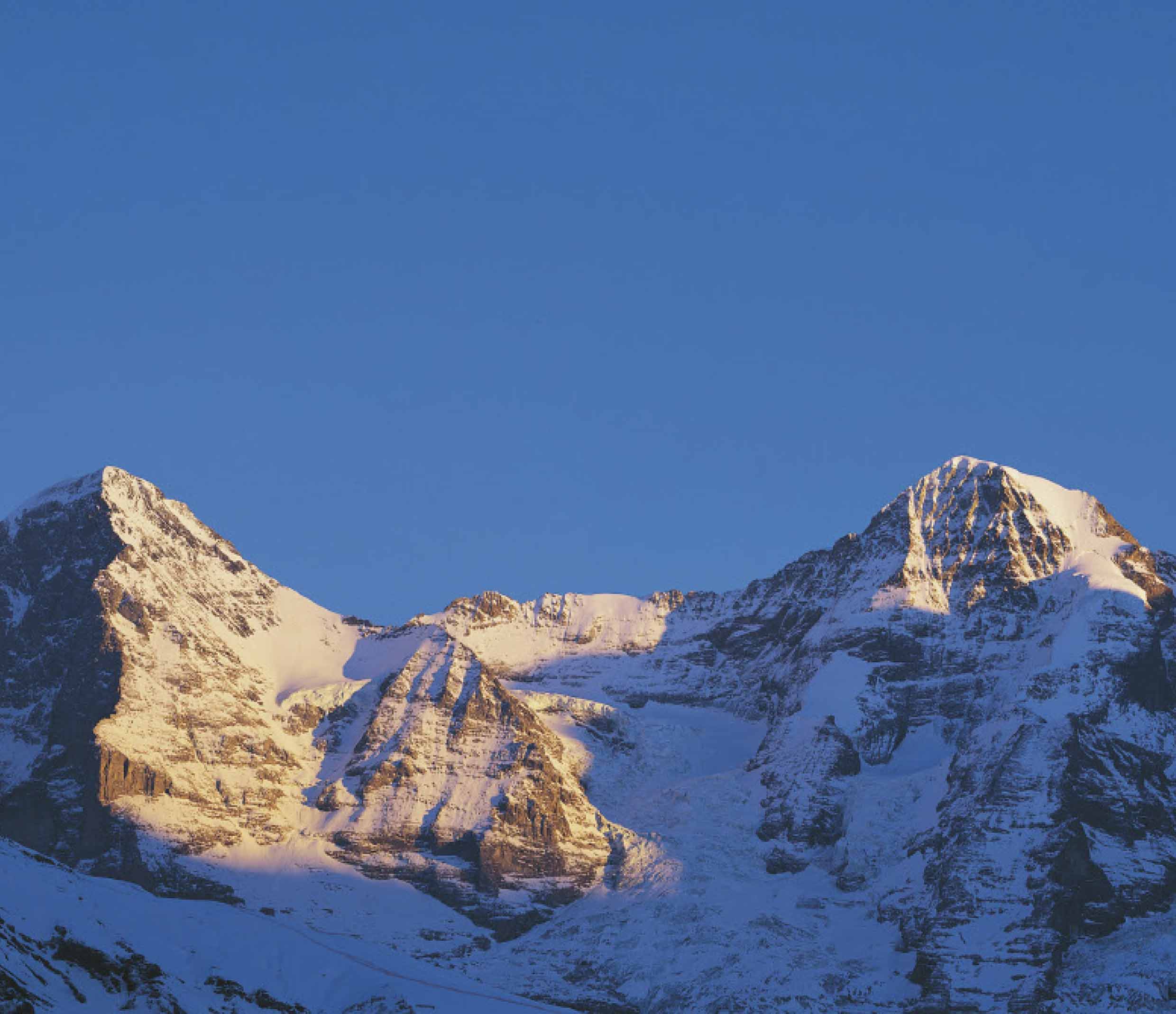
The Jungfrau – Aletsch – Bietschhorn World Natural Heritage Site lies at the very heart of the Alps. This fascinating and diverse site is a region of superlatives: the largest glaciated area in Eurasia, the longest glacier in Europe, 900-metre-thick ice, nine mountains standing over 4,000 metres high… in short, 850 square kilometres of unsurpassable natural beauty.
Facts & figures
| What | High alpine landscape, 50% of which is glaciated and 80% with no vegetation cover. |
| Where | Cantons of Valais (57%) and Bern (43%), Switzerland. |
| UNESCO Inscription | “Jungfrau-Aletsch-Bietschhorn” in 2001; extension and renaming of the site to “Swiss Alps Jungfrau Aletsch” in 2007. |
| Why | Site of exceptional natural beauty, outstanding example representing the development of landforms, as well as significant ongoing ecological and biological processes (Criteria 7, 8 and 9 of UNESCO Operational Guidelines). |
• THE ARCHITECTURAL WORK OF LE CORBUSIER
Le Corbusier (1887-1965) is considered one of the 20th century’s most significant and influential architects. He is a key figure in the internationalisation of architecture and urban planning, which characterised the urban landscapes of the 20th century.
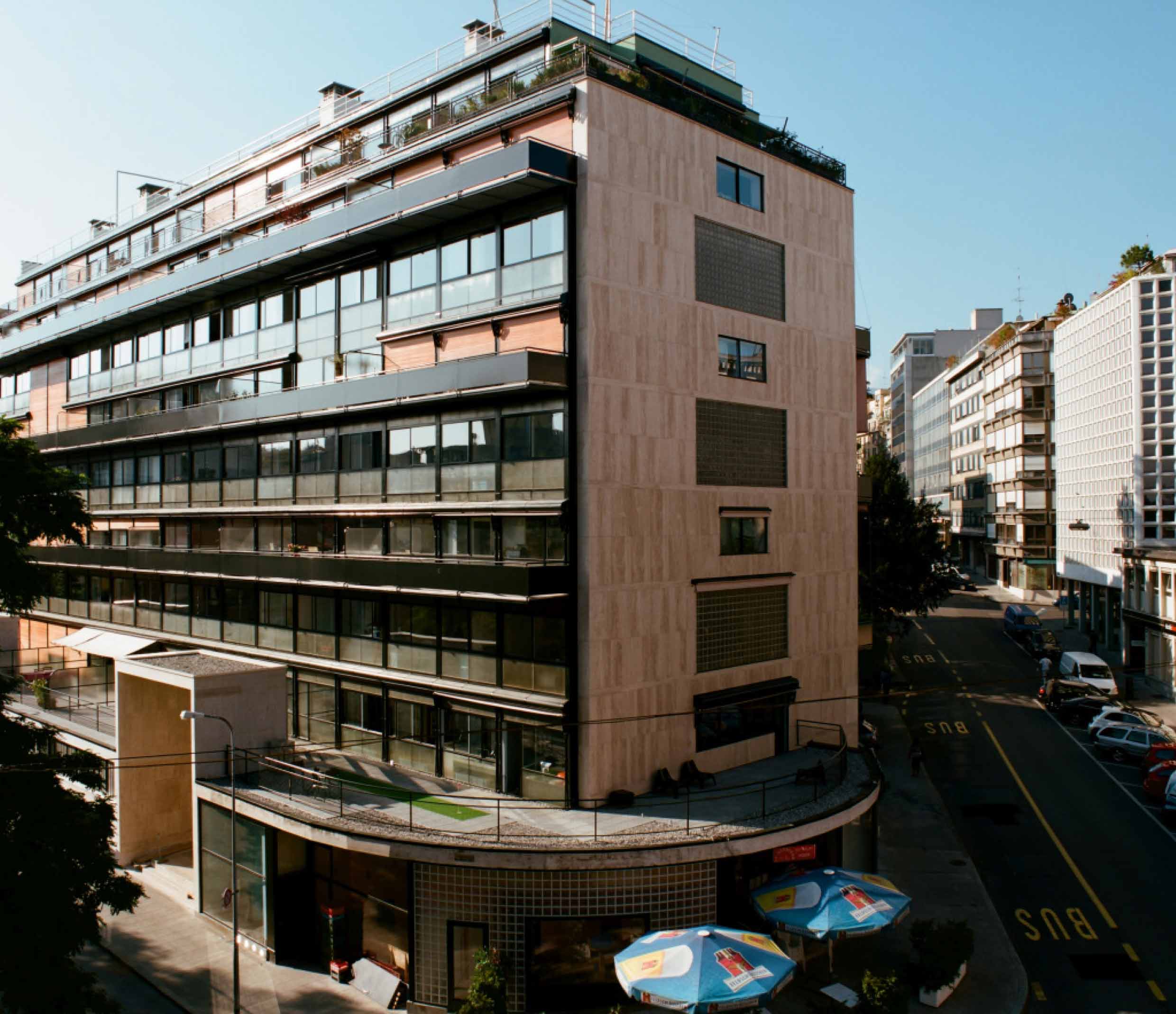
Facts & figures
| Object | 17 buildings in 7 countries on three continents. They embody Le Corbusier’s key contribution to modernist architecture over five centuries. |
| Countries | Argentina, Belgium, Germany, France, India, Japan and Switzerland |
| Inscription On The World Heritage List | 2016 |
| Why | The work is a serial transnational property, as defined by Article 137 of the guidelines of the World Heritage Convention. The structures designed by Le Corbusier illustrate the profound transformation of architecture and the architectural profession in the twentieth century. |