Search here
 Log In
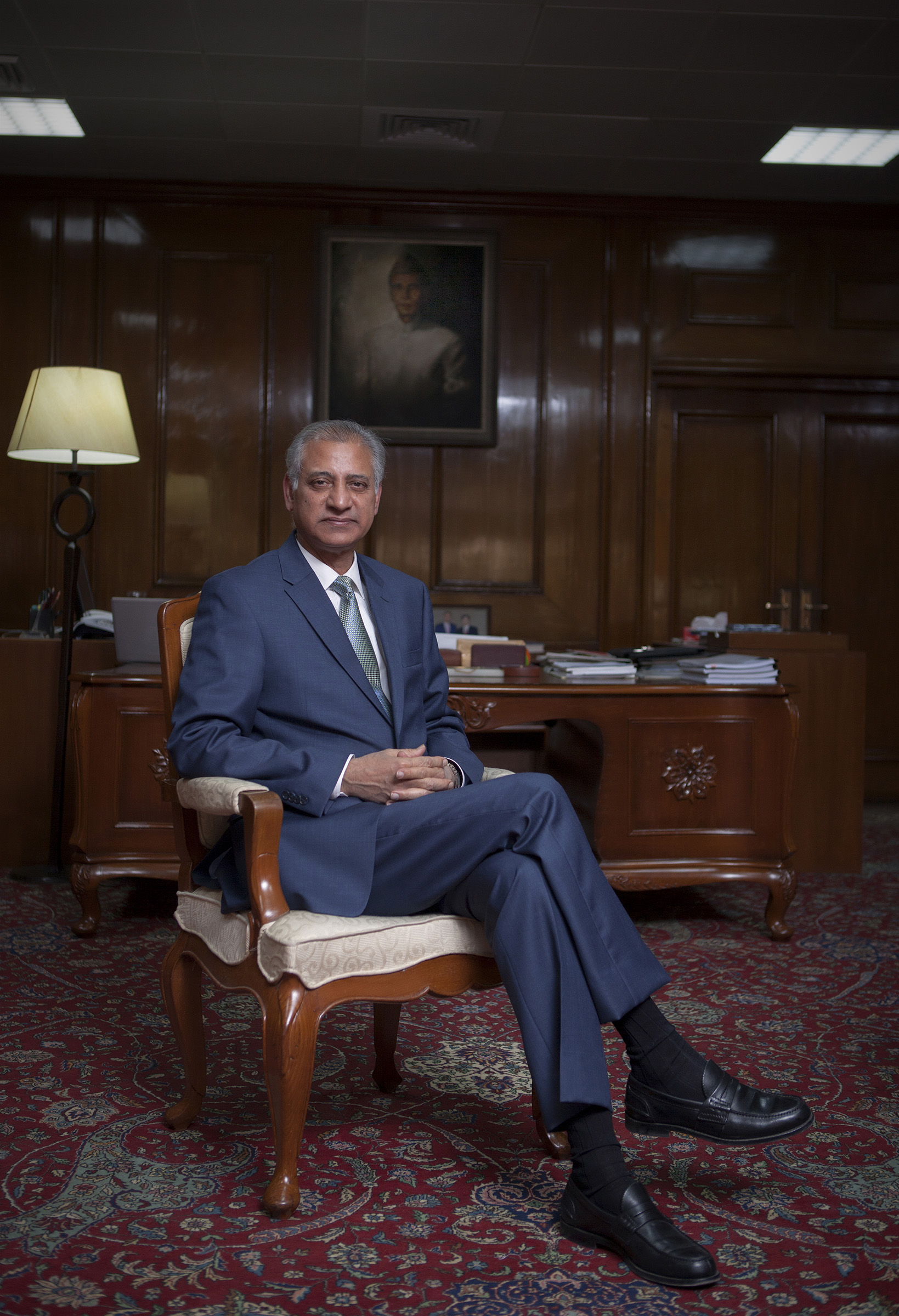
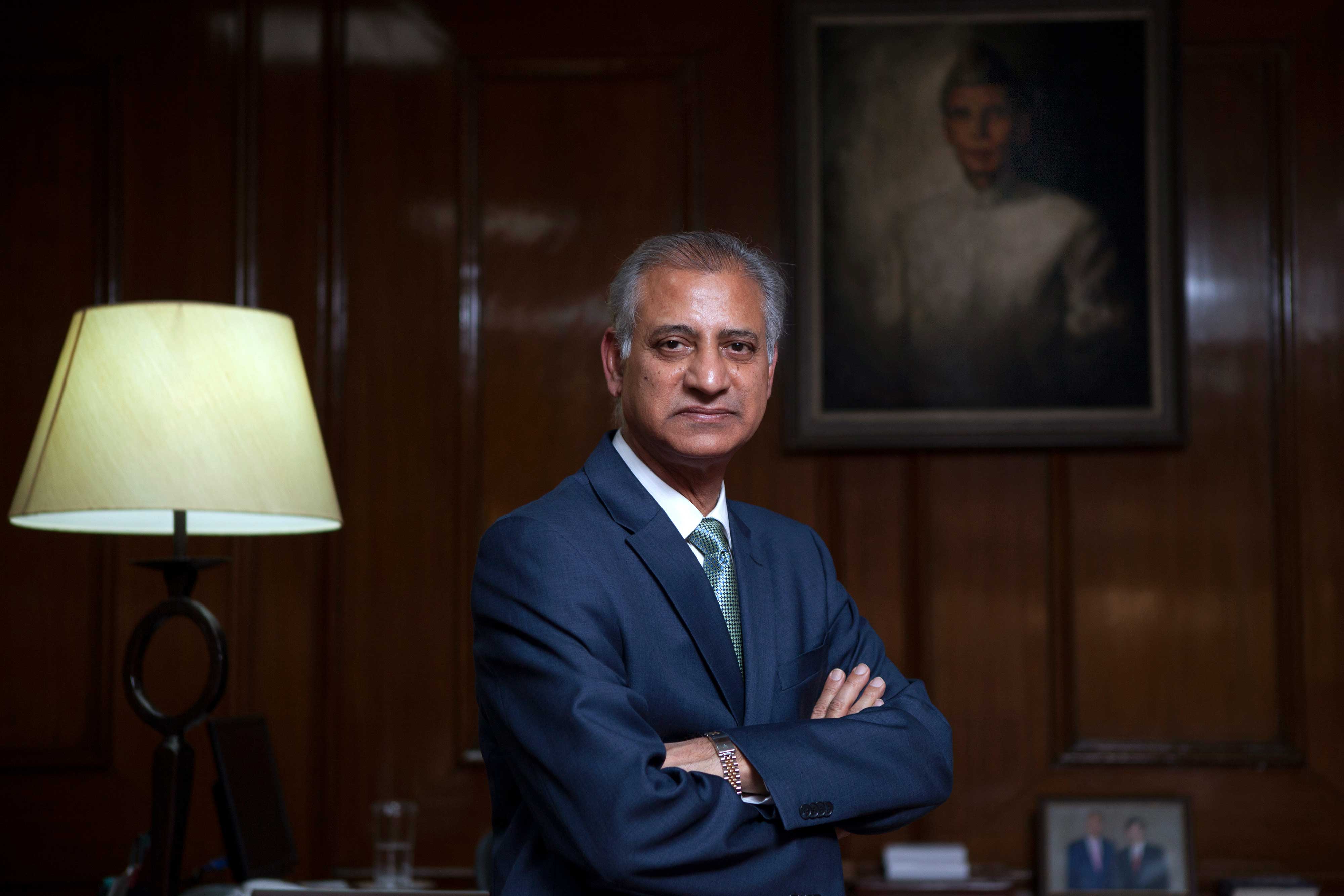
Governor, State Bank of Pakistan
Evolve: Since 1978, you have vast experience of working with national and international banks and financial institutions. How have you transformed your exposure into most sensitive role of heading the largest monetary regulating authority of Pakistan, SBP?
Ashraf Mahmood Wathra: Exposures and experiences lead to each other. When combined together, such an evolution of skills assist an individual in developing a unique approach to tackle the given situations and to carve out the pathway to achieve the desired objectives. My professional career history is replete with challenges arising out of difficult situations or the higher standards personally set for the output and outcome. Therefore, I take the current assignment as another challenge of my career where capabilities are swiftly required to be transformed into abilities.
The central banks are at the centre of the economic stage and influence the environment around them. The uplifting of a developing economy requires an optimum level of institutional strength in the central bank. The procrastination in responding to the challenges of the economic development on account of institutional strengthening is not an option. While assuming the charge of Governor, State Bank of Pakistan, I was very much cognizant that during my tenure, I will be required to simultaneously lead efforts to adequately perform the statuary duties of SBP and to strengthen institutional capacity of SBP.
I strongly believe in home grown solutions. The best practices need to be best suited. One can always learn from the experience of other central banks but divergence in roles and objectives; socio-economic environment: and financial and business cycles necessitate the evolution of home-grown cognitive processes. Therefore, we at SBP have progressed in inculcating the organizational culture of developing deep understanding into the critical elements like history, mandate, environment, interconnectedness, global influences etc. before embarking upon any policy making. The collective thinking and team work are critical for ownership of organizational decisions and implementation. It is with the same spirit, through a participative and consultative process, we have developed our Strategic Plan 2016-20, known as SBP Vision 2020, which contain clear strategic imperatives around which the future activities will be organized in the coming years. With a view to improve institutional capacity, we are also continually investing in human resources, IT, and physical infrastructure.
On the economic front, I would like to share the recent indicators which evidence the right direction we are following. It is quite encouraging to note that the average headline inflation has declined to 4.5 % in FY15 which is the lowest in last ten years. The balance of payments position is continuously improving and foreign exchange reserves are all time high. The low inflation and stability in the exchange rate shifted the focus of SBP monetary policy towards catalyzing growth and investment in the country. We have progressed towards improving the depth and efficiency of the money, debt and foreign exchange markets in Pakistan. The banking sector is healthy with steady earnings and strong capital position well above the international benchmarks. In the context of safety and soundness of financial system, SBP is developing comprehensive financial stability framework, deposit insurance scheme, crisis management framework along with supporting legal and regulatory structures. We are now moving towards Risk-Based Supervision approach and are at advanced stage of finalizing policy on identification, regulation/ supervision of Domestic Systemically Important Banks (D-SIBs). I am confident that ongoing enhancements in regulatory and supervisory frameworks will prove instrumental in ensuring financial sector stability in Pakistan.
The challenge of enhancement in financial inclusion is quite formidable amid given socio-economic context. With a view to promote financial inclusion, we have developed a broader National Financial Inclusion Strategy in consultation with all stakeholders. It shall be implemented in next five years and aims at ensuring access to a range of quality payments, savings, credit and insurance services with dignity and fairness. Our continuous efforts to facilitate overseas Pakistanis and their families back home are bearing fruits and workers’ remittances through formal channels reached to US$ 18.7 billion during FY15.
With a view to strengthening SBP’s autonomy, certain amendments in SBP Act, 1956 have been proposed. The proposal includes the establishment of a statutory Monetary Policy Committee to provide full operational independence to SBP and to enhance the effectiveness of monetary policy. These amendments are already passed by both houses of the parliament and a notification is expected soon for implementation.
Evolve: Global Financial Crisis (GFC) of 2007-08 exposed the vulnerabilities of prevailing financial system. How did SBP address this crisis and what reforms have been introduced to avoid the effects of such catastrophe on Pakistan in future?
Ashraf Mahmood Wathra: In Pakistan, before the GFC, an unprecedented rise in international capital inflows, both foreign direct investment and portfolio, allowed the country to overspend. Despite rising fiscal deficit and external current account deficit, the inflows resulted in increased foreign exchange reserves and a stable exchange rate. With the onset of GFC, the economy experienced “sudden stop ” leading to decline in net capital and financial inflows. From January 2008 onwards, reserves fell sharply and Pakistan suffered a balance of payments crisis as the exchange rate depreciated significantly. Inflation increased, in addition to the domestic demand pressures, international price shocks also played their role in domestic inflation.
In order to tackle occurrence of events like GFC, SBP launched its strategy based on a comprehensive assessment and evaluation of the banking and the broader financial system identifying the key issues and limitations. The reforms included consolidation and strengthening of banking sector by promoting continued mergers and acquisitions, while seeking to restructure the outstanding public financial institutions, strengthen prudential regulation and supervision, develop financial safety net frameworks, development of core financial infrastructure and strengthening competition and efficiency in the banking system.
SBP has continued to introduce new reforms in the financial sector and has recently shared the strategic plan for next 5 years – SBP vision 2020. The strategy is to: enhance the effectiveness of monetary policy; strengthen financial stability; improve efficiency, effectiveness and fairness of the banking system; increase financial inclusion; develop modern and robust payments system; and strengthen SBP’s organizational efficiency and effectiveness.
Evolve: How do you opine that should there be more coordination between the global monetary authorities to prevent shocks?
Ashraf Mahmood Wathra: Recent global developments have significantly transformed the operating environment for monetary policy. This has created opportunities as well as challenges. Globalization has expanded economic interdependence and interaction of countries greatly. This has created the need for greater coordination in terms of appropriate institutional design as well as standardization reflected in the adoption of similar monetary policy approaches.
In similar vein, monetary policy formulation has also become more complex and interdependent. Continuous monitoring of financial markets, up gradation of technical skills at the central bank, flexibility and eternal watchfulness hold the key to making monetary policy matter in the evolving global environment. Central banks need to take into account, among others, developments in the global economic situation; the international inflationary, interest rate, exchange rate trends; and capital movements while formulating monetary policy.
In this regard, lessons must be learned from episodes such as May 2013 Federal Reserve’s indication to reverse its quantitative easing program and the resultant capital reversals from and currency depreciation in emerging market economies. More recently, China’s currency devaluation and the resultant market disturbances that sent the worldwide markets jittering is another example. Capacity of international financial institutions (IFIs) to influence macro and regulatory policies seems to be limited in the presence of such episodes of recurring financial crisis.
Therefore, there is a need of broader policy dialogue among advanced economies and the emerging and developing countries so that policymakers may be aware of the spillovers their policies might create, as well as potential damages the economies may experience.
Evolve: What is your assessment of current government’s performance and its reforms record? How do you evaluate the budget deficit, tax revenues and social spending of the government?
Ashraf Mahmood Wathra: The revival of economic growth started in FY14 and accelerated in FY15, as reflected by the latest economic indicators. For example, the inflation rate declined to the lowest level of the past twelve years, exchange rate is stable, current account deficit has reduced, and budget deficit is contained. The historical agreement with Chinese government on China Pak Economic Corridor (CPEC) indicates a great potential for country to become a leading economy in the world.
Encouragingly, the fiscal deficit has been reduced from 8.2 percent in FY13 to 5.3 percent in FY15. This is achieved mainly through control on public expenditures – yet without compromising development programs. In fact, the federal current expenditure (excluding interest payment and defence) declined during FY15, which shows the government remained frugal in running its routine business. However, the government is struggling with revenue mobilization. FBR tax to GDP ratio has somewhat improved however only a quantum leap will help. On a positive note, in order to increase the tax net, the existing database of 3.6 million individuals holding the National Tax Number (NTN) is being merged with the Computerized National Identity Card (CNIC) database comprising 150 million people; this will help identify potential tax payers in the country.
On social spending side, the present government not only continued the Benazir Income Support Programme (BISP), but also increased the cash grant from Rs 1,000 to Rs 1,500 per month. The expenditure under BISP has continued to show a robust growth. The government’s manifesto also proposed to increase public expenditure on education to 4 percent of the GDP by the end of its tenure. The actual expenditure was 2.1 percent of the GDP in FY14. The target for health spending is 2 percent of the GDP, which was 0.7 percent of GDP in FY14.
Despite inheriting a fragile economy, deteriorating law and order, strained ties with neighboring countries, and uncontrollable inflation, the present government managed to put things in order through independent and prudent policies, since coming to power in June 2013. The economy has successfully followed the path of fiscal discipline due to strenuous efforts by the government in order to contain expenditures through expenditure management strategy and revenue building measures. Furthermore decline in international oil prices also helped in reducing the pressures on external and fiscal sector.
Evolve: Pakistan stands to benefit from the fall in oil prices mainly through lower inflation and imports. How do you evaluate the impact of this on country’s economy?
Ashraf Mahmood Wathra: The fall in oil prices would positively affect nearly all sectors of the economy. At first, not only has this fall eased inflationary pressures in the domestic economy, but has also pushed down inflation expectations. Similarly, this low oil prices also bode well for sustaining the hard-earned external sector stability: our oil import bill typically eats up nearly 59 percent of the country’s export earnings, and equals nearly 6 percent of our GDP. Low international prices mean that we can reduce our import bill, without cutting back the quantum of imported goods.
We believe that a more far-reaching impact of the fall in oil prices would be on the accumulation of circular debt that had severely hit the productive capacity of all stakeholders in the energy supply chain. Lower furnace oil price has narrowed the difference between the cost of thermal power generation and retail tariffs (known as the tariff differential subsidy), which has been a major component of circular debt. It is important to recall here that this debt had been the major causative factor behind power outages in the previous few years; if this issue is sorted out, it will be easier to ensure smooth power supplies to local businesses, especially the exporting industries.
Evolve: What do you think that up to what extent GSP Plus Status would help to strengthen Pakistan’s economy especially in terms of export promotion?
Ashraf Mahmood Wathra: GSP Plus is a great opportunity for Pakistani exporters. However, in order to fully utilize its benefits, there is a need to address supply-side constraints like energy shortages, product concentration and limited availability of raw-materials. Export data for the previous two years underscores the same, which shows that though we were able to send more goods to the EU after the GSP Plus, this was at the cost of other markets.
The government is working closely with the industry to address these constraints. If things work out, huge gains are expected; after all, the EU is the largest importing region in the world and over 30 percent of Pakistan’s exports are already going into this region. In effect, the demand boost from this region has increased the motivation for both the government and the private sector to undertake structural reforms in exporting sectors: perceived gains are not only high, but also certain, as well as quick.
Evolve: In your view what initiatives are required to be taken to connect Pakistan, a global trade corridor, with global business community?
Ashraf Mahmood Wathra: We need to ensure five basic ingredients of global connectivity, around which, all the policymaking recently is centered around. These include:
Security: Successful actions have been taken against militants all across the country, and a marked improvement is visible in law and order situation.
Macroeconomic stability: Macroeconomic imbalances have been reduced substantially and most economic indicators are showing stability like exchange rate, inflation, fiscal deficit, etc.
Energy: Serious efforts are being made to minimize power and gas outages that had severely dented Pakistan’s productive capacity in the previous few years.
Infrastructure: The government is focused on fixing the public infrastructure in the country; in FY15 also, public investments posted a significant growth of 25 percent. With China-Pakistan Economic Corridor underway, more improvements are visible in the country’s infrastructure.
Skilled labor: Capacity building is required in a number of industries to enhance labor productivity. There is a need to strengthen education standards in the country, and a public-private co-ordination is required to improve vocational trainings.
Evolve: How do you envision Pakistan, a country of 200 million people?
Ashraf Mahmood Wathra: Pakistan is considered to be one of the Next Eleven, i.e., eleven countries (along with the BRICs), having a potential to become one of the world's large economies in the 21st century.
It is a labor-abundant economy; and is world's 6th largest country in terms of population (191.7 million). The country has a high demographic dividend, as 40 percent of its population is in the working age bracket of 20-45 years. It also has abundant natural resources such as coal, oil, gas, minerals, and fertile agriculture land. Its geographical location gives it additional advantages.
Structural issues such as energy shortages and law & order situation, which impeded the economic growth in recent years, have eased to a great extent; and the economy grew at 4.2 percent in FY15 (highest in last seven years).
With these positives, along with business friendly policies, Pakistan’s economy is set to embark on a higher growth trajectory. Moreover, implementation of infrastructure projects planned under the China-Pakistan Economic Corridor (CPEC) would create favorable investment and multi-lateral trade environment in the country. Furthermore, large population of over 190 million people also implies robust demand for goods and services. To meet this demand, production activities also flourish and more capital and consumer goods are produced. This additional production creates employment opportunities. With additional supply of labor, economies of scale can be more easily achieved. Similarly, large population can stimulate innovative activity. A big home market offers a very attractive prize for success.
Evolve: What is your assessment of future global economic scenario? Will Asian Infrastructure Investment Bank (AIIB) founded by China, will challenge the supremacy of IMF and World Bank?
Ashraf Mahmood Wathra: It will be too early to make such an assessment, but I believe that we should view the AIIB as a step towards more inclusive and robust set of IFIs that power the global economic development. The existing set of IFIs are not geared to meet all infrastructure development needs of emerging markets. The presence of enormous infrastructure gaps in the developing world, testifies their grievances. The AIIB’s official mandate is to fill these gaps. The US, and the US-influenced IFIs, must not see this as a challenge to their supremacy in the global financial world. Certainly, if the AIIB use Yuan as the lending currency, this may enhance its international standing; but China has already worked hard in the previous few years to include the Yuan in the SDR basket. The emerging markets would welcome such a development. Please note that the status of AIIB has been shifted ever since non-Asian countries, especially the UK, Germany and many other European countries have joined as founding members.
From a mere aid agency or a commercial bank, the AIIB is now a multilateral development bank with over 50 members; China’s capital contribution has been reduced from 50 percent to only 30 percent; and most importantly, China would not have ‘absolute’ veto power as most initially thought. It only has 26 percent voting rights in loan decisions. Similarly, the perceived objective of promoting Chinese exports to absorb its excess capacity, is also not practical; not only would this undermine the rebalancing campaign, but would also question the legitimacy and credibility of the institution.
Evolve: Your message to the readers of EVOLVE?
Ashraf Mahmood Wathra: After months of hard work, right policy making, and international support, Pakistan’s economy has eventually come out of one of the most difficult phases in its history. Today we are a much stable country from economic standpoint, as well as from security perspective. Our negative image in the international community is now diluting at a fast pace, and renowned media houses are boasting Pakistan’s strengths and potentials. The changing dynamics of the global economy has prominently put Pakistan on investors’ radar; this will further help us re-integrate with the global economy. All our focus now is on reducing structural impediments from our economy, and maximizing the benefits from available opportunities.