Search here
 Log In
Shifting Global Balance Of Power
How China Challenged American Expectations?
Half a century since President Nixon’s determination to establish a strong U.S. China relations, it has become evident that Washington has been too confident about their influence on China’s global pathway. Free traders, financial analysts, and patriots alike have been disproved in their belief that China’s political choices would be altered by a dominating American presence. Little has come to alter China’s own personal authority, including the failure of U.S military power diplomacy, nor did trade deals set to encourage economic and political openness. Therefore, it is now necessary, more than ever, to encourage a recouping and rethinking of the United States’ approach to China; the importance of such reestablishment overcomes any risks pertaining to a destabilization of current bilateral relationships with Beijing, instead drawing focus to new policy making. Only then will all foreign actors, primarily the United States, have the possibility of encouraging economic and political liberalization within China.
‘It is now necessary, more than ever, to encourage a recouping and rethinking of the United States’ approach to China’
The Power of the Market
With the primary goal of bringing economic liberalization to the Chinese economy, U.S. policy has encouraged commercial interactions. This lead to the United States’ decision to grant China the most favored nation trading status in the 1990s, aiding the accession of China into the World Trade Organization in 2001, and has continuous high levels of economic dialogue from the Bush to Obama presidencies. Through this, trade in goods between China and the United States has increased from $8 billion in 1987, to $578 billion in 2016. However, contrary to western expectation, Chinese liberalization has been halted, replaced instead with a minimization of the state capitalist model. China’s large increase in wealth instead acted as an encouragement of the Chinese Communist Party and its state-led policies. During the 2008 Financial Crisis when U.S. officials believed debt would encourage liberalizing reforms, Chinese officials instead increased industrialization through the Made in China 2025 plan. This further promoted national technology sectors such as biomedicine and robotics, resisting any urge from Washington to level playing fields for foreign companies. Non-Chinese firms instead agreed to joint ventures and shared technology whilst feeding subsidies to domestic players, with the United States accepting such policies due to the benefits at hand. However, recently the United States’ have come to realize the little hope for China to alter its ways; in a recent U.S. Chamber of Commerce report, 60% of U.S. companies have no confidence China will further open its markets. Therefore, it has become evident that all such previous mechanisms have failed to increase China’s economic openness, including Trump’s most recent Comprehensive Economic Dialogue.
However, recently the United States’ have come to realize the little hope for China to alter its ways; in a recent U.S. Chamber of Commerce report, 60% of U.S. companies have no confidence China will further open its markets.
The Imperative of Liberalization
Economic growth within China was originally thought to also bring political liberalization, believed to begin with the Chinese middle class demanding rights whilst pragmatic Chinese officials aimed for progressive legal reforms. The United States’ attempted to further encourage this process through technology sharing, trade, and people to people exchanges by admitting more Chinese students to American universities. Contrary to Western belief, the collapse of the Soviet Union and military crackdown 1989 Tiananmen Square did not lead to a further liberalization of Chinese politics, but rather acted as an example of the risks of democratization. Hopes of greater press freedom and a strong, civil society accepting competition to the Communist Party were dimmed as Beijing responded to the 21st century's increasing globalization with tighter control, stressing regime and authoritarianism. Political liberalization was further banished through a 2013 Community Party memo, warning against western constitutional democracy as something that could break China. Whilst increases in technology were thought to increase civil liberties, there has instead been a further crack down on academics, journalists, and religious leaders alike. This has been largely through China’s social credit system which aims to punish citizens based on online activity, and further fueled by the government’s ability to locate the location of people in seconds.
Contrary to Western belief, the collapse of the Soviet Union and military crackdown 1989 Tiananmen Square did not lead to a further liberalization of Chinese politics, but rather acted as an example of the risks of democratization.
The Deterrent of Primacy
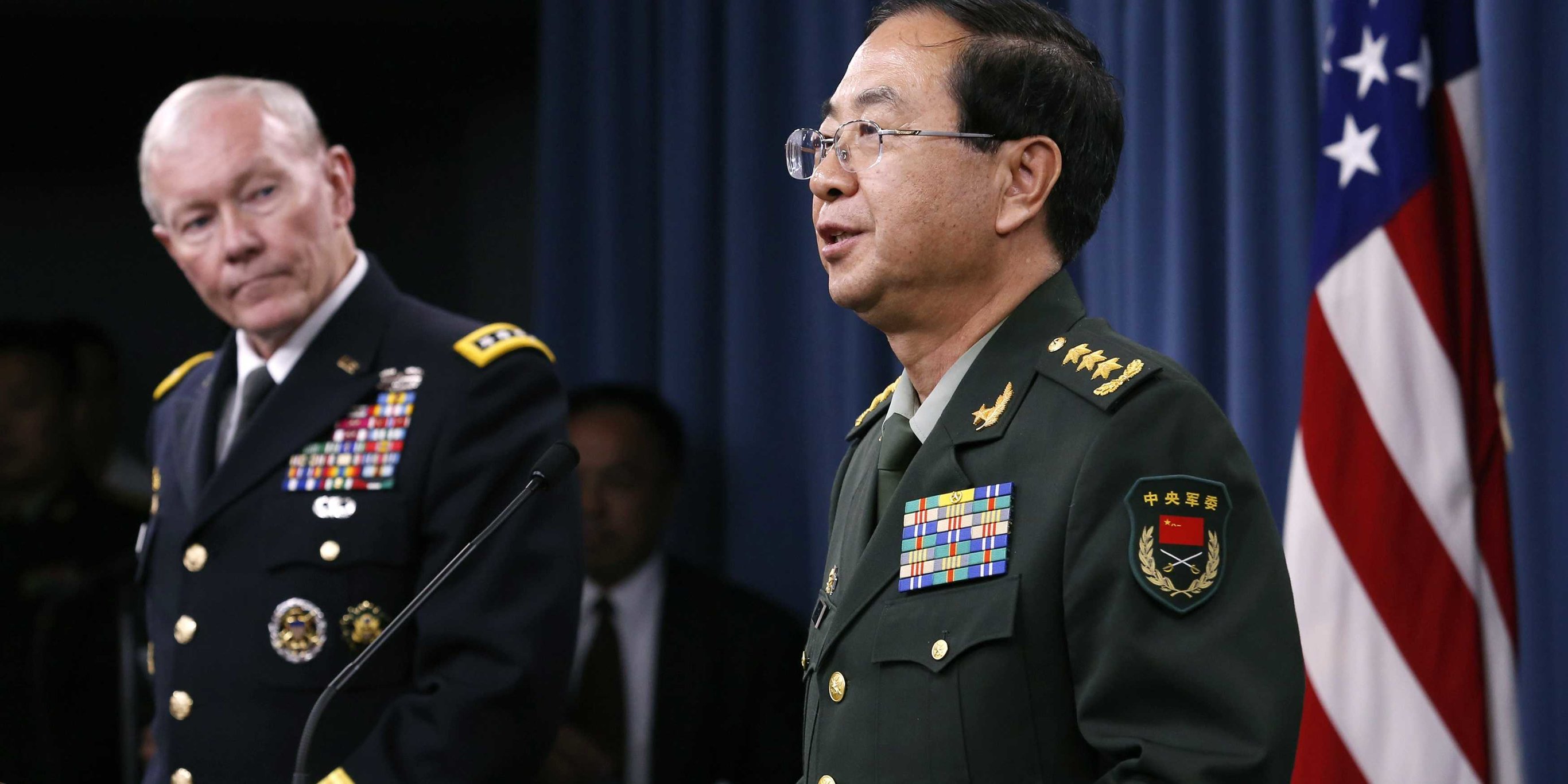
United States’ diplomacy and military action aimed to persuade Beijing it was not possible nor needed to challenge U.S. security order in Asia. Instead, Washington aimed to strongly promote China’s participation in regional security mechanisms, spun through further confidence building measures implemented by the Clinton administration in the 1990s. The general belief was through increased allay of military competition in Asia, China would aim its desires towards regional order and military sufficiency, focusing further upon domestic affairs. With the collapse of the Soviet Union and high costs of an arms race with the United States, American policy makers also believed China would restrain from pushing primacy in the Asian region. However, the United States’ was also sure during this period of time not to confront China, avoiding any risks of creating a powerful enemy. As China did begin investing wealth into military power, the Chinese government continued to aim for peace with Washington, following a moderate foreign policy path set by politician Deng Xiaoping. Throughout the early 21st century, China has reassured the world that they are aiming for a “peaceful development” as their strategic choice, as reported by State Councilor Dai Bingguo. However, continuous U.S. military presence posed as unacceptable for Beijing, acting as threat to China’s interests in Taiwan, East and South China Seas, or the Korean Peninsula. With the belief that Washington would prevent China’s emerging powers, they began pushing away from U.S. military order in Asia. In the end, no American efforts were able to slow down the rise of China’s, now dominant, military power through Chinese efforts to modernize and accelerate technology and weaponry. Examples of this are evident in new military installations in the South China Sea, and China’s first military base in Djibouti. China now is on the path to be equal to their United States’ peers, as a rich and strong nation.
As China did begin investing wealth into military power, the Chinese government continued to aim for peace with Washington, following a moderate foreign policy path set by politician Deng Xiaoping.
The Constraints of World Order
After the end of World War II, the United States built institutions within Asia that became widely accepted norms, including freedom of commerce, a peaceful resolution of disputes, and cooperation and diplomacy for global challenges. Beijing’s benefit from this liberal order was thought to encourage their cooperation, being further preserved through U.S. policy aiming to push China’s involvement in multilateral institutions. In Washington’s perspective, the prosperity China had experienced was due to this international system, and there became an expectation that China would uphold such rules. Through joining the Asia-Pacific Economic Cooperation organization in 1991, agreeing to the Nuclear Nonproliferation Treaty in 1992, and joining the World Trade Organization in 2001, China took on more responsibility, even becoming a major contributor to UN counter piracy and peacekeeping negotiations. However, Beijing remained threatened by other elements of U.S. led order, specifically what they saw as violations of sovereignty involving economic sanctions or military action. Whilst there is priority given to defending China’s authoritarian system, the country also has worked to water down multilateral sanctions and UN intervention in Russia, benefiting nondemocratic governments such as Sudan and Syria. China is also set to build its own institutions, such as the Asian Infrastructure Investment Bank and the Belt and Road Initiative, Xi’s vision for connecting China. These institutions have allowed China its own agenda setting power, departing from western set values. Interestingly, Beijing explicitly differentiates from the United States and Europe by its approach to development, not demanding countries accept governance reforms as a condition for receiving aid. Within their own region, China has taken steps to alter security without provoking the United States, using coast guard vessels and legal warfare in the South China Sea. In summer of 2016, by ignoring a landmark ruling under the UN Convention on the Law of the Sea holding China’s expansion in the South China Sea as illegal, proving to the United States that Chinese leaders were aware they could get any with denying international law. Countries in the region economically dependent on China have also failed to push back as much as the United States expected them to.
China is also set to build its own institutions, such as the Asian Infrastructure Investment Bank and the Belt and Road Initiative, Xi’s vision for connecting China.
Taking Stock
As the U.S. China policy becomes increasingly more tenuous, Washington has chosen to focus its efforts elsewhere. The fight against terrorism since 2001 has consumed U.S. national security, changing China from a strategic competitor to an ally against religious extremism. The Obama administration aimed to rebalance attention to Asia, yet a majority of efforts and budgets remained in the Middle East. This strategic distraction has allowed China to press advantage on the belief of the United States’ general decline. Xi sees China now as a “global leader,” and a “new option for other countries.” Washington now faces its most dynamic competitor in modern history, requiring it to do away with hopeful thinking on the expectations of China. The Trump administration’s policies often focus narrowly on bilateral trade deficits, remaining confrontational with China without encouraging competition. China, on the other hand, has managed to increase competition without being confrontational. By accepting Washington’s past policy has been short of aspirations, it is now the United States challenges China through focusing on its own behavior. By basing policy on more realistic assumptions and concentration upon its own power and allies, Washington may be able to make a more sustainable bilateral relationship with China.
The Trump administration’s policies often focus narrowly on bilateral trade deficits, remaining confrontational with China without encouraging competition. China, on the other hand, has managed to increase competition without being confrontational.