Search here
 Log In
Pakistan’s Foreign Policy Around Sustainable Fundamentals
Pursuing National Priorities
National interest should be the only driving force behind Pakistan’s foreign policy. All our alliances should be subjected to this keystone criterion. That said, no country can remain isolated and all relationships between states, bilaterally and multilaterally, are therefore based on mutual interests, which are freely determined and pursued.
But what do we exactly mean by national interest? It lies in enhancing our economic, military and cultural power within our overall ideological framework. We should use our foreign policy to, first and foremost, defend our territory from outside aggression and internal strife, that necessitates strong defense and deterrent capabilities. Pakistan has to leverage our relations with nations in the region and beyond, as well as with international multilateral institutions, to attract foreign direct investment, start off joint ventures and promote trade. All these activities should be geared towards accelerating our GDP growth, raising standards of living and improving human development. Moreover, it is a core function of Pakistan’s foreign policy practitioners to project the country’s soft power, one that must be nurtured within Pakistan. A national interest-centred foreign policy will also act as a catalyst for domestic economic development and international influence.
Building On Our Strengths
Pakistan’s discomfort with India has been the core driver of its foreign policy since Independence. Its relations with its immediate neighbours such as Afghanistan and Iran, and other regional countries such as Turkey and the Gulf States, have all been filtered through this security prism. Its close alliance with the United States-led regional security systems for the past six decades was also shaped by this core dynamic. The normal pursuit of national interest has been primarily defined in hard security terms by successive governing elites. A wider definition which highlights the pursuit of economic and social prosperity of the people of Pakistan as the rational end goal of its relations with the wider world is mostly absent from our strategic thinking.
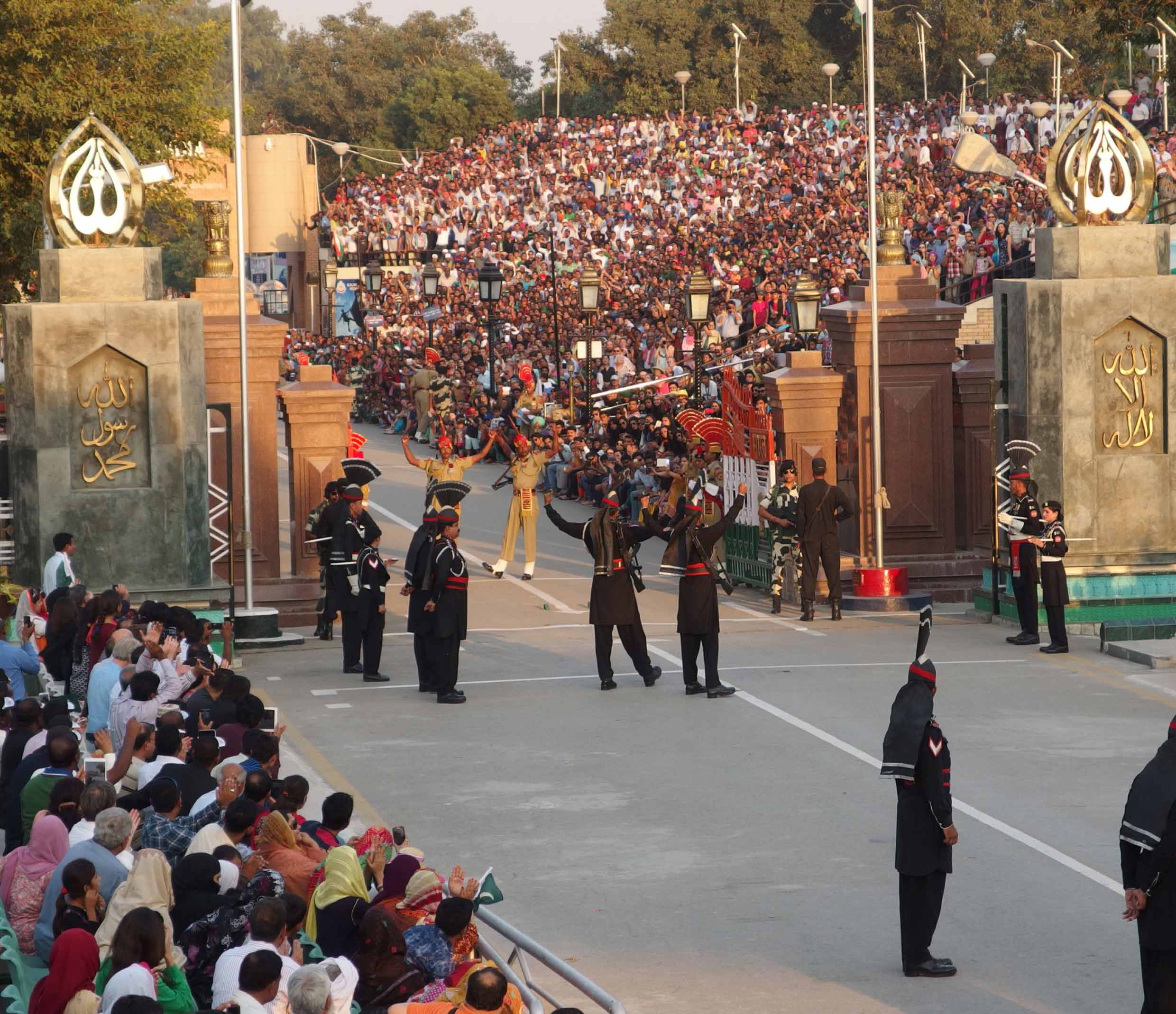
Changing global trends in regional trade and the growth of Asian economies is forcing Pakistan to readjust the focus of its foreign relations especially within its neighborhood. Pakistan’s reluctance in getting militarily involved in the Saudi-led war in Yemen is evidence of this new thinking. As Iran looks to rejoin the global economy after sanctions against its exports come to an end, Pakistan is positioning to revive the Iran-Pakistan gas pipeline. Getting too deeply enmeshed in the Iranian-Saudi struggle in the Middle East would intensify tensions with Iran and adversely impact security in the province of Balochistan. Pakistan sincerely tried to improve its relations with the Ashraf Ghani administration in Afghanistan, but was unable to sustain. Afghanistan, which has a weak central government, and virtually little administrative control outside Kabul, remains an elusive and unreliable relationship. Pakistan’s foreign policy ought to be based on our country’s inherent strengths. As the sixth-largest nation in the world by way of population – with reliable demographic data indicating that we are closing in on 200 million people – we should frame a policy which assumes that we possess a reasonable quality of human resources and have an extremely useful geography.
Our human resource base was good enough to make us the only nuclearized Muslim state in the world. Our strength is our agriculture, which enables us to be food-secure with a considerable surplus of rice and wheat. We also enjoy an abundance of fruit, vegetables and dairy products and have the capacity to launch all these for export. Our next strength is located in our capacity to weave the finest cotton fabrics in the world, based on indigenously grown raw cotton, which commands strong markets abroad.
We can rightfully claim of the highest quality of craftsmanship in leather, metals, pottery and stitched craft, and are now entering the fashion market at an international level. Our jewelry, gemstones and marble – notably onyx – draw interest worldwide. Moreover, our considerable mineral resources await exploration, as do our deposits of natural gas. Despite all these strengths, we have fallen into a debt trap because of poor governance, lack of transparency and mismanagement, rectifying which is certainly within the realm of the feasible. A growth- and export-driven economy would enable Pakistan to exploit our strategic advantage effectively and base our foreign policy on an economically strong agenda.
Regional Collaboration
The welfare of a nation, the power of a state and the importance of its voice in the comity of nations is drawn from the strength of its economy. Therefore, Pakistan’s foreign policy ought to be determined primarily by economic interests. For the first time in three centuries from the West to Asia, a historic shift is taking place in the center of gravity of the global economy. This provides a unique opportunity for Pakistan to build a prosperous future for its people and emerge as a strong and economically independent country.
Over the last two decades, China and India – with a billion citizens each – have doubled their per capita incomes. According to a recent United Nations Development Programme report, in terms of speed and scale, this economic performance has had a greater impact on the world than the Industrial Revolution in Europe in the late 18th and early 19th centuries. Given present trends, China will emerge as the largest economy in the world over the next two decades and if South Asia achieves economic integration as envisioned in South Asian Free Trade Area (SAFTA), then South Asia can emerge as the second-largest economy in the world, thereby making the China–South Asia region the greatest economic powerhouse.