

 Search here
 Log In


.jpg)
CO-WORKING: THE CEO UPGRADE
If the headquarters represented the heart of corporate life in the 1990s, then co-working serves as its pulse today, keeping work alive, human, and adaptive. Co-working is flexible, fast, and adaptable, bringing a human touch to an increasingly automated world. The concept of “where work happens” is constantly being rewritten, yet no shift has been more transformative than the rise of co-working spaces. What initially began as a solution for freelancers and early-stage entrepreneurs has now grown into a global movement that is reshaping the cultural DNA of businesses. CEOs and established companies now view work through the lens of co-working spaces. Co-working is not merely an alternative workspace; it is a philosophy of work, built on flexibility, community, and belonging. This is not a momentary wave; it’s a movement rewriting the rules of work.
Why is Co-Working Suddenly Everywhere?
The rise is not a simple reaction to remote work alone. It is a result of deeper structural shifts in the global economy, which demand a new approach to workplace design:
- Flexibility in how and where you get your work done.
- Human connectivity is vital because constant digital engagement has taken an emotional toll. Employees now expect environments that create true connections, moving beyond virtual exchanges.
- Creativity is fueled by diverse perspectives and thinking outside the box.
- Work-life balance to keep burnout away. Co-working providers embed wellness infrastructure.
- Scalable solutions that can grow with your team.
The digital world made work borderless, and the post-digital era is giving it meaning. Co-working sits at the intersection where efficiency and purpose meet.
Modern CEOs don’t lead from corner offices; they lead by showing up, listening, and being present
A Shift Beyond Wi-Fi and Office Desks
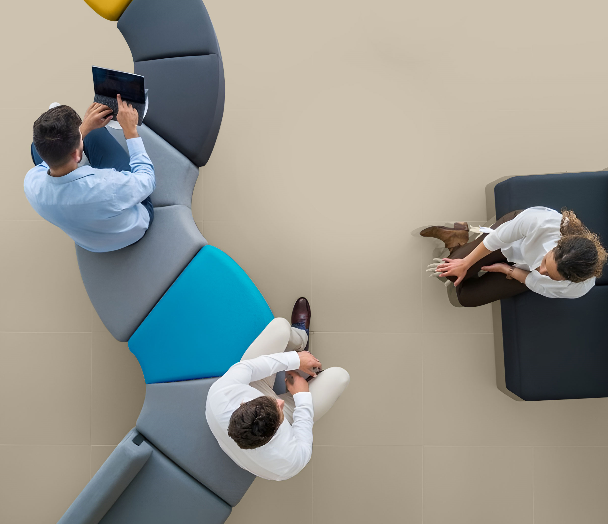
When people imagine co-working spaces, common images include comfortable sofas, artisanal coffee bars, and glass-walled meeting rooms. These elements matter, but the true value of co-working lies beneath the aesthetics.
- A New Face of the Modern Workplace
Today’s workers define themselves with purpose, autonomy, and creative alignment rather than their employer alone. Co-working providers adopt a hospitality mindset and curate environments that feel warm, intentional, and inspiring. Traditional offices stand for stability; co-working spaces open the door to growth, purpose, and limitless possibilities.
- Collisions that Catalyze Creativity
One of the most overlooked advantages of co-working is its ability to create planned opportunities for serendipitous interactions. A data scientist may sit beside a graphic designer, while a social entrepreneur may work next to investment consultants. These planned opportunities for serendipitous interactions encourage:
- Cross-industry perspectives
- Spontaneous collaborations
- Rapid prototyping through peer feedback
Innovation thrives where diversity thrives. Co-working transforms everyday encounters into strategic advantages.
- Building Resilience in a Hyper-Connected World
Culture is no longer defined by mission statements. It is shaped by daily experiences, how people feel at the start of the day, and by their interactions.
Co-working environments strengthen emotional and cognitive resilience by offering:
- Community-led workshops
- Wellness programs
- Curated networking and collaboration events
- On-site mental health resources
These offerings are not perks; they are foundational investments in human sustainability.
In a world of automation, co-working reintroduces the human touch where work finds its meaning.
Hybrid Leadership in the Post-Pandemic Era
Whether leaders like it or not, the business world is now hybrid. Hybrid leadership brings new challenges: leaders must figure out how to trust, align, and work without relying on physical presence. Co-working spaces bridge the gap between home offices and corporate headquarters.
For CEOs overseeing distributed teams, these spaces offer critical advantages:
- Clear separation between professional and personal lives
- Access to high-quality infrastructure regardless of location
- Preventing burnout in 24/7 connected cycles
- Ensuring remote employees have access to the same tools and facilities as those near the HQ
Most importantly, co-working restores the human energy, nonverbal cues and emotional intelligence lost in video meetings. This allows leaders to anchor their teams under one roof without imposing a rigid environment.
The future of work isn’t an office or remote, it’s an ecosystem of flexibility, wellness, and belonging
Reimagining Corporate Culture: From Control to Connection
One of the most remarkable aspects of co-working spaces is how they transform the way people approach work:
- From Hierarchy to Ecosystem Participation
Traditional offices often reinforce hierarchy through corner offices, reserved parking, and departmental silos. Co-working environments break down these barriers. In the shared ecosystem, everyone feels safe and comfortable. The design fosters a sense of belonging and encourages participation on all levels. Everyone feels equal and seen.
- From Policies to Experiences
Policies are shaped by experiences, not handbooks. Repeated experiences shape policies:
- How natural is collaboration?
- How easily can a person find help?
- Do people stay late because they want to — or do they have to?
Co-working spaces allow individuals to reflect on these questions easily. They allow you to reflect and adjust your daily rhythms.
- From Routine Tasks to Purposeful Engagement
Co-working spaces encourage purposeful engagement beyond daily routine tasks. In today’s professional landscape, employees seek growth, stimulation, and alignment with a larger purpose rather than mere stability. Co-working environments curate spaces that allow networking, learning, curiosity, and exploration. This creates a pathway to retention and improved performance outcomes.
The new headquarters isn’t a building, it’s a community where people come not just to work, but to belong
Global Leaders in Workplace Innovation
To understand the scale of impact, consider the example of five leading companies flourishing in co-working:
1. WeWork (Global)
WeWork is the most recognized brand in co-working. Major enterprises like Amazon, Microsoft, Salesforce now use WeWork locations for satellite teams and international expansion.
What is its strength? Seamless integration. Members get consistent designs, technology, and service quality.
2. Soho Works (London, New York)
Born from Soho House’s legacy in creative hospitality. Soho Works attracted media moguls, fashion houses, and indie filmmakers. It’s a workspace that serves as a muse, with analog switchboards, vintage lighting, and soundproof podcast studios.
3. The Wing (USA)
One of the most influential women-focused co-working spaces that offers lactation rooms, beauty lounges, and women-led programming. It demonstrates that equity starts with programming.
4. Mindspace (Europe & USA)
Popular among European executives and leaders who are looking to scale up. It blends boutique sensibility with enterprise readiness. High ceilings. Wooden floors. Thoughtful acoustics. It demonstrates that human-centered design and professionalism are compatible.
5. Impact Hub (Worldwide)
Impact Hub serves entrepreneurs tackling education, climate, and social justice. It is located in 100+ cities. But it is more than a co-working space; it accelerates programs, social investors, and global summits that turn local efforts into scalable movements.
Culture isn’t built in boardrooms; it emerges through daily moments of connection, insight, and creativity
How is Co-Working Reshaping the CEO Mindset?
Co-working is reshaping the modern CEO mindset.
- From Command to Adaptability
The old model was authoritative; the new model demands something different: agility. Modern leaders face constant changes, unfamiliar challenges, and unexpected questions. This requires them to be flexible, yielding faster and better results while staying ahead of shifts that others might miss.
- From Distance to Presence
Gone are the days when a CEO could lead behind closed doors. In a co-working environment, visibility yields effective results. Being present, showing up, taking interest, and working gives better results compared to communicating via email. Authenticity is not performative here. It’s required.
- From Network Size to Network Quality
A boardroom cannot replicate the learning gained in a co-working environment. A casual chat in a co-working environment can lead to a joint venture. A panel discussion can reveal the blind spots in the strategy. These meetings are not casual chit-chats; they are strategic intelligence.
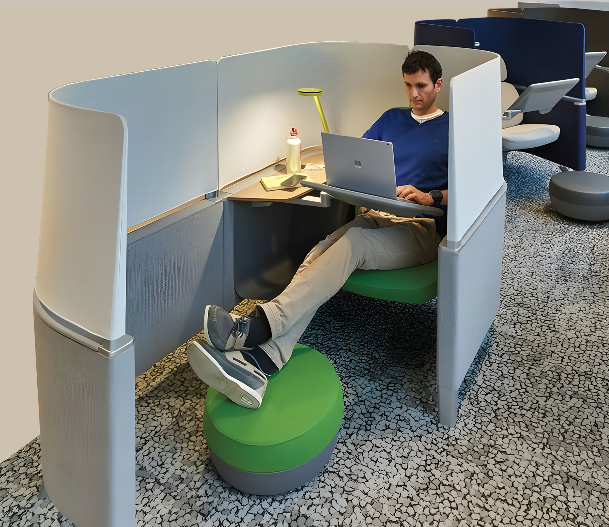
The Future is not an Office or Remote — It’s an Ecosystem
The next chapter of corporate culture is not written in the boardroom alone but emerges in spaces where boundaries are blurred and possibilities expand.
Wellness is essential, flexibility is mandatory, and connection is the true competitive advantage.
Companies are not choosing co-working spaces merely for cost savings; they are embracing the values they want to mirror for their growth and success. Once a CEO realizes this, the organization will reflect new standards focused not on efficiency but on vitality.
The world of work is not defined by buildings. It is defined by experiences. Culture is not built in structures; it emerges through moments of insight, laughter, connection, and challenge. Co-working will amplify the corporate culture. For visionary leaders, it is not a trend to watch but a transformation to lead.
The New Headquarters?
It’s not a building.
It’s a community.
And the future belongs to those who show up — not to manage it, but to belong to it.