Search here
 Log In
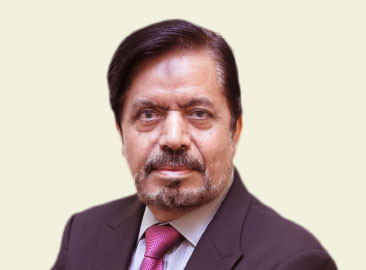
Resident Representative of IMF for Pakistan
Profile:
Born in 1976 in Tajikistan,Tokhir joined IMF in 2005 and worked in its different departments. He has done his PhD in Economics from The Ohio State University, USA. Currently he is working as Resident Representative of IMF in Pakistan since April this year. He also has the teaching experience of International Economics, Economics of Money and Banking, Principles of Macro- and Microeconomics. He is equipped with research skills like Modeling in Matlab, econometric research in STATA/ Eviews. He is fluent in English, Russian, Tajik languages.
Blurb:
Building a road is an important first step, but taking full advantage of that road and making it a “two-way traffic” is the real challenge.
Evolve: Viewing the IMF-Pakistan relations in the historical perspective of more than thirty years, how do you see the economy's performance in recent years?
Tokhir Mirzoev: First of all thanks for this opportunity. You have rightly mentioned that the IMF and Pakistan have a long history of engagement. The main lesson from the past experiences is that Pakistan has been quite successful in implementing reforms at the time of crisis or close to crisis but implementing structural reforms has been more challenging. Today, we are at a stage where another IMF programme is in place. This programme started in 2013 when Pakistan was again in a situation close to a crisis. Since then, a lot has been done and achieved. Now we can say that the risks of an immediate crisis have largely dissipated and macroeconomic stability has been restored and strengthened. At the same time, the same challenge that has been elusive for so many years is to make these gains irreversible and to make Pakistan stronger on the external front by making deep structural reforms to turn Pakistan into a dynamic emerging market economy like most of its neighbors.
Evolve: What is your assessment of current government's performance and its reforms record?
Tokhir Mirzoev: Since the beginning of the IMF programme, there have been several notable achievements. Foreign exchange reserves in State Bank of Pakistan were very low in the beginning of programme but now have increased significantly. Budget deficit has been reduced since 2013. As far as reforms are concerned, some reforms are in planning stage while some are already being implemented stage. So I think it is fair to say that the government has done a good job of overcoming a difficult situation and setting the stage for the next step which is deeper structural transformation of the economy. The factors like low oil prices, low interest rates, low inflation, declining budget deficit, and strong growth in remittances make up for some of the best conditions in the history of Pakistan to implement these structural reforms. It will be critical to take advantage of this opportunity.
Evolve: What are the risks on the external front for Pakistan?
Tokhir Mirzoev: The main short-term risk comes from the oil price which has dropped down last year but could rise again and from remittances, which showed healthy growth, but could slow down if economic growth in the Gulf countries weakens. In this context, the biggest weakness of the Pakistani economy is its small export sector. At present the exports to GDP ratio in Pakistan is10% as opposed to 40% in other emerging economies. At the same time, imports are about twice the amount of exports. This imbalance makes Pakistan vulnerable to external risks and calls for strong reforms and larger buffers to increase resilience of the economy.
Evolve: How do you evaluate the budget deficit, tax revenues and social spending of the government?
Tokhir Mirzoev: Over the past two years, the budget deficit has progressively been reduced. Another positive development is that the tax-to-GDP ratio has also increased. In addition, there are some improvements in terms of expenditures. The government has managed to reduce energy subsidies that were not reaching the right people while the Benazir Income Support Programme (BISP)—a much better way to help the vulnerable segments of the population—has been substantially increased. Going forward, it will be critical to improve tax compliance and generate the revenue needed to enhance public investment, as well as expenditure on education, healthcare, and social assistance. Pakistan’s tax-to-GDP ratio is still around 10%, which is about a half of what it is in other emerging economies. Increasing this ratio through widening the tax net will be critical to ensure adequate public investment in the country.
Evolve: What do you think that up to what extent GSP plus status would help to strengthen Pakistan’s economy?
Tokhir Mirzoev: It is a very positive development. It will surely help the export sector and we welcome this initiative whole heartedly. There was already a notable increase in exports to European Union last year. At the same time, it is important to understand that this initiative alone will not be sufficient to eliminate the external trade imbalance. The exporters need to become more efficient and productive to be competitive in foreign markets. In sum, the GSP plus is a good but small step in a right direction.
Evolve: In your view what initiatives are required to be taken to connect Pakistan, a global trade corridor with global business community?
Tokhir Mirzoev: We have seen recent positive initiatives from China and we are hearing about different initiatives on the energy side as well. These initiatives will bring about significant economic and business opportunity. At the same time, it is important to keep in mind that connecting with other parts of the world is not a goal in itself. The real challenge is to be able to use this opportunity, i.e. to be able to compete in the foreign markets. This brings us back to the same issues of the urgent need for structural reforms to increase export competitiveness. In other words, building a road is an important first step, but taking full advantage of that road and making it a “two-way traffic” is the real challenge.
Evolve: How do you envision Pakistan, a country of 200 million people?
Tokhir Mirzoev: I think that this is a country of huge potential. It is a country of 200 million of mostly young, well educated and talented people. The ability of Pakistan to utilize this potential will greatly depend on the ability of the government to implement the right reforms to provide economic opportunity for people from all walks of life. I see Pakistan as a country of huge promise. All the ingredients—people, location, and resources— are already here. It is a matter of connecting the dots and putting these ingredients to a productive and efficient use. That is the focus of our advice.
Evolve: What is your assessment of global economic situation?
Tokhir Mirzoev: Global economic situation remains complicated. We have recently published our world and regional economic outlooks. Basically we see a slow recovery of growth in the world. European Union is showing growth but it remains rather low. Pakistan’s Eastern neighborhood is more dynamic with healthy growth rates, despite some slowdown in China. The situation in Middle East and Central Asia is more complicated due to conflicts and the impact of the Russian crisis. As I mentioned before, despite this mixed environment, Pakistan is enjoying a favorable set of macroeconomic conditions which make for an ideal starting point for reforms.
Evolve: How do you opine that should there be more coordination between global monetary authorities to prevent shocks?
Tokhir Mirzoev: I think there should be. Many initiatives have been taken all over the world between monitoring authorities, notably in financial sector. Examples include cross border cooperation in regulating transnational banks and financial institutions, combating money laundering and other joint measures to promote financial stability. Many central banks work with each other to create bilateral credit lines. The recession of 2008-09 has provided many lessons, particularly in Europe. Among other things, it highlighted some of the deficiencies in coordination, particularly when it comes to supervising international banks. A lot of work has been done since then and we hope that it will reinforce international financial stability in the period ahead.
Evolve: Your message to readers of EVOLVE?
Tokhir Mirzoev: It is a great honor and pleasure to be working in Pakistan. It has been an interesting discovery for me, both personally and professionally. Most of all, I wish for Pakistan to make the full use of its amazing economic potential and achieve a swift rise to the ranks of dynamic emerging market economies.