Search here
 Log In
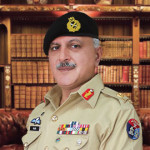
Chairman, Heavy Industries Taxila
Profile:
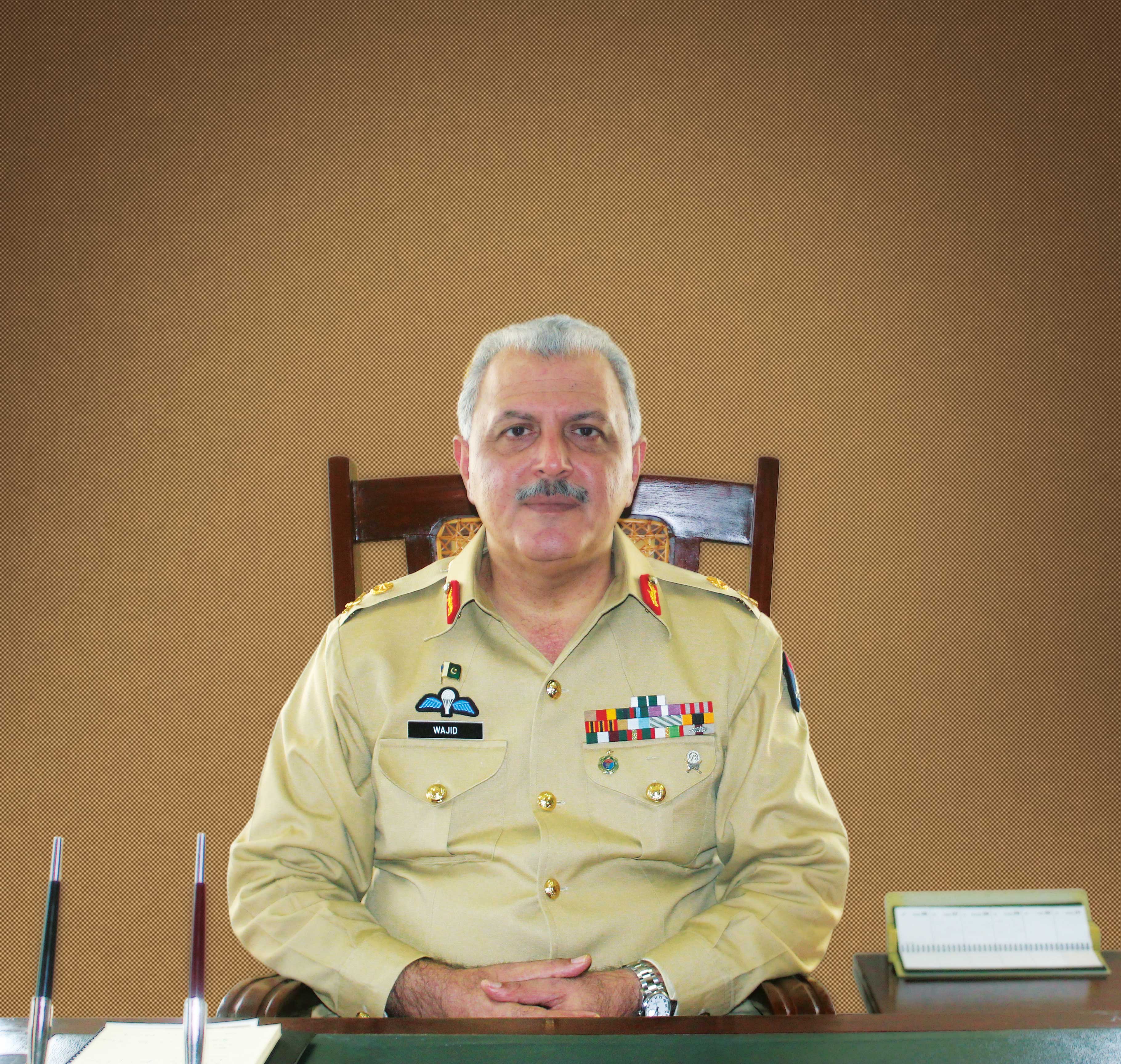
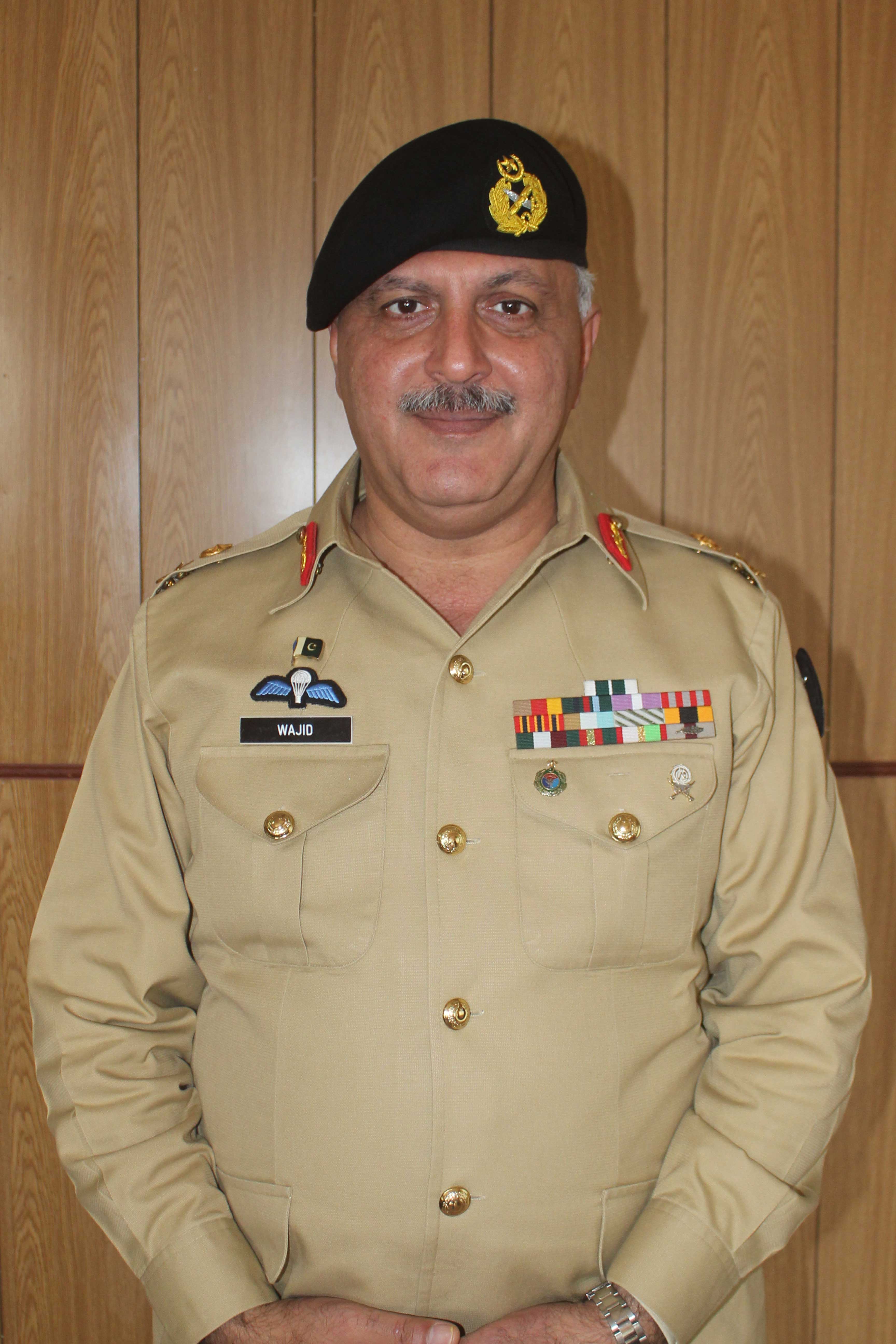
Born in 1959, Lt. Gen Syed Wajid Hussain has been the chairman of Heavy Industry Taxila (HIT) Board since January 2013. Mr. Hussain holds Masters Degrees in subjects of War Studies and National Security respectively from Pakistan and USA, along with professional certifications i.e. Staff Course from Command and Staff College Quetta, Armed Forces War course from National Defence University (NDU) Islamabad, Armour Squadron Commander Course from West Germany and National Security Course from National Defence University, USA. He has also served as instructor at Command and Staff College Quetta and NDU Islamabad. Mr. Hussain also has the honor of serving in General Headquarters (GHQ) Rawalpindi on various appointments. Later in Operational area, he commanded an Armoured and Infantry Brigade, and Mechanized Division. Mr. Hussain has also served as Commandant at School of Armour and Mechanized Warfare.
Blurb:
Politico-economic environment plays a very crucial role. You need a very strong political clout to sell your products because when countries make decisions to buy big ticket items; it is not only based on defense requirements but is also dependent on their political relationship with Pakistan.
Evolve: Please enlighten us about your vision and strategy that made Heavy Industries Taxila, a most modern Military Industrial Complex of Pakistan?
Lt. General Syed Wajid Hussain: First of all I am really grateful to EVOLVE team for the initiative of promoting Defense Production Establishment of Pakistan Army and giving Heavy Industries Taxila (HIT) a place on its pages.
Coming to the question of vision and strategy, institutions and organizations like HIT require a leader who has belief and quest to continuously enhance the quality of the products. When I took over as Chairman HIT, I observed few technological gaps in the products manufactured for the military and commercial purpose. By grace of Allah Almighty we have now focused on state of the art technology being the key to quality enhancement. We have modernized our manufacturing processes in accordance with international quality standards. I can proudly claim that due to dedication and strenuous efforts of my officers and workers, today HIT is amongst the most modern industrial outfit under one umbrella for rebuilding / manufacturing various make and types of defence equipment. Many renowned international firms have visited HIT and have shown keen interest for joint collaboration in various projects. Based on the latest composite technology, HIT has introduced two new products to support our Security Forces against security threats i.e. Armoured Security Vehicle Protector and Dragoon. These products have received tremendous response from the national and international market during defence industry exhibitions. Being state of the art equipment, both these products have a great potential for export.
On the Defence side, quality of products is very important. In HIT, we have very high standard testing protocols. The vision is to balance the requirements of quality with the product cost. We have to mostly out match our adversary in quality not in numbers. Therefore our aim is to provide an optimized solution to Pakistan Army without compromising on quality.
I will further add to this, with respect to HIT’s motto i.e. Strength Through Self Reliance. Pakistan has got great potential in the area of engineering in its down stream industry. However there are certain limitations due to size of our economy and limited domestic demand. The issue is basically economy of scales. When it comes to minor sub-assemblies and parts, we get very good support from our vendors but as far as major assemblies are concerned, we lack the expertise and cannot move without the help of private sector. In relation to HIT products, today we are manufacturing Tanks, but not the engine, which is heart of the Tank.
It is imperative to mention here that, this problem is not only with Pakistan.Even in countries like China and Korea, no factory of defence sector makes everything; rather developed private industry around them supports the defence sector. My vision since I took over is that, HIT should start developing its own engine. Hopefully before I leave, I will initiate a process in this regard. I would like to highlight that it is not only an engineering problem but also a business problem because if you start developing an engine without having a market, it will result in wastage of investment. Thus we need to balance both the issues.
Evolve: What type of challenges are you facing and what are your achievements?
Lt. General Syed Wajid Hussain: In relation to achievements, production of Wheeled Armoured Security Vehicle Dragoon Stanag level III and Armoured Security Vehicle Protector with B7 level protection for the very first time in Pakistan is a big achievement of HIT. In the prevailing security environment amid war on terror, the law enforcement agencies were in need of suitable equipment to counter the threats. I can proudly claim that you cannot get a vehicle with B7 level protection anywhere in the world at such a low cost and weight. Regarding challenges, we have dependency on import of technologies from other countries.
On the defense side, our biggest challenge is to maintain the armoured fleet held with Pakistan Army in the field. Defense forces not only look towards HIT for manufacturing but also for the sustenance of their fleet. Pakistan Army is holding diversified range of equipment of various make and types of Eastern and Western origins. In the absence of standardization, maintenance and sustenance of vast variety of equipment becomes a huge challenge for HIT. Here I shall again proudly say that my factories and team have done incredible job with regards to maintaining the armoured fleet. Today HIT is facing supply chain problems from certain Original Equipment Manufacturers (OEMs). To quote you an example, that due to certain Original Equipment Manufacturers countries internal, economic and revitalization problems, contracts concluded for procurement of spares for repair and maintenance are pending since long.
In addition to this, in certain cases, HIT is facing problem in relation to poor technology equipment procured in the past. Efforts are in hand to upgrade this category of equipment to meet the present day battle field conditions.
Evolve: What is the production capacity of Heavy Industries Taxila (HIT)?
Lt. General Syed Wajid Hussain: Heavy Industries Taxila has the capacity to manufacture Tanks, Tank Guns and Armoured Personnel Carriers. We also under take complete rebuild of Tanks including engines, Tanks Guns, Armoured Personnel Carriers and Self Propelled Guns.
On the commercial side, we have the capacity to manufacture 50 Armoured Security Vehicles Dragoon, 75 Armoured Security Vehicles Protector, 100 Light Armoured Vehicles Mohafiz and 150 Armoured Guard Post Bunkers per annum. We can also manufacture 5000 Bullet Proof Jackets / Vests per month.
Presently HIT is overloaded because our main customer i.e. Pakistan Army’s demand is more than our capacity. To fulfill the requirement, HIT has made some internal adjustments. I will give you an example that we have an APC manufacturing factory and an APC rebuild factory. Due to increased demand of rebuild, the APC manufacturing factory has taken the onus of responsibility for sharing the load of the rebuild factory. It has never been done before.
In order to meet the demand of Army, tank manufacturing factory needs some capacity enhancement and we are working on it. I would like to highlight that HIT regularly carries out Project Management Reviews which is a good thing. In order to maintain continuity in production goals, HIT regularly spends amount on Balancing, Modernization and Replacement (BMR) of its machinery. We are also making an effort for induction of state of the art machinery having latest technological features to keep itself at par with modern military industries. In future modernization program, HIT is planning to go for automation and robotic welding to acheive production targets and quality of work.
Evolve: Which product/s of HIT is getting more attention and appreciation from buyers?
Lt. General Syed Wajid Hussain: Most of our products are made for Pak Army on demand, so there is no question of one product getting more popular than the other. On the commercial side, I think B6 level Mohafiz Security Vehicles remain popular and we are continuously receiving orders for bullet proof jackets as well. We also have started receiving orders for our Protector Vehicles with B7 protection level. As far as international market is concerned, couple of countries has shown keen interest in Dragoon Armored Security Vehicles.
Evolve: How do you rate the quality and service level of HIT’s products? Do they meet global requirements?
Lt. General Syed Wajid Hussain: Yes, Alhamdolillah, all the factories are ISO 9001 - 2008 certified. HIT has an elaborate system of quality assurance within the factories and at the central level. HIT meets the most stringent quality standards which are set by Inspection and Technical Development (ITD) Directorate. I can assure you that the quality standards of ITD Directorate are perhaps the best in the world. Our Chinese partners tell me that when they go out to sell their equipment, their customers do not ask them whether Peoples Liberation Army uses their equipment or otherwise but they do ask whether Pakistan Army uses that equipment or not. When our product qualifies the ITD Standard, then I am fully satisfied that we are meeting the international standards. As far as the comparison is concerned, you can only test the equipment according to its technology and the features claimed by the manufacturer. So it’s possible that there are better technologies but then they are equally expensive. The technologies being handled in HIT and the standards which we are supposed to offer are close to perfection.
Evolve: What are your plans and approach for joint R&D and Production with private sector?
Lt. General Syed Wajid Hussain: It depends on many factors. Manufacture of engines is one project which HIT can do with the help of private sector and private sector has the potential. For example, we are in the process of developing engine parts like piston assemblies, sleeves, connectors, shell bearings etc. These are the parts which have high replacement rate. This is one area we are already working and want to expand it for development of a complete engine at some stage. In addition there are many areas in which we involve the vendor industry. There are five hundred and fifty vendors providing us most of the parts. Around hundred and twenty thousand items have been developed through these vendors. About eighty thousand parts have been developed by HIT itself. The bigger projects require joint research and development effort. Previously, HIT was doing bullet proofing but I was not personally satisfied with the quality therefore, for some time, I stopped offering this product. Recently we have signed a joint venture and the JV partners have brought state of the art latest technology from Jankel, UK. HIT has already carried out bullet proofing of few vehicles of Punjab Govt. Inshallah, in near future HIT is planning to demonstrate capabilities of this technology by carrying out complete destruction of a discretely Armoured Toyota Land Cruiser based on the Jankel technology. HIT has another joint venture on purely a commercial product i.e. pre-fab houses. HIT has expertise in steel therefore we envisage a lot of scope in this field . We hope to excel here in collaboration with a private partner. After earthquake, people are slowly and gradually shifting to pre-fab type of houses and buildings.
Last point I would like to mention is that joint venture is a very attractive concept but again it has to be handled very carefully. A lot of offers have been received, especially from foreign companies for manufacture of trucks and railway wagons. These are huge projects and a number of factors are required to be considered prior to undertaking such projects. First of course, is the mandate of Defense Production which is primarily to support armed forces. Whereas Ministry of Industries has their own mandate. Some of these products relate to Ministry of Industries. To handle such mega projects in a defense organization, there are many problems. It is difficult to be competitive with the private sector because our rules and procedures are not in line with corporate sector requirements. However, we are open to it and at any stage, if we feel that it is a feasible project which is primarily related to meeting the needs of our defense forces like military trucks, civilian trucks or military jeeps, we can consider that. However we have to overcome above mentioned limitations.
Evolve: How do you opine that what is the future of Defense Export industry of Pakistan?
Lt. General Syed Wajid Hussain: I will be frank about it. It is very hard to export big ticket defense products when your clout is not that of an industrialized country. This is an area where we have well established countries and manufacturers. Broadly it is Europe, USA and Russia. Now if you want to sell your big ticket items like tanks, APCs, aircrafts, fighter jets, JF-17s etc then essentially you are competing with USA, Russia and European countries. Countries having good defence budgets can fulfill their needs from these developed countries while the countries with lower budgets go for cheaper options.
In this scenario, politico-economic environment plays a very crucial role.You need a very strong political clout to sell your products because when countries make decisions to buy big ticket items; it is not only based on defense requirements but is also dependent on their political relationship with Pakistan. In my view, whether it is DEPO, HIT or other Defense Production Establishments, they should continuously try to improve and sell their products on the basis of quality and cost. Possibility of one time order is always there but to sustain marketing of big ticket items, while competing with all the other big giants, requires lot of money and big budget. You may get one time order for tanks or JF17s from some friendly countries but it will not be a routine.
So, I think, we should be very sensible in approaching this subject and we should not be chasing rabbits. We should be rather looking at those products which are easily marketable. I will give the example of Super Mushak in case of PAC Kamra, our security vehicles, wheeled APCs, discrete armored vehicles and bullet proof jackets etc. In electronics, NRTC’s communication equipment and Jammers are a good choice. These products are economical and the quality is equally good.We sold APCs to Iraq once but in a particular environment.
When we talk of export then there has to be continuous growth. Any industry which does not grow continuously dies. We should be very selective in products on which we should invest to export them.
Evolve: In your whole career, what was the hardest moment for you, personally?
Lt. General Syed Wajid Hussain: Honest to God, none by the grace of Allah Almighty. I have been to Waziristan. I have commanded a brigade there and that should have been difficult time. Coming to HIT, for a soldier, to switch over from army to industry, should have been hard but army trains you in such a good way that I did not face any problem. I must give credit to the system that there never has been a situation where I thought that it was impossible to meet any particular requirement. However, there are certain cultural issues. If you ask to change the mind set and the culture, it is a big challenge at times in an organization and even sometimes in the army. But I cannot say that there was any hard moment in my life.
Evolve: How do you describe the role of HIT in War on terror and contribution in this national cause?
Lt. General Syed Wajid Hussain: Alhamdulillah, HIT has been in the forefront and we also have two martyrs in the operational area. Our teams regularly visited the units in the frontline to provide them field support on location. I myself and my predecessors have been visiting the units in operational areas. If we get any requirement from units operating in the operational areas, we give it the top most priority. We have provided cannons for Al-Khalid tank which were used only in Operation Al-Meezan. We installed Thermal Imager sites which are very valuable for observation and keeping the terrorists away. They really mattered in some of those areas. On the whole whenever there is a requirement from any unit operating in the operational area, that is our top priority.
Evolve : Any message for the readers of EVOLVE?
Lt. General Syed Wajid Hussain: I think that the readers of the EVOLVE magazine are at the senior leadership positions. I just want to convey this massage to our industry that there are certain bottlenecks which need to be overcome. I think we have huge potential but this has been used to a limit of deletions in products. I think we need to go beyond the level of deletions which we have achieved in some of the products that are assembled in Pakistan. If our engineering industry develops, that will also help the defense industry in achieving the indigenization goals. We should strive to contribute to the national cause and should not only focus on making good profits. The profits will certainly be there once the industry expands and flourishes. We should focus on expanding our technology base and this is the key to industrialization. We have very good brains that need to be provided the right opportunities in the country to avoid brain drain.