Search here
 Log In
The Ambassador /Head of European Union
“Awareness about the global business trends and attitudes is pivotal as especially in terms of Europe, Pakistani businessmen should know that we are very much conscious and serious about Quality Assurance”
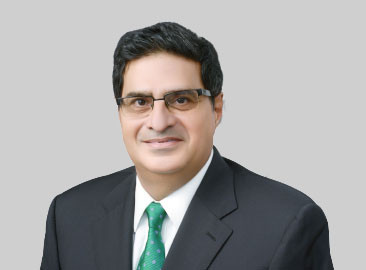
Ambassador Lars-Gunnar Wigemark the Head of the European Union Delegation to Pakistan graduated from Harvard University in 1984 with an A.B. Magna Cum Laude in Social Science and holds a Master's Degree from the Fletcher School of Law and Diplomacy in International Law and Economics. In 1988 he joined the Swedish Foreign Service in Stockholm and has been posted to Belgrade, Washington, Brussels, Kabul and Moscow, where he served as Deputy Head and Minister at the Swedish Embassy 2003-2007. In 2008 Lars-Gunnar Wigemark was appointed Head of the Security Policy Unit in the European Commission and as of December 2010 he is working in the External Action Service of the European Union. In September 2010 the European Union High Representative Catherine Ashton appointed Mr Wigemark as one of the first EU ambassadors under the Lisbon Treaty. He took up his new duties in Pakistan in early February 2011.
Evolve: How do you evaluate the role of EU in Pakistan, in a situation where US has a dominant role in Pakistan’s foreign policy and China is seen as ‘all-weather friend’?
Lars-Gunnar Wigemark: Well that’s a reality that United States of America and Peoples Republic of China have diversified bilateral relations with Pakistan. China is one of Pakistan’s neighboring countries and US has a leading role in global politics. But first it is necessary to understand the chemistry of European Union. The EU is a unique economic and political partnership between 28 European countries. The idea was based on the philosophy that countries trading with one another become economically interdependent and more likely they will avoid conflict. Starting with six countries, today a huge single market has been created and continues to develop towards its full potential. Our commitment and dedication has made EU a major player in global scenario. Although good relations story starts from the nature of relations you are having with your neighbors yet we are very hopeful that our support and cooperation will provide Pakistan, an opportunity to evolve globally and helping and understanding the need that number of friends in your friends list must increase gradually and good relations with neighbors are keys to justify your friendship offer to rest of the world. We have very clear and transparent systems to build relations focusing on truth, trust and dignity.
Evolve: Pakistan has an interest in deepening and widening ties with Europe. In your opinion how EU can play its role by using non military soft power tools such as economic assistance and trade to facilitate Pakistan?
Lars-Gunnar Wigemark: Yes that’s a reality and trade volume between Pakistan and EU in 2014 is the proof of this interest. I feel pride to share that trade volume has touched the figure of 1billion Euros.
We in true spirit want to see Pakistan an “Islamic Welfare State” committed to prosperity of its people. But there are some important and sensitive points are necessary to be understood. Although Pakistan is facing security issues yet buying more and more weapons cannot guarantee the peace. It’s the people who are the real strength of any country. By providing health, education, food and biggest of all the justice you can make people more efficient and effective to play their roles and then our support and assistance can make any change. I want to make it very clear that we are political actors and we do not have any military role or kind of militarily support policy.
Evolve: To contribute to the reduction of poverty and the promotion of sustainable development and good governance, EU has awarded GSP+ status to Pakistan in December 2013. Would you be kind enough to share the impact of this initiative on Pakistan?
Lars-Gunnar Wigemark: For Pakistan achieving GSP+ status is a milestone.GSP+ is special incentive arrangement for sustainable development and good governance, which offers additional duty free exports to support vulnerable developing countries previously 16 now 25 countries (including Pakistan) in their ratification and implementation of relevant international conventions in these fields. This preferential tariff will help Pakistan not only to enter the EU market but also to sustain their share in it. It is worth mentioning that textiles and garments sector of Pakistan is facing solid competition from China, India, Indonesia, Thailand and Vietnam. Pakistan’s qualification as a GSP+ beneficiary country would put it in a tremendously advantageous position because China, India, Indonesia, Thailand and Vietnam are not eligible for GSP+. China has graduated out of the Textile and Garments sections of the standard GSP while India has graduated out of the Textile section of the standard GSP, meaning that imports from China and India will not be benefiting from privileged duties. Moreover Pakistan is only be the second textile and garment exporting country in the South and South East Asian region which will have duty free access into the EU. It is not surprising that the main beneficiary of the GSP+ scheme would be the Textiles and Garments sector but leather and leather articles, footwear, plastics, ethanol, fresh and processed fruits etc also have the potential to take the advantage of duty free access.
Evolve: What are the pre-requisites for maintaining GSP+ status and how EU gauges its satisfactory implementation?
Lars-Gunnar Wigemark: Firstly it needs to be clearly understood that the GSP+ scheme is a ‘Special Incentive Arrangement for sustainable development and good governance’ and it has been awarded to Pakistan for a period of ten years starting from January 2014. As the name suggests, the scheme has been conceived by the European Union as an incentive to inculcate good governance and sustainable development practices in the developing countries, in order to help them in achieving best practices and moving up the ladder of development. Therefore; the additional tariff preferences provided under special incentive arrangement for sustainable development and good governance would be granted to those developing countries which; due to a lack of diversification and insufficient integration within the international trading system, are vulnerable. The vulnerability criteria pertains the signing/ratification of the core conventions. The implementation of these conventions is the core issue which would ensure Pakistan’s continuity in the GSP+ regime. These conventions are related to good governance, labor laws and rights, minority and gender rights and equality, protection of the environment, human rights etc. In this regard the EU has devised a monitoring mechanism and it is expected of the beneficiary countries to fully cooperate in providing information, whereby the EU would gauge the satisfactory implementation of these conventions, failing which, the country could face withdrawal of GSP+ status. In Pakistan a section is working in Prime Minister’s secretariat to coordinate with EU for fulfilling the parameters of GSP+.
Evolve: Since the start of its cooperation with Pakistan, the EU has spent more than one billion Euros on projects and programs like education, rural development, clean water, energy, good governance, rule of law and human rights. How do you rate the success ratio of this sincere contribution in terms of true output?
Lars-Gunnar Wigemark: Your question is very valid and justified. It is quite natural that even when you pay tax you claim for the return in form of facilities as it has been taken from you in the name of welfare. The aid and assistance donated in the name of betterment of people of Pakistan has not shown trickledown effect as effectively as it should show. We have contributed in different hard times like floods, earthquake, war against terrorism and welfare projects like clean water, energy, education, rehabilitation of calamity victims but this is very encouraging that now Pakistan is asking us for trade rather aid. Besides all these we have learnt a lot from past practices.
We have developed seven (7) years plan 2014-2020 focusing on three areas.
- Education specially the Technical Education
- Rural Development
- Governance
For education EU has contributed 23 Million Euros with Netherlands and Germany to a total of 43 Million Euros. This project will be implemented by a German agency in Pakistan i-e GIS. For rural development we are working with local rural development authorities to identify the areas of development and progress. As far as governance is concerned we are committed to apply financial management practices in provinces like KPK, Sindh and Balochistan. We also have refined our practices and processes as we identify the needs at local level and provide funds to provincial authorities as after 18th amendment provinces have been delegated more powers and authorities which were with federal government earlier. I am very much positive that with passage of time the things will be changed and our sincere input will become a true output.
Evolve: How European Neighborhood Policy (ENP), an initiative to ‘strengthening the prosperity, stability and security of all’ can play a role of torch bearer for other alliances like SAARC for collective betterment of humanity?
Lars-Gunnar Wigemark: I think that political will is the essence of all peace promoting initiatives. This guides you to trace and repair the missing link. When we talk about SAARC, it revolves around Pak-India relations. Until or unless these two nations/countries do not build a trustworthy environment SAARC will be unable to play any productive role in its region i-e South Asia. India and Pakistan are neighboring countries and I already have mentioned in the beginning that good relations with neighbors are keys to justify your friendship offer to rest of the world.
Evolve: What initiatives are required to be taken to connect Pakistan, a market of 200 million people and a growing middle class with higher discretionary incomes with global business community?
Lars-Gunnar Wigemark: Your question directly relates with effective planning and in case of a country planning starts from CENSUS. It is the census that gives the actual and accurate stats of your potential. It attracts the investor as investor calculates the consumption level while investing. Moreover how many schools, universities, hospitals, roads are required and how much jobs are needed to be created; these all information can be provided by census only. Unfortunately in Pakistan this has become a political issue due to election constituencies. After census a well functioning team is must to exploit the potential of country. Then awareness about the global business trends and attitudes is pivotal as especially in terms of Europe Pakistani businessmen should know that we are very much conscious and serious about Quality Assurance. It is surprising that India’s Halal meat export is much higher than that of Pakistan just because that they are following our described standards.
Evolve: How do you feel while working in Pakistan in comparison of other countries and how do you evaluate the potential of Pakistanis?
Lars-Gunnar Wigemark: It is really difficult to compare the countries in terms of working and serving there but I must say that Pakistan is a country of people full of energy and spirit. It has cultural diversity and most of all people want to work and excel.
Evolve: You work very hard as an Ambassador, what do you do to relax? Do you have any hobbies?
Lars-Gunnar Wigemark: I like playing golf, socializing and attending Pakistani marriages as they are full of fun and life.
Evolve: Your message to readers of EVOLVE magazine
Lars-Gunnar Wigemark: As EVOLVE is widely read among the business community so my message to them is that you are blessed people so try to be transparent in your practices and committed to your cause. Adopt the practice of invest-reinvest. Focus on creating more employment opportunities and pay your taxes honestly.